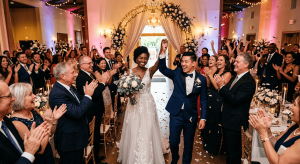
“How to plan a wedding timeline” is really two questions wearing the same coat, and most guides only answer one of them. There is the planning timeline, the month-by-month countdown from the engagement to the wedding day, and there is the wedding-day timeline, the hour-by-hour run of show for the day itself. This guide covers the first one in full, and I will show you how to build the second one near the end.
I have planned more than 200 weddings up and down the East Coast, and the question I get within an hour of an engagement is always some version of “what do I do first, and when?” The honest answer is that a wedding planning timeline is less about cramming tasks into months and more about sequencing the handful of decisions that unlock everything else.
According to The Knot, the average couple plans for about 15 months. That number hides a lot. If you have a shorter runway or a tighter budget, the standard 12 month wedding planning checklist needs real adjusting, and I will walk you through that too. Here is the sequence I actually use with my couples, phase by phase.
Your wedding planning timeline at a glance
12+ months out: Lock the foundation
Set your budget and a target guest count, then book the venue and date. These four decisions control every choice after them.
9 to 11 months out: Book the vendors that sell out
Photographer, caterer, band or DJ, planner. Start dress shopping now, since gowns take months to arrive.
6 to 8 months out: Attire, registry, save-the-dates
Mail save-the-dates, order all attire, build the registry, and book beauty, florals, cake, and transportation.
4 to 5 months out: Details and tastings
Menu tasting, order invitations, plan the ceremony, research your marriage license, start your vows.
2 to 3 months out: Mail invitations, finalize the paper
Send invitations 6 to 8 weeks out, track RSVPs, start the seating chart, and build the wedding-day timeline.
1 month out: Confirm everything, lock the headcount
Give the final headcount to your caterer, make final payments, prep tip envelopes, and confirm every arrival time.
The week of: Hand it off and stop planning
Deliver the day-of timeline and payments to your point person, pack your kit, run the rehearsal, then step away.
Start here: the two timelines people mix up
Before you touch a single month, understand which timeline you are building. The planning timeline is the long countdown you see above, and it lives in a checklist or a shared spreadsheet. The wedding-day timeline is a one-page schedule for the day itself, and you do not build it until you are about two to three months out. Couples burn weeks worrying about the hour-by-hour schedule a year early, when the only thing that matters that early is the foundation.
You need three things in hand before the countdown means anything: a target date range (not a fixed day yet), a rough guest count, and a real budget conversation with anyone who is contributing. The order is deliberate. Your budget and guest count together decide which venues you can even tour, so settling them first saves you from falling for a space you cannot fill or afford.
Here is the part the viral checklists never say out loud: the standard 12-month template quietly assumes a roughly 15-month engagement and a mid-five-figure budget. Below about $20,000, or under eight months of runway, half those milestones collapse into each other. If that is your situation, skip ahead to the section on compressing the timeline before you start booking anything.
Did you know
The average couple plans for about 15 months, and 82% hire their venue before any other vendor. The venue is the decision that sets your date, your headcount ceiling, and roughly half your budget. Source: The Knot 2025 Real Weddings Study.
Step 1: Lock the four things everything hangs on (12+ months out)
This first phase is short on tasks and long on consequences. You are setting your budget, your target guest count, your date, and your venue, in that order. Get these four right and the rest of the year is logistics. Get them out of order and you will redo work.
Venues drive the calendar. Popular spaces book 12 to 18 months out for peak spring and fall Saturdays, and 82% of couples lock their venue first for exactly that reason. Tour with your guest count and budget already decided, ask what is included before you ask the price, and get the date in writing the day you commit. If you want a full breakdown of what these numbers look like in 2026, my guide on how much a wedding really costs walks through it line by line, and how to find the right venue covers the touring questions I hand my couples.
Step 2: Book the vendors that sell out (9 to 11 months out)
Once the venue is locked, move fast on the vendors who only take one couple per date. The good photographers, caterers, and bands in any given market are gone for prime Saturdays a year ahead, and waiting rarely gets you a better option, only a more expensive one. This is also when you bring on a planner or month-of coordinator if you want one, because they are most useful before the decisions are made.
Start dress shopping now, even if the wedding feels far away. Most bridal gowns are made to order and take 6 to 8 months to arrive, plus alterations, so a 9-to-12-month head start is normal rather than early. My full guide to choosing a wedding dress covers the shopping window in detail.
- Photographer and videographer: top names book first, often a year out
- Caterer: unless your venue is full-service and catering is included
- Band or DJ: your single biggest driver of how the reception feels
- Planner or coordinator: earlier is better, since they shape the rest
- Wedding dress: start shopping; the gown timeline is longer than you think
Step 3: Attire, registry, and save-the-dates (6 to 8 months out)
This is the busiest stretch of the whole wedding planning checklist, and it is where momentum builds. Save-the-dates go out now, 6 to 8 months ahead for a local wedding and 8 to 12 months for a destination so guests can book travel. Order the rest of the attire, since bridesmaid dresses and groomsmen suits carry their own production and alteration timelines.
You are also setting up the infrastructure that makes the back half easy: build your registry, launch your wedding website, and book the vendors that round out the day. Lock hair and makeup, florals, the cake, and transportation, and reserve hotel room blocks if guests are traveling in.
Etiquette note
The mailing rhythm that keeps your headcount honest: send save-the-dates 6 to 8 months out (8 to 12 for destination), mail formal invitations 6 to 8 weeks before the wedding, and set your RSVP deadline 3 to 4 weeks before the date. Earlier on the invitations and guests forget to reply; later and your caterer cannot lock a count. Emily Post has held to this window for decades because it works.
For the full word-by-word breakdown of when each mailing goes out, see my guide on when to send wedding invitations.
Step 4: Details and tastings (4 to 5 months out)
The big bookings are behind you, so this phase is about turning decisions into specifics. Do your menu tasting and confirm the catering selections, order your invitations, and draft a first floor plan with your venue. Plan the shape of the ceremony, choose readings and music, and decide who is standing up with you.
This is also the quiet-paperwork phase. Research your marriage license requirements now (the waiting periods and validity windows vary by state), schedule a hair-and-makeup trial, and start writing your vows if you are writing your own. Beginning vows early sounds excessive until you are staring at a blank page the week before, so my walkthrough on how to write wedding vows is worth a look here.
Step 5: Mail invitations and finalize the paper (2 to 3 months out)
Invitations go in the mail 6 to 8 weeks out, and from there your job is mostly tracking and finalizing. Set up an RSVP system you will actually check, because the seating chart cannot start until replies come in. Confirm ceremony readings and music, meet your officiant to walk through the order, and pick up the rings if you have not already.
Now is when you build the wedding-day timeline, the hour-by-hour schedule, with your photographer and venue. They know how long portraits, a first look, and room flips actually take, and their input is what keeps the day from running 40 minutes behind by dinner.
Step 6: Confirm everything and lock the headcount (1 month out)
The final month is confirmation, not creation. Give your final headcount to the caterer, make final payments, and prep labeled tip envelopes so no one is digging for cash at midnight. Call or email every vendor to confirm arrival times and the day-of contact, do your last dress fitting, and finish the seating chart once the stragglers have replied.
Distribute the day-of timeline to your vendors, your wedding party, and your families so everyone arrives knowing where to be. The goal of this month is that nothing is left to decide in the final week.
Step 7: Hand it off and stop planning (the week of)
By now the plan is built, so the week of is about delegation. Hand the day-of timeline and the payment envelopes to your coordinator or Maid of Honor (MOH), pack a day-of kit (steamer, snacks, sewing kit, chargers, a copy of every vendor contact), and run the rehearsal so the wedding party knows the order.
Then the hardest task on the entire list: stop. Couples who keep tweaking the seating chart and re-confirming vendors at midnight the night before do not get a better wedding, only a more exhausted one. Trust the runway you built.
How to compress the timeline for a short engagement
Not everyone gets 15 months, and the good news is you do not need it. I have planned weddings on a three-week timeline and on a two-year one, and the difference is not quality, it is how ruthlessly you sequence. When the runway is short, you protect the same Step 1 foundation and compress everything after it.
On a six-month timeline, book the venue, caterer, and photographer in the first two weeks, choose an off-peak date or a Friday or Sunday for availability, and buy an off-the-rack or made-to-order-rush gown rather than a custom one. On a three-month timeline, lean toward a venue that is full-service, send digital save-the-dates immediately, and cut the registry and favors before you cut anything that affects guest comfort. The milestones do not disappear; they stack tighter and a few drop off entirely.
Building your wedding-day timeline (the hour-by-hour version)
This is the second timeline, the one for the day itself, and you build it around two fixed anchors: your ceremony start and sunset (your photographer will want golden-hour portraits). Work outward from there. A standard ceremony runs 30 minutes to an hour, cocktail hour is one hour, and most receptions run four to five.
Here is a clean shape for a 4 p.m. ceremony to adapt to your day:
- 1:00 p.m. Hair and makeup wraps; getting-ready photos
- 2:30 p.m. First look and wedding-party portraits
- 4:00 p.m. Ceremony
- 4:45 p.m. Cocktail hour; family and couple portraits
- 5:45 p.m. Grand entrance and first dance
- 6:15 p.m. Dinner and toasts
- 8:00 p.m. Open dancing; cake
- 10:30 p.m. Grand exit
Build this with your photographer and venue around two to three months out, not a year early, and add buffer between blocks (more on that below). If music order is part of your run of show, my list of the best wedding songs can help you slot the first dance and the send-off.
Timeline mistakes I see every season
1. Booking the fun vendors before the venue
Every season I have at least one couple who falls for a photographer or a band, books them, and then cannot find a venue available on a date that works. The venue sets the date and the headcount ceiling, so it goes first, always.
2. Setting the budget after touring venues, not before
Walk into a $40,000 venue with no number in mind and you will leave wanting it. Decide your total budget and guest count at the kitchen table, then only tour spaces that fit both. My wedding budget guide shows how to set that number before you fall in love with a room.
3. Mailing invitations too early or too late
Too early and guests set them aside and forget to reply; too late and your caterer cannot lock a count. Six to eight weeks before the date is the window, with save-the-dates carrying the early notice.
4. Leaving the seating chart for the final week
The seating chart depends on RSVPs, and RSVPs always trickle in late. Start the chart the moment your RSVP deadline passes, and chase non-responders by phone rather than waiting on them.
5. Building a wedding-day timeline with no buffer
A schedule packed end to end will be 40 minutes behind by dinner. Add 10 to 15 minutes of cushion between major blocks, because portraits and room flips always run long.
Real planner tips most checklists skip
The generic wedding to do list tells you what to do. After 200-plus weddings, here is what I tell my couples about how to do it without losing your mind.
- Put your two non-negotiables on paper before anything else. If it is live music and a great photographer, fund those first and flex everything around them.
- Tell your vendors your real budget, gently. A good vendor works within it; a number kept secret only invites the next tier up.
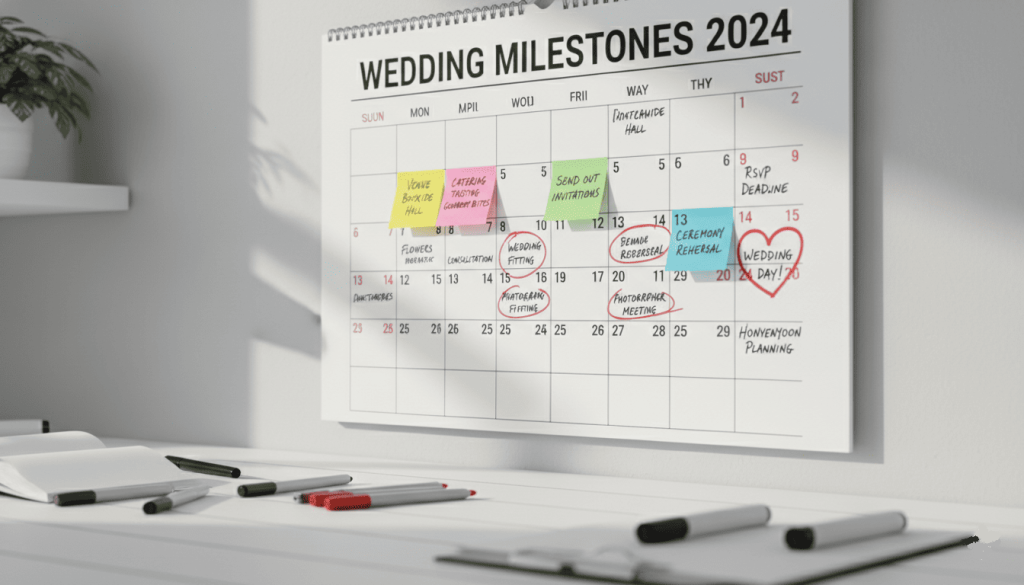
- Build a deadline calendar, not just a task list. “Order invitations by April 1” beats a floating to-do that slides week to week.
- Assign one point person who is not in the wedding party. The party is busy being in photos; your point person fields the vendor calls.
- Keep one shared planning document both partners can edit. Separate spreadsheets are how details get booked twice or not at all.

Tools and templates
You do not need fancy software, but a checklist that reorganizes around your date saves real hours. The free planners from The Knot and Zola both adjust their task lists automatically once you enter your wedding date, and Joy does the same alongside its free wedding website. Any of them works; the one you will actually open is the right one.
If you would rather print one page and check boxes by hand, my complete wedding planning checklist lays out all 12 months in a format you can print, and the broader how to plan a wedding guide is the place to start if this is day one of your engagement.
Frequently asked questions
How long does it really take to plan a wedding?
The average is about 15 months, according to The Knot, but that is just an average. Twelve months is comfortable, eight is doable, and three is possible with a full-service venue and a willingness to cut extras. The number that matters is how much your venue and top vendors are booked, not the calendar itself.
Can you plan a wedding in three months?
Yes, and I have done it. Choose a venue that handles catering in-house, pick an off-peak or weekday date for availability, send digital save-the-dates the first week, and buy an off-the-rack gown. You protect the foundation and drop the extras like favors and a long registry.
What should you do first when planning a wedding?
Set your budget and a target guest count before anything else, because together they decide which venues you can tour. Then book the venue and date. Roughly 82% of couples book the venue first for exactly this reason.
When should you book your wedding venue?
As soon as your budget and guest count are set, ideally 12 to 18 months out for peak spring and fall Saturdays. For off-peak dates or weekdays you have more flexibility, but booking fewer than nine months out starts to limit your options.
What is the difference between a wedding timeline and a wedding-day timeline?
The wedding planning timeline is the month-by-month countdown of tasks from engagement to wedding day. The wedding-day timeline is the hour-by-hour schedule for the day itself, built around your ceremony and sunset about two to three months out. You need both, but not at the same time.
When should you send save-the-dates and invitations?
Send save-the-dates 6 to 8 months before the wedding, or 8 to 12 months for a destination so guests can book travel. Mail formal invitations 6 to 8 weeks before the date, with an RSVP deadline 3 to 4 weeks out.
Sources
- The Knot 2026 Real Weddings Study (average cost $34,200). theknot.com
- The Knot: How Long It Takes to Plan a Wedding (15-month average). theknot.com
- The Knot: 12-Month Wedding Planning Countdown. theknot.com
- Zola: Ultimate Wedding Planning Checklist & Timeline 2026. zola.com
- Joy: How to Create Your Wedding Planning Timeline (venue and dress lead times). withjoy.com
- Emily Post Institute: Wedding Invitation & RSVP Etiquette. emilypost.com
Written by Madison Cole, Certified Wedding Planner. Madison has planned more than 200 weddings across the East Coast and writes the planning and attire guides at One Stop Wedding Planner.