If you just got engaged and opened Pinterest, you already know the problem: there are thousands of gowns, every boutique has an opinion, and half the advice online is some version of “trust the process.” That is not useful when you have a date on the calendar and no idea where to start.
I have planned more than 200 weddings out of Charleston since 2015, and I have stood next to a lot of brides in a lot of fitting rooms. The dress search is where I see couples lose the most time and the most sleep, usually because they start with the wrong question. They ask “what dress flatters my body type?” before they have answered the questions that actually narrow the field: where, when, and how you want to move.
So here is the order I walk my own clients through. This guide covers the full process, from locking your details to the final fitting, with a real look at wedding dress styles, silhouettes, timing, and budget. My honest take, after years of doing this: your venue and your season choose your dress far more than any wedding dress for body type chart ever will. A heavy ball gown in a July garden in the Lowcountry is a mistake no silhouette rule can fix.
Let’s build your search the way I build it for a client.
How to choose a wedding dress, step by step
Lock your date, venue, and season first
These three details rule out more than half the gowns before you try on a single one.
Set a real budget, alterations included
The average US dress runs about $2,100. Alterations are a separate line you have to plan for.
Start shopping 9 to 12 months out
Made-to-order gowns take months to produce. Earlier than 12 months invites second-guessing; later than 8 means rush fees.
Find a silhouette you can live in
Pick by how you want to move and feel, not by a body-type rulebook.
Book the appointment and bring the right things
Nude seamless undergarments, heels at your wedding height, inspiration photos, and one to three people you trust.
Try on, narrow down, and commit
Most brides try on 5 to 10 gowns. More than that and decision fatigue takes over.
Plan alterations and the final fitting
Two to three fittings, ending two to three weeks before the wedding. Learn your bustle.
Step 1: Lock your date, venue, and season first
This is the step almost everyone skips, and it is the one that saves you the most heartbreak. Before you fall for a gown, you need to know where you are getting married, when, and what the weather will be doing.
A cathedral wedding and a barefoot beach ceremony call for two completely different dresses. A structured ball gown looks magnificent in a ballroom and miserable on hot sand. A delicate slip dress that floats at a coastal wedding can read underdressed in a formal church.
Season matters just as much. Heavy satin and long sleeves are a gift in November and a punishment in August. I have watched more than one bride wilt by the first dance because the dress that looked perfect in a climate-controlled boutique had no business outdoors in Lowcountry humidity.
If you have not nailed these details yet, do that first. My month-by-month wedding planning timeline walks through exactly when the venue, date, and dress search should each happen so nothing gets out of order.
Step 2: Set a real dress budget, alterations included
Here is the number to anchor on. The average wedding dress in the US costs about $2,100, according to The Knot 2026 Real Weddings Study, which surveyed 10,474 couples married in 2025. That is roughly 6% of a total wedding budget for most couples.
“Average” hides a wide range. Brides regularly spend anywhere from a few hundred dollars on an off-the-rack find to well past $10,000 on couture. Where you land depends on fabric, the designer’s reputation, and how much customizing you want.
The line most brides forget is alterations, and almost every made-to-order gown needs them. Plan for a separate alterations budget on top of the dress price, plus the cost of a veil, shoes, and undergarments. In my own bookings I have seen alteration bills land anywhere from a light hem to a full reconstruction, so ask the seamstress for an estimate before you commit, not after.
If you want the dress to sit cleanly inside your overall numbers, build it into the plan from day one. My guide to how to budget for a wedding shows where attire fits against everything else you are paying for.

Step 3: Start shopping 9 to 12 months out
This is the timing rule I repeat most often, because getting it wrong is expensive. Begin your search 9 to 12 months before the wedding, with the goal of ordering your gown around 8 to 9 months out. The Knot’s own shopping timeline lands in the same window.
The reason is simple: most gowns are made to order, and production commonly takes four to six months from the day you place the order. Add fittings on top of that. Your first fitting usually falls around three months before the wedding, with a final fitting in the last two to three weeks.
Start much earlier than 12 months and you risk falling out of love with a dress you bought before your vision settled. Start later than eight months and you are often paying rush fees to make the timeline work. There is a sweet spot, and it is not as wide as brides assume.
One caveat I want you to hear clearly: a short timeline is not a crisis. If you are getting married in a few months, off-the-rack gowns, sample sales, and rush orders all exist for exactly this reason. You have options, and a good consultant will steer you to them.
Step 4: Find a silhouette you can live in
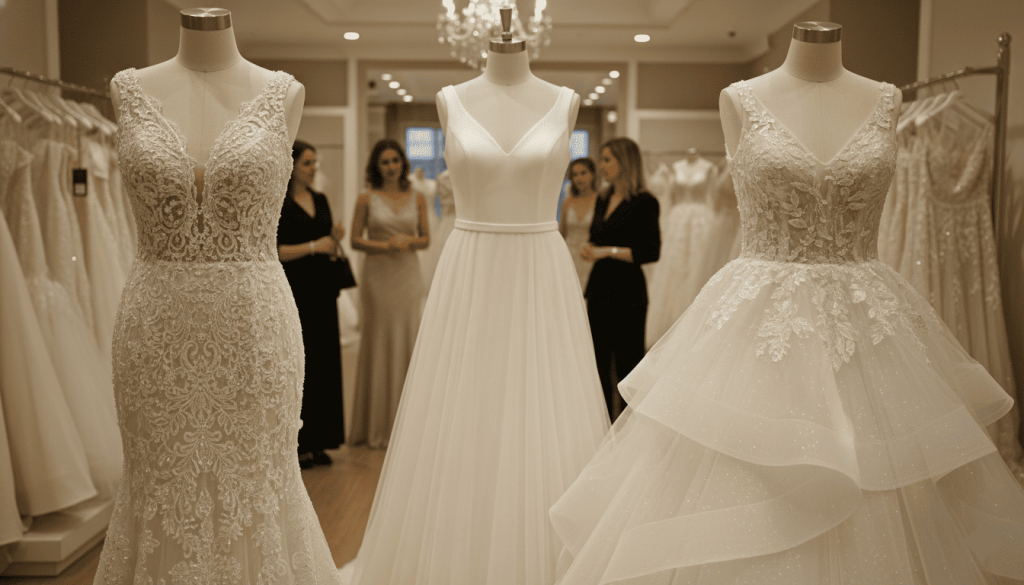
Now the part everyone wants to start with. The honest answer on wedding dress styles is that there is no silhouette that “must” go with a particular figure. The boutique blogs that sort bodies into apples and pears and assign each a “correct” dress are selling you a rulebook that real brides break happily every weekend.
Choose your silhouette by two questions instead: how do you want to move, and where are you wearing it. Here are the five core shapes and the practical trade-offs I see play out in real fittings.
A-line
Fitted through the bodice, then flowing out gently from the waist. It is the closest thing to a do-anything gown: easy to walk in, easy to dance in, and at home at almost any venue. If you are unsure where to start, start here.
Ball gown
A fitted top with a dramatic, full skirt. It is the showstopper, and it belongs in formal and ballroom settings. The trade-off is weight and maneuverability. It is genuinely hard to sit, hug, and dance in volume that size, and it does not love heat or sand.
Mermaid and trumpet
Fitted through the bodice, waist, and hips, then flaring out near or below the knee. These are the most structured, body-skimming shapes, and they photograph beautifully. Know going in that they restrict your stride, so practice sitting and walking, and budget for a good bustle.
Sheath and column
A straight, lightweight line that skims rather than flares. This is my standing recommendation for beach, garden, and destination weddings: it is comfortable, it moves with you, and it packs and travels far better than a structured gown.
Empire waist
The seam sits just under the bust, and the fabric falls loose from there. It is light, forgiving, and comfortable for long outdoor days and warm seasons, which is why I reach for it so often in summer ceremonies.
The thing I tell every bride: the dress on the hanger almost never predicts the dress in the mirror. Try at least one gown from each silhouette before you decide, even the ones you are sure you will hate. Some of the happiest brides I have worked with said yes to a shape they walked in swearing off.
Step 5: Book the appointment and bring the right things
Most bridal shops are appointment only, and weekend slots fill up fast, so book a few weeks ahead. What you bring to that appointment changes how productive it is.
- Nude, seamless undergarments. They let you switch silhouettes quickly and read the line of the dress without distractions. Most gowns have built-in support, so a bra is often optional.
- Shoes close to your wedding-day height. Heel height changes the hem and the whole proportion of the dress. If you do not have your shoes yet, bring something similar.
- Inspiration photos. A handful of saved gowns gives your stylist a starting direction. A hundred contradictory pins does the opposite.
- Any heirloom pieces. If you know you are wearing your grandmother’s veil or a specific necklace, bring it so you can see the full picture.
Then there is the crew. I am going to be direct, because this is where appointments go sideways: bring one to three people whose taste you trust and who will keep the focus on you. A big group means a lot of loud opinions, and the loudest voice is rarely the one wearing the dress.
If your mom is part of your shopping crew, her own outfit search is its own project. My complete mother-of-the-bride guide covers her dress and her role so the two of you can plan it together without it taking over your day.
Step 6: Try on, narrow down, and commit
On appointment day, pace yourself. Do not book more than two or three appointments in a single day, and aim to try on roughly 5 to 10 gowns total. That sounds low, and it is on purpose. Past about ten dresses, everything starts to blur and decision fatigue sets in. Brides who try on thirty gowns rarely feel more certain. They feel more exhausted.
Trust your reaction over your spreadsheet. The dress is usually the one you do not want to take off, the one that makes the room go quiet. If you keep circling back to a shape you ruled out earlier, that is information.
When you find it, be ready to order that day. Because of production lead times, hesitating a few weeks can push you straight into rush territory. This is exactly why Steps 1 through 3 come first: when your date, budget, and timeline are already settled, saying yes is easy and you are not gambling on the calendar.
Step 7: Plan alterations and the final fitting
The dress arriving is not the finish line. Nearly every gown needs alterations to fit you precisely, and that process takes its own runway.
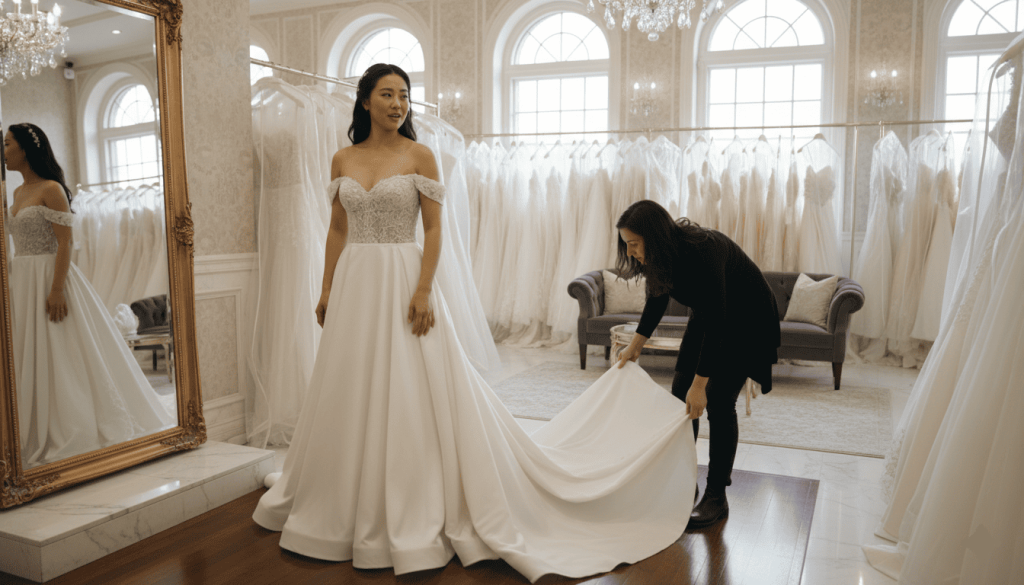
Expect two to three fittings. The first, around three months out, is where the seamstress assesses fit and marks the major adjustments: hem, bodice, straps, and the bustle. The second fine-tunes. The final fitting falls two to three weeks before the wedding, and by then everything should be perfect.
Bring your actual shoes and undergarments to every fitting, because the hem depends on them. And one practical thing brides always forget: learn your bustle, and teach it to your maid of honor too. There is nothing worse than a beautiful train nobody can hook up before the reception.
Common mistakes and how to avoid them
After enough seasons, the same handful of dress mistakes show up again and again. Here are the ones worth heading off early.
1. Shopping before the venue and date are locked
If you buy the dress before you know where and when you are marrying, you are guessing. I have watched brides fall for a beaded long-sleeve gown and then book an outdoor July wedding. Lock the details first.
2. Bringing a crowd of six to the appointment
More opinions do not equal more clarity. A big audience turns a personal decision into a committee vote, and the bride almost always loses. Keep it to a small, trusted group.
3. Treating alterations as an afterthought
The sticker price is rarely the real price. When brides forget to budget for the seamstress, the final bill stings. Ask for an alterations estimate before you order, not after the gown arrives.
4. Choosing a dress that fights the venue
A gown that wins the fitting room can lose the actual wedding. Sand, stairs, grass, and heat all punish the wrong silhouette. Picture yourself moving through your real space, not just standing on the boutique pedestal.
5. Starting too late and paying for it
Begin under eight months out and you are usually paying rush fees on top of everything else, with fewer styles available. Time is the cheapest thing you can give this process, so give it early.
Three dress regrets I see every Charleston season
These are the ones that stick with me, because they were all avoidable.
The first is the too-early buy. A bride with an 18-month engagement orders her gown in month two, then watches her taste and her vision shift over the next year. By the wedding, she has made peace with a dress she no longer loves. Over a long engagement, both your style and your body can change, so I steer my brides to start the search closer to the 9-to-12-month window.
The second is the dress that cannot dance. I have seen stunning mermaid gowns sit out half the reception because the bride physically could not move in them and nobody had practiced the bustle. The fix costs nothing: test the full range of motion in the fitting room, and rehearse the bustle before the day.
The third is the undergarment surprise. A bride shows up to the final fitting in different shapewear than she wore to alterations, the line of the dress changes, and suddenly there is a panic 12 days out. Wear the same undergarments and shoes to every single fitting. It is the smallest detail and it derails more final fittings than anything else I see.
Where to shop, by budget
You do not need a single “best” store, you need the right tier for your number. Full-service bridal salons give you the made-to-order experience, expert fittings, and the widest designer selection, and that is where most of the made-to-order timeline above applies.
If your budget is tighter or your timeline is short, look at off-the-rack retailers and sample sales, where you can often take a gown home the same day and alter it in weeks rather than months. Online bridal retailers can be a real option too, with the honest caveat that you are trading the fitting-room experience for a lower price, so build in extra time for shipping and local alterations.
If you are weighing one of the big online budget retailers, read an honest breakdown of fit and quality first. My JJ’s House review goes through sizing, fabric, and what to actually expect before you order a gown sight unseen.
Frequently asked questions
How do I choose a wedding dress for my body type?
Less by rulebook than most blogs claim. Instead of matching a “body type” to a single approved silhouette, choose by how you want to move and where you are getting married, then try at least one gown from each silhouette. A-line suits almost everyone and every venue, which makes it the easiest place to start.
When should I start shopping for my wedding dress?
Begin 9 to 12 months before the wedding and aim to order around 8 to 9 months out. Made-to-order gowns take roughly four to six months to produce, plus fittings. Starting under eight months out usually means paying rush fees and seeing fewer styles.
How much should I spend on a wedding dress?
The average US wedding dress costs about $2,100, around 6% of a typical wedding budget, according to The Knot 2026 Real Weddings Study. Brides spend anywhere from a few hundred dollars off the rack to well past $10,000 on couture. Whatever you set, budget for alterations separately.
How many dresses should I try on?
Most brides try on 5 to 10 gowns and feel confident. Past about ten, decision fatigue sets in and the dresses blur together. Stay focused on a couple of silhouettes you like, and do not book more than two or three appointments in one day.
What should I bring to a bridal appointment?
Nude seamless undergarments, shoes close to your wedding-day heel height, a few inspiration photos, and any heirloom accessories you plan to wear. Bring one to three trusted people, not a crowd. A smaller group keeps the focus on how you feel in the dress.
Can I find a wedding dress on a short timeline?
Yes. Off-the-rack gowns, sample sales, and rush orders all exist for compressed timelines, and some can be purchased and altered in four to eight weeks. Book your appointment right away and tell the consultant your date so they can steer you to in-stock options.
The one thing to remember
If you take nothing else from this, take the order of operations: settle where and when you are marrying, set a budget that includes alterations, then shop on a 9-to-12-month runway. Do that, and the silhouette question sorts itself out, because you will already know what your day actually needs.
The dress is the part of planning brides remember most vividly, so give it room to be enjoyable instead of rushed. When you are ready to slot it into the bigger picture, my full guide to planning a wedding connects the dress search to everything else on your list.
— Madison Cole, Certified Wedding Planner
Sources
- The Knot — Average Wedding Dress Cost (2026 Real Weddings Study). theknot.com
- The Knot — Wedding Gown Shopping Timeline & Checklist. theknot.com
- The Knot Worldwide — 2026 Real Weddings Study (industry overview). theknotww.com
About the author
Madison Cole is a Certified Wedding Planner and the editor of One Stop Wedding Planner. She planned more than 200 weddings out of Charleston, South Carolina, between 2015 and 2024, from intimate backyard ceremonies to historic-mansion and destination weddings, before turning to editorial work. She writes the playbook she handed her own clients for nine years: no fluff, just what works.