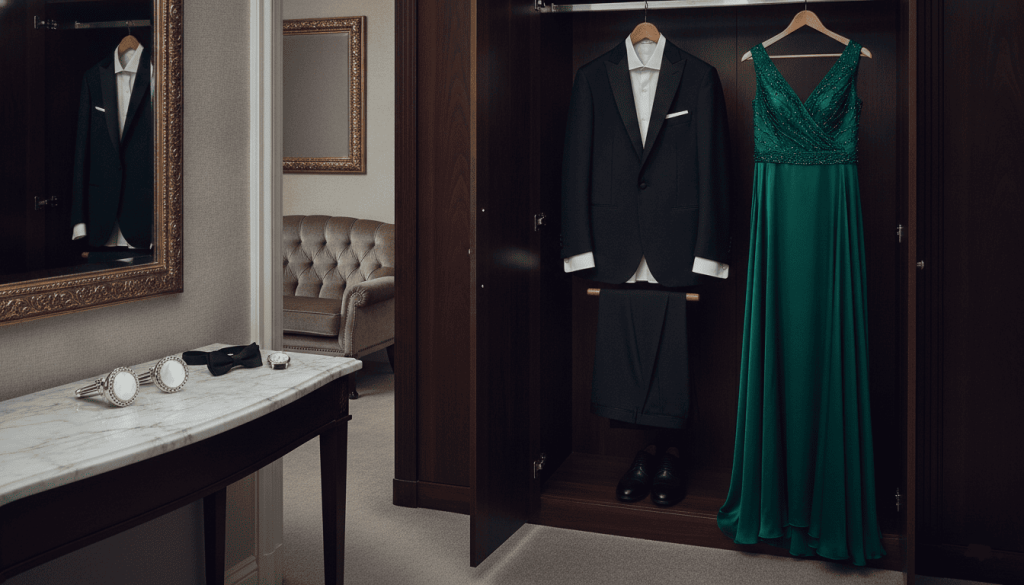
Formal attire is a wedding and event dress code that sits one notch below black tie and one notch above cocktail — it calls for a floor-length or elegant ankle-length gown for women and a dark, well-tailored suit (a tuxedo is welcome but not required) for men. From planning over 200 weddings on the East Coast, I’ve watched “formal attire” trip up more guests than almost any other line on an invitation, mostly because people read it as a polite way of saying black tie. It isn’t. Below I’ll walk you through exactly what it means, where it lands on the dress code ladder, and what to actually wear if you’re a guest.
Definition
Formal attire — a polished dress code that asks for a full-length or refined ankle-length dress for women and a dark, tailored suit or tuxedo for men, sitting just below black tie.
What formal attire actually means
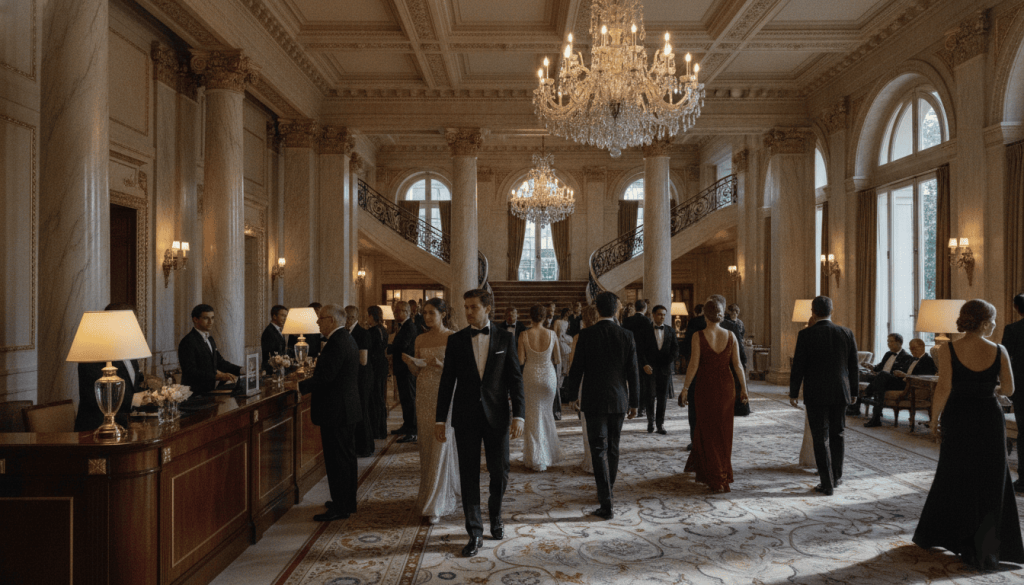
Think of dress codes as a ladder, not a vibe. Each rung tells you precisely how dressed up the couple expects you to be, and “formal” is a real, defined rung — not a catch-all for “look nice.” When an invitation says formal attire, the hosts are signaling an evening of some occasion: a hotel ballroom, a historic estate, a sit-down dinner, often with a band. They want guests to match that level of polish without the strict tuxedo-and-gown rules of true black tie.
The cleanest way I describe it to my couples and their guests: formal attire gives you black-tie elegance with a little breathing room. A woman can wear a floor-length gown, but a sophisticated ankle-length dress or a dressy column of separates works too. A man should be in a dark suit at minimum, and a tuxedo is never wrong. The fabrics lean rich — satin, crepe, fine wool — and the whole look should feel intentional rather than thrown together. Wedding editors at The Knot frame it the same way: formal attire lives between cocktail and black tie, slightly more elevated than the former and a touch more relaxed than the latter.
Where formal attire sits on the dress code spectrum
Here’s the full ladder from most to least formal, so you can see exactly where your invitation lands:
- White tie — the most formal code there is. Floor-length ball gowns, tailcoats. You’ll mostly meet this at state dinners and galas, rarely at weddings.
- Black tie — floor-length gowns for women, tuxedos for men. Strict and elegant.
- Black-tie optional — the same look as black tie, but a dark suit and a long dress are acceptable alternatives.
- Formal attire — full-length or elegant ankle-length dresses, dark suits or tuxedos. The rung this guide is about.
- Semi-formal — a midi or cocktail-length dress and a suit. Dressy, but you can skip the gown.
- Cocktail attire — knee-length dresses, jumpsuits, a sharp suit. Playful and a step down from formal.
The two rungs people confuse with formal are the ones directly around it. If your invitation says cocktail attire or semi-formal attire, you have far more freedom on length than formal allows. And if you’re still unsure whether your event leans dressier or more relaxed, my breakdown of semi-formal versus formal attire lays the two side by side.
Formal attire for women
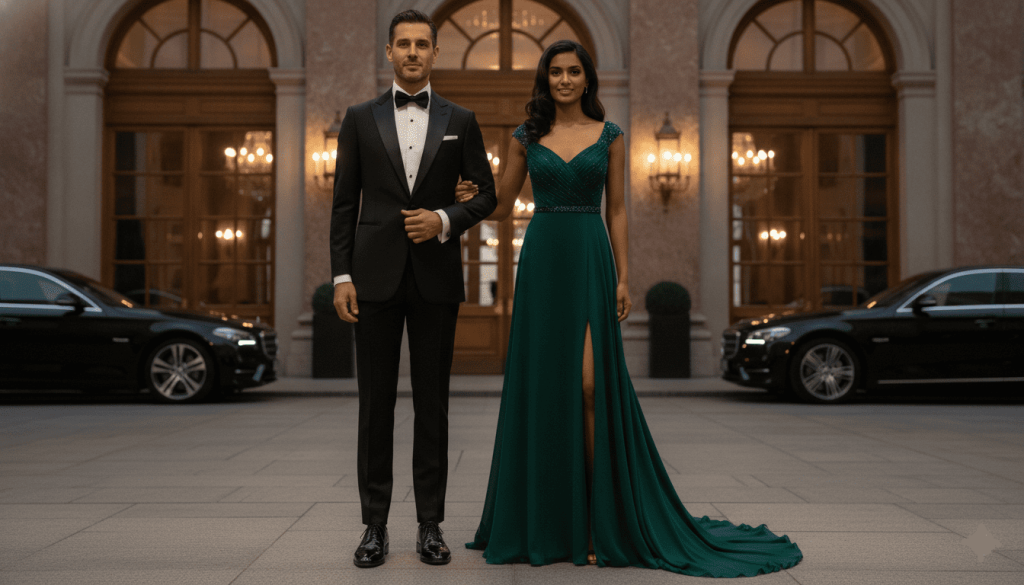
For women, formal attire is where a beautiful long dress earns its place in your closet. Here’s what I tell guests when they ask me what’s safe:
- Length first. A floor-length gown is the surest bet. An elegant ankle-length or maxi dress also reads correctly — formal gives you that flexibility, which true black tie does not.
- Fabric does the work. Satin, crepe, chiffon, velvet, and fine knits all photograph beautifully and signal “occasion.” Skip anything that reads casual, like cotton jersey or linen.
- Dressy separates count. A sleek column skirt with a refined top, or a tailored wide-leg jumpsuit, works when a gown isn’t your style.
- Keep accessories deliberate. A clutch, heeled sandals or pumps, and one or two considered pieces of jewelry. Formal rewards restraint over sparkle overload.
- Mind the color. Rich, deeper hues feel the most formal, but a bright or pastel gown is perfectly fine — just steer clear of anything bridal-adjacent.
If you want to push your look toward the dressiest end of formal without overshooting into strict black tie, my guide to black-tie attire for a woman shows you exactly where the line is.
Madison’s note
“At the formal weddings I plan, the guests who look the most put-together aren’t the ones in the flashiest dress — they’re the ones whose hemline grazes the floor and whose shoes they can actually dance in by 10 p.m. If you’re between two dresses, pick the longer one for a formal code. It almost always reads correctly.”
— Madison Cole, Certified Wedding Planner
Formal attire for men
Men have it more straightforward, and that’s good news. A dark suit clears the bar every time.
- A dark, well-tailored suit is the baseline. Navy, charcoal, or black. Fit matters more than the price tag — a $300 suit that’s tailored beats a $1,200 one that isn’t.
- A tuxedo is always welcome. If you own one or want to rent, a tux is never overdressed for a formal wedding.
- Crisp white shirt, real tie. A pressed white button-down and a silk tie pull the look together. A bow tie nudges you toward the black-tie end, which is fine here.
- Shoes and details. Polished oxfords or derbies in black or dark brown, a leather belt that matches, and minimal extras — a pocket square if you like, cufflinks if your shirt calls for them.
- Skip the casual tells. No sneakers, no open collars, no patterned shirts that read like a workday. Formal is a quiet, confident look.
What changes by season and venue
The dress code sets the floor, but the venue and season fine-tune it. A formal wedding in a January ballroom and a formal wedding at an August vineyard call for the same level of polish in different fabrics. For warm-weather and outdoor formal events, lighter fabrics and brighter colors are common and entirely appropriate; for winter and evening ballrooms, deeper hues and heavier materials feel right. Always read the venue alongside the dress code — a “formal” garden ceremony at 4 p.m. reads slightly softer than a “formal” hotel reception at 7 p.m.
Etiquette note
When in doubt, dress up rather than down. Etiquette authorities like Emily Post are consistent on this: at a formal event, being a touch overdressed reads as respect for the hosts, while being underdressed reads as the opposite. If the invitation only says “formal” with no venue clues, default to a long dress or a dark suit and you’ll never be the guest who got it wrong.
Common mistakes guests make with formal attire
After 200-plus weddings, the same misreads come up again and again. Here’s what to sidestep:
- Treating formal as full black tie. You don’t need a tuxedo or a floor-sweeping gown. A dark suit and an elegant ankle-length dress are both correct. Over-formalizing is rarely a disaster, but it’s unnecessary stress.
- Treating formal as cocktail. The opposite mistake, and the riskier one. A knee-length cocktail dress or a sport coat with no tie undershoots a formal code.
- Reaching for casual fabrics. Linen, cotton jersey, and denim of any kind read as too relaxed, no matter how nice the cut.
- Worrying too much about black. Black is widely accepted at formal weddings now — it’s elegant and easy. If you’re nervous about it, my take on whether you can wear black to a wedding walks through the rare cases where it’s worth a second thought.
- Forgetting the couple’s wishes. If the invitation adds a color request or a specific note, that always outranks the general dress code.
Frequently asked questions
Is formal attire the same as black tie?
No. Black tie requires a floor-length gown and a tuxedo, while formal attire is one step more relaxed — it allows an elegant ankle-length dress and a dark suit in place of a gown or tux. A tuxedo and a long gown still work perfectly for a formal event; they’re just not mandatory the way they are for black tie.
Can a man wear a regular suit to a formal event?
Yes, as long as it’s a dark, well-tailored suit in navy, charcoal, or black with a crisp white shirt and a tie. A tuxedo is welcome but not required for formal attire. The most important factor is fit — a sharp, tailored suit always outperforms an expensive one that doesn’t fit well.
Does formal attire require a floor-length dress?
Not strictly. A floor-length gown is the safest choice, but an elegant ankle-length or maxi dress, or dressy separates, all read correctly for a formal dress code. If you’re choosing between two dresses, the longer one is almost always the safer pick for a formal event.
What’s the difference between formal and semi-formal attire?
Formal attire is dressier: it leans toward long dresses and dark suits or tuxedos. Semi-formal gives you more room — a midi or cocktail-length dress and a suit are both fine, and a gown isn’t expected. In short, formal asks for length and polish, while semi-formal lets you stop a step earlier.
Sources
Sources
- The Knot — Formal Wedding Attire, Defined. theknot.com
- Brides — Wedding Dress Code Guide. brides.com
- Emily Post Institute — Dress Code Etiquette. emilypost.com
- Town & Country — Dress Codes Explained. townandcountrymag.com
Formal attire isn’t a riddle — it’s a clearly defined rung that asks for a long or elegant ankle-length dress, or a dark suit or tuxedo, with rich fabrics and deliberate details. Read your invitation, glance at the venue and season, and dress one notch up if you’re unsure. Get those three things right and you’ll look exactly as the couple intended.
— Madison Cole, Certified Wedding Planner