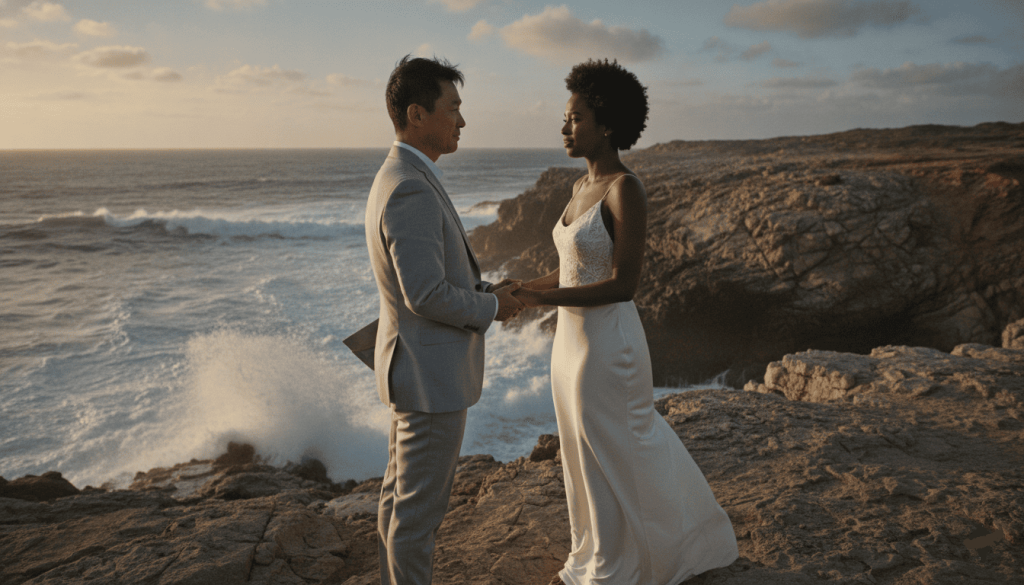
If you have been reading about how to elope, you have probably noticed one thing: almost every guide out there was written by an elopement photographer who would love to sell you a package. I plan weddings for a living, not photo sessions, so this is the version I hand my own couples when they tell me they want to skip the 150-guest production and marry on their own terms.
Across more than 200 weddings, I have coordinated everything from 300-person ballroom affairs to two people and an officiant on a quiet stretch of the Carolina coast. The small ones are not less work. They are different work. Eloping today rarely means a secret courthouse run; for most of my couples it means an intentional small wedding built around the two of them and, sometimes, a handful of people who matter most.
This guide covers how to plan an elopement from start to finish: deciding it is right for you, choosing a location, setting a budget, sorting the legal paperwork, booking the few vendors you actually need, and telling your family without starting a feud. By the end you will have a working elopement checklist and a realistic sense of what the day costs and how long it takes to put together. It works whether you are two weeks out from a courthouse appointment or a year out from a national-park ceremony. The elopement steps stay the same; only the scale changes.
How to elope, step by step
Decide eloping is right for you
Get clear on why you want to skip the big wedding and how you want the day to feel.
Choose your location, then check its rules
Pick a spot that means something, and confirm permits and group-size limits before you fall in love with it.
Set a realistic elopement budget
Decide what you are willing to spend and where you want that money to go.
Handle the marriage license
Find out the license rules in the county where you will marry, including the wait and any witness requirement.
Decide who, if anyone, comes along
Just the two of you, or a small group? This shapes your location and your logistics.
Book the few vendors you need
Usually an officiant and a photographer, sometimes a planner or coordinator for travel days.
Plan attire, vows, and the day’s details
Outfits, what you will say, rings, and any small touches like flowers or a dinner reservation.
Tell your family, then map a loose timeline
Have the conversation before the day, and sketch a simple hour-by-hour plan so nothing feels rushed.
Before you start: what eloping actually means now
The word still carries an old image: a ladder, a secret, a Vegas chapel at midnight. That version is mostly gone. The couples I work with today elope on purpose, not in a panic, and they tell the people they love about it. An elopement now sits anywhere on a spectrum from just the two of you to a micro-wedding of 15 to 20 guests.
That matters because it sets your expectations correctly. You are not throwing planning out the window. You are cutting the parts you do not want, the seating chart, the 200 invitations, the dance floor for distant cousins, and keeping the parts that mean something. Go in expecting a handful of real decisions rather than zero, and the rest of these elopement steps will feel manageable.
Step 1: Decide eloping is right for you
Before you book anything, get honest about why you want to elope. For some of my couples it is the money. For others it is the introvert math: they cannot picture themselves performing in front of 150 people. Some want an adventure, a ceremony somewhere that takes effort to reach. Your reason is the filter for every choice that follows.
Sit down together and answer two questions: how do you want the day to feel, and who do you genuinely want present? If the honest answer is “calm, private, just us,” an elopement fits beautifully. If part of you still wants your mother in the room when you say your vows, that is worth knowing now, because you can build that in without turning it back into a full wedding.
Step 2: Choose your location, then check its rules early
Location shapes everything else about an elopement: the budget, the travel, the mood of your photos, and how many people can realistically come. Start with what pulls at you. A courthouse in your hometown, a beach at sunrise, a mountain overlook, a backyard you love. Then do the unglamorous part before you commit.
Public lands are where couples get tripped up. Many national and state parks require a special-use permit for a ceremony, cap the number of people, and restrict things like chairs, arches, or amplified music. I have watched couples fall for a spot, then learn three weeks out that it needs a permit they cannot get in time. Call the park office or the venue and confirm the rules and any group-size limit first. If you want help thinking through options, my guide to finding the right wedding venue applies to small ceremonies too.
Step 3: Set a realistic elopement budget
Here is the honest range: an elopement budget can be almost nothing beyond a marriage license and a dinner reservation, or it can climb past $15,000 to $20,000 for a destination day with travel, lodging, and a photographer you flew in. Most of my couples land somewhere in the middle. The number is not the point. Where the money goes is the point.
This is the real advantage of eloping. Instead of spreading a budget thin across a reception for a crowd, you can put it toward the two or three things you actually care about: the location, the photography, the dress, the trip. Decide those priorities first, then assign dollars. For the full national picture, see how much a wedding costs, and for a method to build your own numbers, my guide to budgeting for a wedding works at any size.
Did you know
The average US wedding runs around $33,000, while an elopement can start at little more than the price of a marriage license and a nice dinner. The gap is almost entirely the reception: feeding and seating 100-plus guests. Source: The Knot Real Weddings Study.
Step 4: Handle the marriage license
This is the step couples treat as an afterthought, and it is the one that can actually derail the day. How to elope legally comes down to the paperwork: you need a valid marriage license from the place where you are marrying, a legally recognized officiant, and, in many states, one or two witnesses to sign.
The rules genuinely vary by state and county. Some have a waiting period between getting the license and using it. Some require the ceremony to happen within a set window. Fees commonly run from about $10 to over $100. I do not give legal advice, so do this one thing: contact the county clerk’s office where you will marry and ask them directly about the license, the wait, and witnesses. If the difference between the license and the certificate is fuzzy, my explainer on the marriage license vs. the marriage certificate clears it up.
One practical note: if you are not hiring a professional officiant, a friend or family member can often get ordained online for free and legally sign your license, which The Knot confirms is a common route for elopements. Just make sure your state recognizes online ordination before you count on it.
Step 5: Decide who, if anyone, comes along
This deceptively small decision drives your logistics. A ceremony with just the two of you opens up nearly any location. Add a few people and your options narrow, because remote spots and small permits cannot absorb a crowd. As a working rule, once you pass roughly 15 to 20 people, you are no longer eloping. You are planning a micro-wedding, which is a wonderful thing, but a different one with a venue and a head count.
If you do want a few guests, choose them by one test: would the day feel incomplete without this person there? That keeps the list from quietly growing into the wedding you were trying to avoid. And remember, anyone you leave out of the ceremony can still be part of a celebration afterward.
Step 6: Book the few vendors you need
Most elopements need a short list: an officiant and a photographer, occasionally a planner or local coordinator if travel is involved. That is usually it. According to The Knot, an officiant in the US typically costs $200 to $1,200, more if they build a custom ceremony or offer premarital counseling.
A good photographer is the line item I tell couples not to cut, because the photos are what you keep. For destination or public-land elopements, hire a local photographer who already knows the area and the permit office, not just someone whose feed looks pretty. The right local pro will save you from logistical surprises you did not know to ask about.
Step 7: Plan attire, vows, and the day’s details
With the big pieces in place, the details are the fun part. What you wear can be exactly what you want, since there is no wedding-party color scheme to coordinate. Some of my couples go full gown and suit; others choose something they can hike or travel in. If you want help narrowing it down, my guide to choosing a wedding dress works just as well for an elopement.
Then there are the vows. With no audience to perform for, eloping couples tend to write the most personal vows I see, because it is genuinely just the two of you. Give yourselves a week or two to draft them rather than scrambling the night before. My walkthrough on writing wedding vows that sound like you has a simple structure to start from. Round it out with the small touches that matter to you: rings, a bouquet, a dinner reservation, a bottle you have been saving.
Step 8: Tell your family, then map a loose timeline
The hardest part of eloping is rarely the logistics. It is the conversation with family. My strongest advice: tell them before the day, in person where you can, and frame it as a decision you are sharing, not permission you are asking for. Something as simple as “we have decided to marry, just the two of us, and we would love your blessing” does most of the work.
Madison’s note
“The couples who tell their parents early, in person, almost always end up with a parent or two at the ceremony. The ones who announce it after the fact are the ones still smoothing things over a year later. The conversation feels harder than it is.”
— Madison Cole, Certified Wedding Planner
Lead with your why. People soften when they understand the reason behind the choice, and you can offer ways to include them without changing the plan: a phone call right after, a dinner the following week, photos you share first. For the etiquette of these conversations, the Emily Post Institute is a level-headed reference.
Once that is handled, sketch a loose day-of timeline. You do not need a minute-by-minute schedule, but a simple order of events keeps the day from feeling rushed or, oddly, too empty. A short, intentional ceremony is part of that; if you are wondering how to pace it, here is roughly how long a wedding ceremony usually runs so you can plan the rest of the day around it.
Common mistakes I see couples make when they elope
1. Treating the marriage license as an afterthought
Couples plan the outfits and the photos, then realize a waiting period or an out-of-county license rule does not fit their date. Sort the license the same week you set the date, not the week before the ceremony.
2. Falling for a location before checking the permit rules
That dream overlook may require a permit you cannot get in time, or cap your group below the number you invited. Confirm the rules before you emotionally commit to a spot.
3. Letting “just a few people” quietly become a wedding
The guest list creeps from two, to six, to twenty, and suddenly you need a venue, a head count, and catering. If you want more than a handful of people, plan a micro-wedding on purpose rather than an elopement that outgrew itself.
4. Telling family only after the photos are posted
This is the one that causes lasting hurt. A surprise announcement on social media lands very differently than a private conversation beforehand. The couples who talk to their families first almost always come out the other side with the relationship intact.

A few planner tips I give my own couples
- Build the day around the one or two hours that matter, the ceremony and maybe a sunset, rather than overstuffing the schedule. Space is the luxury here.
- Put your license pickup on the calendar the week you choose the date, so the paperwork is never the thing standing between you and the ceremony.
- If you want family included without the pressure, host a casual dinner afterward, not a second full wedding. It gives everyone the celebration without recreating what you skipped.
- Pack a small marry-me kit: the license, the rings, printed vows, a copy of any permit, and tissues. On a remote elopement there is no assistant to hand you the thing you forgot.
- Build in a weather backup for any outdoor plan. The couples who pre-decide their rain option are the calm ones when the forecast turns.
Frequently asked questions about eloping
A few of the questions my couples ask most when they start planning an elopement.
How do you elope legally?
You marry legally the same way any couple does: you get a marriage license from the county where you will wed, have a legally recognized officiant perform the ceremony, sign the license with any required witnesses, and have the officiant return it to the county. Rules vary by state and county, including waiting periods and how many witnesses you need, so confirm the details with the local clerk’s office before you set the date.
How much does it cost to elope?
It varies widely. A courthouse ceremony, a couple of nice outfits, and dinner can come in under $1,000, while a destination elopement with travel, a photographer, and lodging can reach $15,000 to $20,000 or more. The marriage license itself usually runs from roughly $10 to over $100 depending on where you marry.
Do you need witnesses to elope?
Sometimes. Many states require one or two witnesses to sign the marriage license, and some require none. If it is just the two of you in a remote spot, ask your officiant or photographer to sign, or check whether your county allows a witness-free ceremony before you go.
Can you elope and still have a party later?
Absolutely, and it is one of my favorite ways to do this. Plenty of my couples marry privately, then host a relaxed dinner or a casual reception weeks or months later. You get the intimate ceremony and the celebration with family, without the pressure of doing both on the same day.
Is eloping actually cheaper than a wedding?
Usually, yes. With the average wedding around $33,000, most elopements cost a fraction of that because you are not paying to feed and seat a large guest list. That said, a luxury destination elopement can cost as much as a mid-size wedding, so the savings depend on the choices you make.
How long does it take to plan an elopement?
Less time than a full wedding, but more than people expect. Allow a few weeks for a simple courthouse ceremony, and three to six months if you want a specific location, a photographer whose work you love, or travel involved. The marriage license rules in your county set the real floor on your timeline.
The sources behind the figures and etiquette guidance in this guide:
Sources
- The Knot, “How Much Does it Cost to Elope?” theknot.com
- The Knot Real Weddings Study. theknot.com
- Emily Post Institute, Wedding Etiquette. emilypost.com
The short version
Eloping is not the absence of planning. It is planning only the parts you actually want: the location, the paperwork, the few people, the vows. Get the marriage license sorted early, choose a spot whose rules you have checked, decide who is there, and tell your family with warmth and confidence. Do those things and the day takes care of itself. If you are still weighing an elopement against a small traditional celebration, my full guide to planning a wedding will help you compare the two before you commit.
Written by Madison Cole, Certified Wedding Planner. Madison has planned more than 200 weddings across the East Coast, from full ballroom celebrations to two-person ceremonies on the Carolina coast, and writes the planning playbook she used to hand her own couples.