Affiliate disclosure : This post may contain affiliate links. As a wedding pro, I only recommend pieces I’d put on a real bride or guest, and we may earn a small commission if you shop through them, at no extra cost to you.
You sent the RSVP weeks ago, and now the only thing left to settle is what to wear to a wedding you’re actually looking forward to. I’ve planned more than 200 weddings across the Lowcountry and up the East Coast, and from the planner’s side of the room I can tell you that guest outfits split into two camps: the people who read the invitation, and the people who guessed. This guide is for the first camp.
Wedding guest attire comes down to a short list of decisions, and most of them are made for you before you ever open your closet. The dress code sets the formality. The season, venue, and time of day narrow your fabric and color. A couple of etiquette lines (the ones about white and the wedding party’s colors) tell you what to leave on the hanger. Once you have those four inputs locked in, picking an outfit gets a lot less stressful.
Below I walk through every common wedding dress code and what it means for women and men, how to dress for the season and the setting, the colors that quietly cause problems, and the mistakes I watch guests make season after season. The etiquette points come from the Emily Post Institute and The Knot; the rest comes from nine years of standing at the back of ceremonies watching what works and what falls apart by the reception.
A January black-tie ballroom and a barefoot beach ceremony in July call for completely different outfits, but the goal behind both is identical: look pulled together, stay comfortable through a long day, and let the couple be the ones everyone is watching. Here’s how to get there.
In this guide
The quick version
- ✓ Read the invitation first. The dress code (or its absence) is the single most important input.
- ✓ Cocktail is not the same as semi-formal, and formal is not the same as black tie. The differences are small but real.
- ✓ Match the fabric and color to the season and the venue, not just to the photos you’ve saved.
- ✓ Skip white, ivory, cream, and champagne, plus the wedding party’s stated colors.
- ✓ When unsure, dress up one notch, not three. Overdressing helps; costume-level formality at a backyard wedding does not.
Start with the invitation, not the closet
Before you scroll a single shopping page, find the dress code. It’s usually printed on the lower corner of the invitation or listed on the couple’s wedding website. According to the Emily Post Institute, the invitation and the time of the wedding are your best guide to its formality, so those two details do most of the heavy lifting.
If there’s no dress code anywhere, don’t guess in a vacuum. I tell guests to read the three clues the couple already gave you: the venue (a country club reads more formal than a brewery), the time (evening is dressier than a noon ceremony), and the season. A 6 p.m. ceremony at a historic mansion in October is almost certainly cocktail or formal, even if no one wrote it down.
When the clues genuinely conflict, ask. A short text to the couple or to whoever invited you (“so excited for the day, what are folks wearing?”) is completely normal and far better than showing up wrong. For a full breakdown of every code in one place, my wedding guest attire cheat sheet lays them out side by side.
Wedding dress codes, decoded
Here are the eight dress codes you’ll actually see on US invitations, from the most formal to the most relaxed. The cheat sheet below is the fast reference; the notes underneath are where the real decisions get made.
The wedding guest dress code cheat sheet
| Dress code | For women | For men |
|---|---|---|
| White tie | Floor-length ball gown, fine fabric | Black tailcoat, white bow tie, vest |
| Black tie | Floor-length gown or elegant dressy midi | Black tuxedo, black bow tie |
| Black-tie optional | Long gown or a polished midi/cocktail dress | Tuxedo or a dark, well-cut suit and tie |
| Formal | Long or sophisticated midi dress, dressy fabrics | Dark suit and tie; tux optional in the evening |
| Cocktail | Knee- to midi-length dress or dressy jumpsuit | Suit and tie, any refined color |
| Semi-formal | Midi dress, dressy separates, lower heel | Suit; tie encouraged, color flexible |
| Dressy casual | Sundress, midi, or skirt and blouse | Slacks and a button-down or knit polo, blazer optional |
| Casual / beach | Flowy floral, maxi, or breathable midi; wedges | Linen pants, dress shirt; often no tie or jacket |
White tie
The most formal code you’ll ever get, and the rarest. For women that means a floor-length ball gown in a fine fabric, with gloves and statement jewelry if you have them. For men there’s exactly one right answer: a black tailcoat, white piqué bow tie, and white vest. If you see white tie, the couple means it, so don’t improvise a regular tux.
Black tie
Black tie is the formal evening standard. Women wear a floor-length gown or, increasingly, an elegant dressy midi in a luxe fabric. Men wear a black tuxedo with a black bow tie. The clearest field rule I give: black tie almost always means an evening wedding, so lean into rich fabrics and darker, jewel, or deep neutral tones.
Black-tie optional
This code gives you a choice, and both answers are correct. You can go full black tie, or you can step down to a long gown, a refined cocktail dress, or, for men, a dark, sharply tailored suit with a tie. The mistake here is under-reading the “optional” and arriving in semi-formal. Stay at the dressier end and you’ll never look out of place.
Formal
Formal (sometimes written as “black-tie creative” or “elegant”) sits just below black tie. Women have room for a long dress or a sophisticated midi in dressy fabrics like crepe, satin, or lace. Men wear a dark suit and tie, with a tuxedo welcome at an evening event. If you want the longer read on where formal lands, my guide to semi-formal and formal attire walks the line between them.
Cocktail
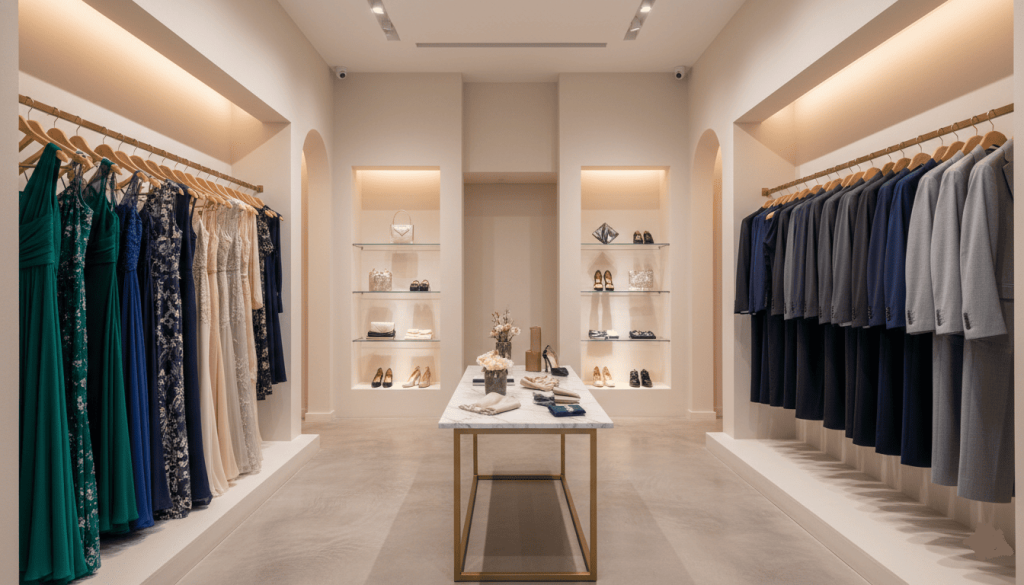
Cocktail is the most common wedding code in the US right now, and the one guests most often get wrong. Women wear a knee- to midi-length dress or a dressy jumpsuit. Men wear a suit and tie in any refined color, no tux required. It reads a touch dressier than semi-formal and usually signals a later-afternoon or evening start. If the word trips you up, start with what cocktail attire actually means, then see the full cocktail attire dress code guide.
Semi-formal
Semi-formal is one notch down from cocktail and a notch up from everyday nice. Women wear a midi dress or dressy separates with a lower heel. Men wear a suit, with a tie encouraged but color flexible. The single most useful thing I can tell you is that cocktail and semi-formal are not interchangeable, and the gap shows in your shoes and fabric. If you want them side by side, here’s semi-formal versus cocktail.
Dressy casual
Dressy casual means polished but relaxed. Think a sundress, midi, or a skirt and blouse for women, and slacks with a button-down or a knit polo for men, blazer optional. This code shows up most at daytime, garden, and brewery weddings. The trap is reading “casual” too literally: no jeans, no shorts, no sneakers, even when the venue feels laid-back.
Casual and beach
Casual and beach weddings reward smart fabric choices over formality. Women do well in a flowy floral, a maxi, or a breathable midi, with wedges or block heels that survive grass and sand. Men can wear linen pants and a dress shirt, often with no tie or jacket. “Casual” still means dressed for a celebration, not a cookout, so keep it neat even when it’s barefoot-on-the-sand relaxed.
Dressing for the season and the setting
The dress code tells you how formal to be. The season and the setting tell you what fabric and color will actually hold up for the day. This is the half of the equation that retailer guides skip and that I watch guests get burned on every summer.
By season
Match your fabric to the weather, not just the calendar photo. Spring and summer call for lighter materials like silk, chiffon, cotton, and lace in brighter or pastel tones. Fall and winter are the time for velvet, brocade, suiting wool, and faux fur in deeper, richer colors. A heavy satin gown in a July garden is miserable by the cocktail hour, and a thin chiffon slip in a December ballroom leaves you cold through the toasts.
By venue and time of day
Evening weddings run dressier than daytime ones, and the venue sets the ceiling. A ballroom or historic mansion pushes you formal; a farm, backyard, or brewery pulls you toward dressy casual. For religious ceremonies, check whether the space calls for covered shoulders or knees, which the Emily Post Institute flags as a real consideration in houses of worship. When in doubt, the time on the invitation is your tiebreaker.
The comfort details guests forget
Here’s what nine years of standing at the back of ceremonies taught me. Stilettos and grass do not mix, so for any outdoor or garden wedding, bring a block heel or wedge or plan to sink. Most ballrooms run their air conditioning cold by 9 p.m., so a wrap earns its place in the photos and saves the night. And whatever you pick, do the sit-and-walk test at home: if you can’t sit through a 45-minute ceremony and cross a parking lot in it, it’s the wrong outfit.
Colors to skip (and the ones that cause real problems)
The loudest rule is the simplest: don’t wear white, and unless the couple specifically asks for it, that’s non-negotiable. The Emily Post Institute notes white can technically work only when it doesn’t distract from the bride or the wedding party, which in practice is almost never worth the risk.
But white isn’t the color that actually starts arguments. The trouble comes from the white-adjacent shades: ivory, cream, champagne, ecru, and pale blush. In person they read as their own color; in the flash photography of a reception, they wash out and read white. That’s the photo the couple’s mother circles three weeks later.
Madison’s note
“The ‘no white’ rule almost never gets broken on purpose. What I see instead is a guest in a champagne or pale blush dress who genuinely thought it was safe. If a shade could be described as ‘almost white’ in daylight, assume it photographs white under a flash and pick something else.”
Madison Cole, Certified Wedding Planner
Two more colors to think about. Skip the wedding party’s stated colors if the couple shared them, so you don’t accidentally blend into the bridesmaids in photos. And then there’s black, which used to be off-limits and now is widely considered both acceptable and chic for most evening and formal weddings. The full answer has a few real exceptions, so I broke it down in can you wear black to a wedding.
Etiquette note
When the couple requests a specific color palette or a themed dress (an all-white party, a “wear color” request, a cultural dress code), the invitation overrides every general rule on this page. Their stated wish always wins. If a request is unclear, ask the host rather than assume, since guessing wrong on a themed wedding is far more awkward than a quick question.
Common mistakes guests make
After enough seasons, the same handful of misses show up at almost every wedding. None of them are about taste. They’re about misreading the inputs, and all five are easy to avoid once you know to look.
1. Treating cocktail and semi-formal as the same code
These two get swapped constantly, and the result is a guest who’s slightly underdressed all night. Cocktail is dressier, usually evening, and asks for a more polished shoe and fabric. When an invitation says cocktail, take it up a notch from your semi-formal default.
2. Dressing for the photos instead of the venue
A dress that looks incredible on a hanger can be the wrong call for the actual space. Outdoor grass, sand, gravel, and stairs all change what footwear works, and a strapless silk in a windy beach ceremony becomes a full-time job. Dress for where you’ll be standing, not for the saved screenshot.
3. Wearing a white-adjacent color that reads white on camera
I covered the danger zone above, but it earns a spot here because it’s the mistake guests most regret. Champagne, ivory, and pale blush are the repeat offenders. If you love the silhouette, look for it in a clearly different shade.
4. Ignoring a stated dress code because “no one will notice”
People notice. A black-tie invitation that gets answered with a daytime sundress stands out in every group photo. The couple chose that code on purpose, so honor the code that’s written, even if it’s dressier than you’d pick for yourself.
5. Over-correcting into costume-level formality
“Overdressed beats underdressed” is good advice with one failure mode. Showing up in a floor-length gown or a full tux at a stated casual or backyard wedding reads as not having read the invitation, the same as underdressing does. The fix is simple: when you’re unsure, go up one notch, not three.
What I tell guests before they shop
These are the lines I actually repeat to friends and clients’ guests before a wedding. None of them are about spending more. They’re about showing up right and staying comfortable for a long day.
- Confirm the dress code in writing before you buy anything. A two-line text saves a return and a guess.
- When the code is ambiguous, dress one level up, never down. A polished guest is never the problem in the room.
- Do the sit, stand, and walk test at home. If it pinches or rides up across a 45-minute ceremony, it’s the wrong piece.
- Plan for a temperature swing. Outdoor afternoons get hot; air-conditioned receptions get cold by the toasts. A wrap or jacket covers both.
- For a multi-event weekend (welcome party, ceremony, brunch), pack one outfit per event and check each against its own dress code. They’re rarely all the same.
- Choose shoes you can dance in, or bring foldable flats. Nobody remembers the heels; everyone remembers the guest who sat out the dancing because her feet gave out.
If you’re a mother of the bride or groom, the calculus shifts a little toward coordinating with the other family and the palette, which I cover in the mother of the bride guide.
Where to find your wedding guest outfit
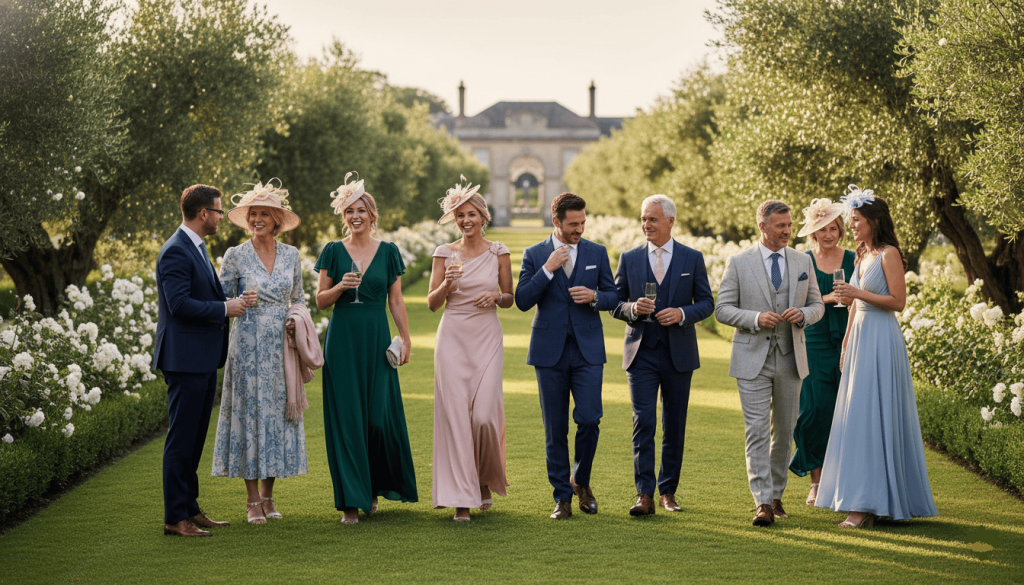
Once you know your dress code, season, and color lane, shopping gets fast. For women, department stores and dress-focused retailers carry the widest range of cocktail and semi-formal options across sizes and budgets. For a curated set of guest looks I’d actually put on someone, start with my roundup of dressy pant suits for wedding guests, which works for guests who’d rather skip a dress entirely.
Budget-friendly bridal and guest retailers can be a great value, though sizing and fabric vary, so order early enough to exchange. I walk through one of the most-asked-about options in my JJ’s House review. For men deciding between renting and buying, the tuxedo versus suit breakdown covers which makes sense for which code.
Browse current wedding guest styles by dress code and size:
Shop guest dresses View suits and tuxedosWedding guest attire FAQ
What should I wear if there’s no dress code listed?
Read the three clues the couple already gave you: the venue, the time of day, and the season. An evening wedding at a formal venue is almost always cocktail or formal, while a noon backyard ceremony leans dressy casual. If those signals conflict, a quick text to the couple settles it.
Can I wear black to a wedding?
In most cases, yes. Black is now widely considered both acceptable and chic for evening and formal weddings. The exceptions are daytime, beach, and some cultural ceremonies where black can read somber, so match the formality and setting before you default to it.
Is a jumpsuit or pantsuit okay for a wedding?
Absolutely. A dressy jumpsuit works for cocktail and semi-formal weddings, and a well-tailored pantsuit reads polished for almost any code below black tie. Match the fabric and formality to the dress code the same way you would with a dress.
What colors should a wedding guest avoid?
Skip white and anything that reads white on camera: ivory, cream, champagne, and pale blush. Also avoid the wedding party’s stated colors if the couple shared them, so you don’t blend into the bridesmaids in group photos. Every other color is fair game.
What should a man wear to a wedding with no dress code?
Default to a well-fitted suit and tie in a season-appropriate color. That single combination covers semi-formal through formal, and you can remove the tie at a relaxed daytime venue. When the venue or time clearly signals black tie, rent or buy a tuxedo instead.
Are open-toe shoes okay for a wedding guest?
Yes for most weddings, especially spring and summer. The exceptions are very formal evening events, where a closed or strappy heel looks more finished, and houses of worship that ask guests to keep feet covered. For outdoor venues, choose a block heel or wedge that handles grass and gravel.
Related reads
- The full wedding guest attire cheat sheet
- Cocktail attire: a complete dress code guide
- Semi-formal attire, explained
- Semi-formal vs cocktail: what’s the difference
- What is cocktail attire?
- Can you wear black to a wedding?
- Best dressy pant suits for wedding guests
- Tuxedo vs suit: which one for which wedding
- The mother of the bride guide (dress and role)
One last thing I tell every guest: the outfit is the easy part once the four inputs are settled. Lock the dress code, season, venue, and color lane, and the shopping takes an afternoon instead of a week. If you'd rather skip the search entirely, you can browse current wedding guest styles by code and size here and filter straight to your lane.
Sources
- Emily Post Institute, Wedding Guest Attire. emilypost.com
- The Knot, What to Wear to a Wedding. theknot.com
- Bella Bridesmaids, Wedding Guest Dos and Don’ts. bellabridesmaids.com
- Bloomingdale’s, Wedding Guest Guide. bloomingdales.com
- Oliver Wicks, What a Man Should Wear to a Wedding. oliverwicks.com
- Proper Cloth, Guide to Wedding Guest Dress Codes for Men. propercloth.com
Some links in this guide are affiliate links. If you book or buy through them, we may earn a small commission at no extra cost to you. I only recommend pieces I’d put on my own clients and their guests. For more, see our full affiliate disclosure and editorial policy. By Madison.
Written by Madison Cole, Certified Wedding Planner
Madison has planned more than 200 weddings across the Lowcountry and the East Coast, from backyard ceremonies to historic-mansion black-tie receptions. She started One Stop Wedding Planner to hand brides, guests, and grooms the same playbook she gave her clients for nine years: no fluff, just what actually works on the day.