Updated June 2026
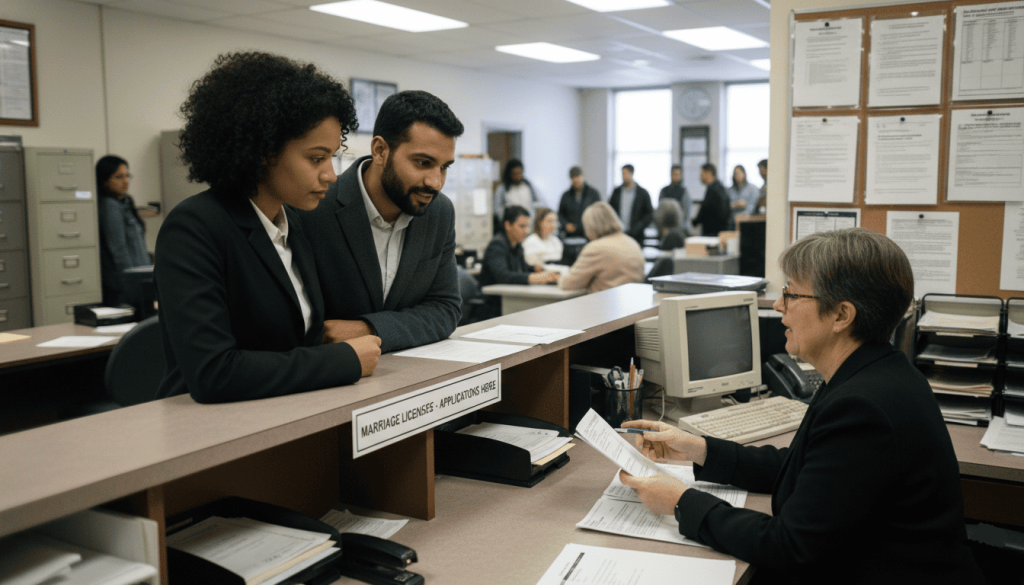
In the US, you get your marriage license from a local government office, almost always the one serving the county or town where your ceremony will take place. After walking couples through this step at more than 200 weddings, I can tell you the paperwork is rarely the problem. The confusion is figuring out which office to walk into, because that office has a different name in nearly every state.
Quick answer
You get a marriage license from your local marriage license office, usually the county clerk in the county where your wedding will take place. In some states that same office is called the Register of Deeds, the County Auditor, the Clerk and Recorder, or the town or city clerk instead. A growing number of counties let you start or finish the application online, but most still ask both people to appear in person or by video before the license is issued.
The office that issues your marriage license
In most of the country, marriage licenses come from the county clerk’s office. But “county clerk” is shorthand, and taking it literally is how couples end up at the wrong counter. In North Carolina you apply at the Register of Deeds. It’s the County Auditor in Washington. In Colorado it’s the Clerk and Recorder, and across much of New England you go to the town or city clerk rather than a county office at all.
What stays constant is the level: this is local government, not a state agency and not a federal one. Your state sets the rules for who can marry and what you need to bring, while the local office actually issues the license and, after the wedding, records it. If you remember one thing, make it this: you are looking for the marriage license desk at your local courthouse, clerk’s office, or city hall.
Most quick guides online stop at “go to the county clerk.” In the states where I’ve planned the most weddings, that label is wrong often enough to send people on a wasted trip. Always confirm the exact office name for your location before you go, and treat that office, not a blog, as the final word on what you’ll need.
How to find the right marriage license office near you
Here’s the order I give my couples so they only have to make one trip.
How to find your marriage license office, step by step
Pin down where the ceremony will be
The license has to come from the state, and usually the county, where you’ll actually say your vows. Start from the wedding location, not your home address.
Search for the local office by name
Look up the county or city name plus “marriage license.” The result you want is a .gov page for the clerk, recorder, or auditor that serves that area.
Confirm whether it’s a county or town office
In most states it’s a county office; in much of New England it’s the town or city clerk. The right page will say which office issues licenses for your jurisdiction.
Check how they take applications
Note whether the office requires an appointment, accepts walk-ins, or offers an online or video option, along with the documents and fee, before you make the trip.
That fourth step matters more than people expect. Some offices issue your license the same day you walk in; others run on appointments only during busy stretches, and a handful now offer a virtual application by video. Two minutes on the office’s own page saves you a second trip across town. As you settle this, it’s worth slotting the license into your broader wedding planning timeline so it lands in the right month.
Does it matter which county or city you apply in?
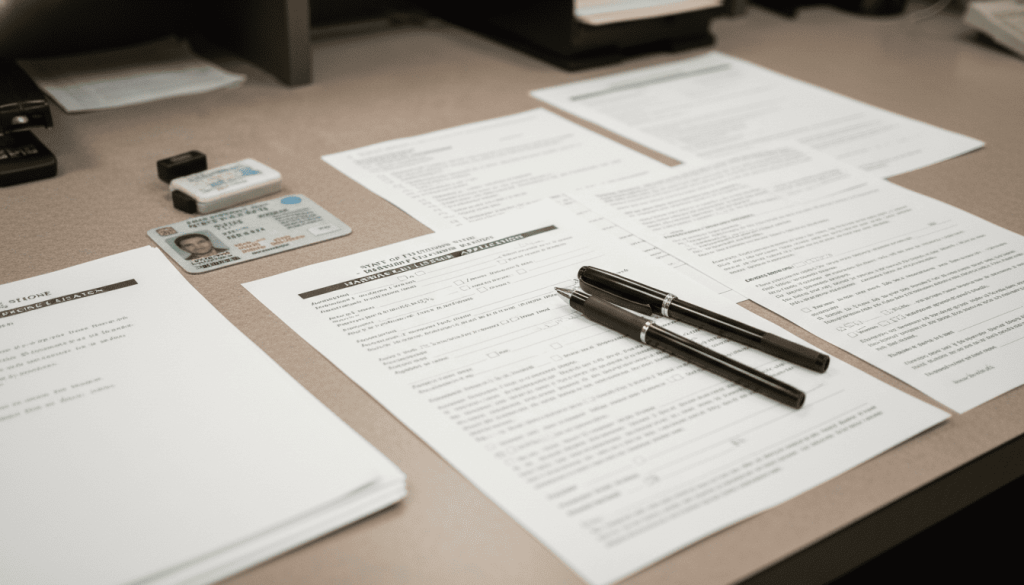
Yes, and this is the rule that surprises people. In the US, your license has to be issued in the place where the wedding will happen, not where you live. The license you pick up in your home state is only good for a ceremony in that state, so a couple marrying out of state applies at the destination, not back home.
Within a state, the reach varies. In Pennsylvania, a license from any county is valid anywhere in Pennsylvania, though not in another state. Colorado works the same way statewide. A few states, like Georgia for non-residents, want you to apply specifically in the county where you’ll marry. Most states do not require you to be a resident at all, which is exactly what makes an in-country destination wedding workable.
One more distinction worth keeping straight: the license is what lets you marry, while the document that proves you married is the marriage certificate you request after the signed license is recorded. If that split is fuzzy, I walk through the difference between a marriage license and a marriage certificate in its own guide.
When to get your marriage license before the wedding
Timing is where I see the real near-misses. A marriage license is not something you grab a year out and tuck away in a drawer. Most have an expiration window that runs anywhere from about 30 days to one year depending on the state, and some states add a waiting period between the day you apply and the first day you’re allowed to marry.
Texas builds in a 72-hour wait. Pennsylvania uses a three-day wait and a 60-day expiration, which gives the license a fairly tight usable window. Arizona issues same-day with no wait, and the license stays valid for a full year. Because the math is different everywhere, I tell couples to confirm both numbers the moment they lock their date.
Timing note
Confirm two numbers as soon as your date is set: the waiting period (the gap between applying and when you can legally marry, from none up to several days) and the expiration window (how long the license stays valid, often 30 to 90 days, and up to a year in some states). Apply inside that valid window so the license is current on your wedding day, leaving a few days of buffer for any waiting period.
The cost of getting this wrong is real, not theoretical.
Madison’s note
“One of my Charleston couples picked up their license almost six weeks ahead for an out-of-state ceremony, not realizing that state required it to be used within 30 days. We caught it at the final walkthrough and they reapplied with two days to spare. Now I check the expiration date on every license the moment a couple tells me they have it in hand.”
— Madison Cole, Certified Wedding Planner
I fold the license into the same stretch of the calendar as the other time-sensitive tasks, right around when you finalize your officiant. That sits well after you’ve sorted when to send your save-the-dates, and near the point where you handle when to mail your wedding invitations. Slotting it there means the license is fresh on the day, with none of the panic I just described.

Frequently asked questions
Can I get a marriage license in a different county than where I live?
In most states, yes. You generally apply in the county where the wedding will take place rather than where you live, and most states don’t require you to be a resident at all. A few states do set residency or specific-county rules, so confirm with the office that serves your venue before you go.
Can I get a marriage license online?
Sometimes. Many county clerk sites let you complete the application online before you arrive, a handful of counties offer a full video appointment, and a few states let you download the license. Even so, most jurisdictions still require at least one in-person or video step, so check what your specific office allows.
Do both people have to be there to get a marriage license?
Usually both applicants appear together, in person or by video, with valid photo ID. When one person genuinely can’t attend, some offices accept an absentee or affidavit application that stands in for the missing party. The exact process is set locally, so ask the issuing office how they handle it.
How long is a marriage license good for?
It depends on the state, ranging from roughly 30 days to one year. Pennsylvania licenses last about 60 days, while Arizona licenses stay valid for a full year. If yours expires or is lost before the wedding, you simply apply for a new one.
Wherever you marry, the move is the same: find the local office that serves your ceremony location, confirm its exact name and how it takes applications, and apply inside the valid window with room for any waiting period. Treat that office as your single source of truth, and the license stops being the stressful part of planning.