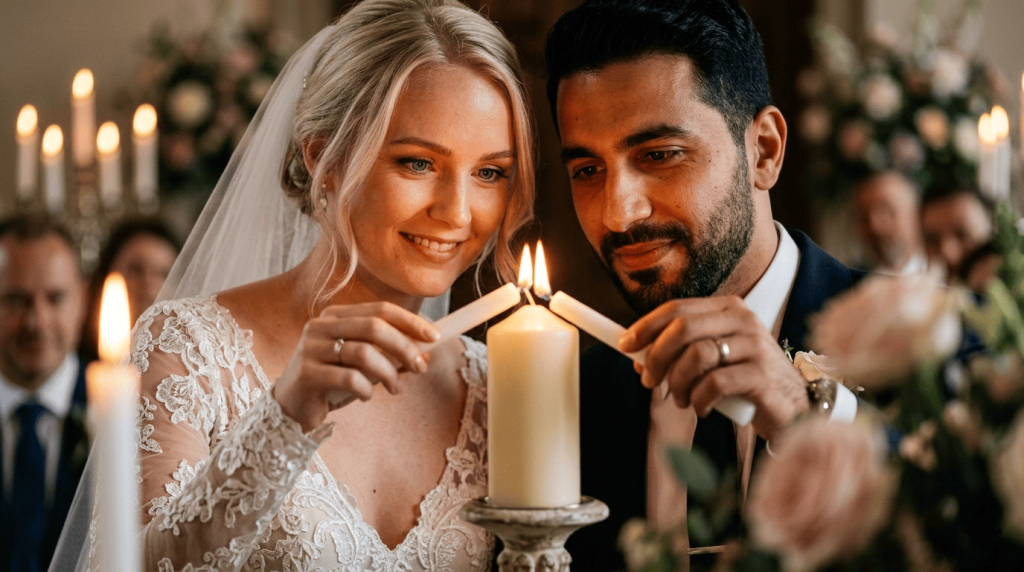
A unity candle is a center pillar candle that a couple lights together during their wedding ceremony, using two smaller taper candles, to symbolize two people and two families merging into one. In more than 200 weddings I’ve planned on the East Coast, it’s one of the most requested ceremony rituals couples ask me to explain, usually right after they’ve seen one at a friend’s wedding. The setup is simple and the symbolism is lovely, but the logistics trip people up more than they expect. Here’s exactly how a unity candle works, who lights it, when, what the officiant says, and how to keep yours from blowing out.
Definition
Unity candle — a center pillar candle a couple lights together during the wedding ceremony, using two smaller taper candles, to symbolize two people and two families becoming one. Most often lit just after the vows.
What a unity candle symbolizes
The classic setup is three candles. Two taper candles stand on either side, one for each partner and the family they come from. The taller candle in the middle is the unity candle. When the couple lifts the two lit tapers and touches them to the center wick at the same time, that single new flame stands for their joined life.
Couples read the symbolism two ways, and both are right. Some blow out the side tapers after lighting the center candle, a way of saying two lives are now permanently one. Others leave the tapers burning beside the center flame, meaning you’re united but you each keep your own identity. There’s no wrong version, so I simply ask couples which message feels truer to them.
Where the unity candle tradition comes from
For something that feels timeless, the unity candle is a fairly recent ritual. It grew popular in American Protestant weddings in the second half of the 20th century, and its exact origins are murky. The Knot notes there are no firm records of where it began, and one often-repeated story credits a 1981 episode of the soap opera General Hospital, the Luke and Laura wedding, with putting it in front of a massive audience.
Its roots are Christian, tied to the idea of two becoming “one flesh,” and you’ll still see it framed that way in many church ceremonies. Over the past few decades, though, it has drifted well beyond any single faith. Today I plan unity candles for Catholic, interfaith, and fully secular couples alike, because the picture of two flames making one needs no translation. The one caveat: a handful of churches don’t include it in their order of service, so it’s worth asking early.
Who lights the unity candle, and when
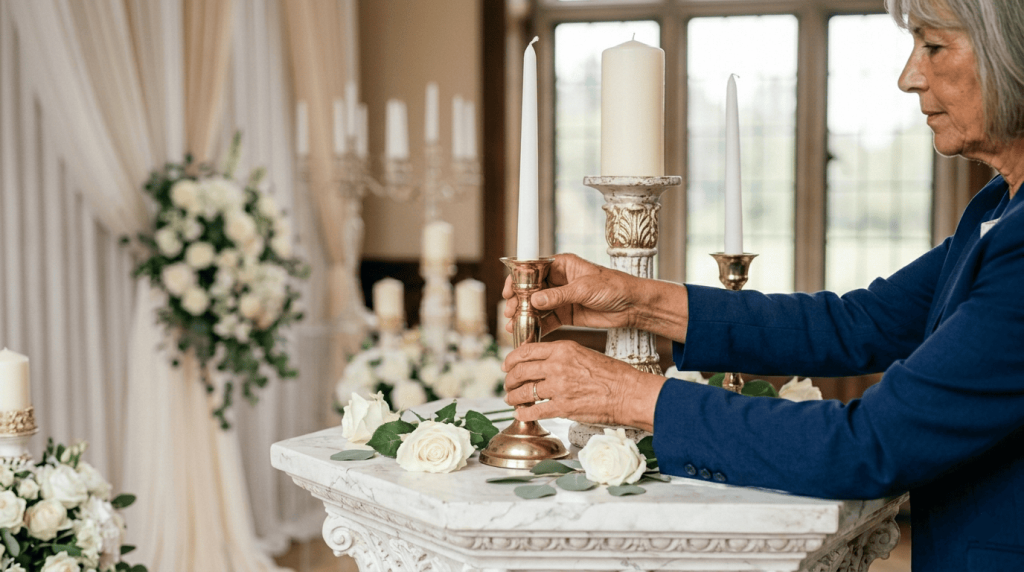
The lighting usually happens in two stages. First, the two side tapers, the “family candles,” are lit, most often by the mothers of the bride and groom, sometimes during the processional as they’re seated. It’s a quiet way to honor both families and makes a lovely photo. Some couples skip the parents and light the tapers themselves, while others hand candles to children or other loved ones to fold them into the moment.
Then comes the main event: the couple lights the center candle together. The most common placement is right after you’ve exchanged your vows, once you’re nearly married, though I’ve seen officiants slot it in just before the vows or right after the pronouncement. There’s no fixed rule, so pick the spot that gives your ceremony its best emotional beat. Plan on 30 to 60 seconds for the whole thing.
Etiquette note
Clear the unity candle with your officiant and your venue before you buy anything. Some churches leave it out of their service, and many indoor venues restrict open flames near drapery or florals. Ask early, not the week of the wedding, so you have time for a backup plan.
Unity candle wording and the officiant script
A unity candle almost always comes with a short reading. As the two of you step up to the candles, your officiant speaks a few lines about the meaning of the flames, then narrates the lighting. The exact wording varies by officiant and faith, but the structure stays consistent: name what the two outer candles represent, explain the center candle, then invite you to light it together.
You don’t need anything elaborate. A simple, non-religious script sounds like this: “These two flames have burned separately, each carrying its own light. Today, [Name] and [Name] bring them together. As you light this candle as one, you carry forward everything that made you who you are, and you become a new family.” If you’d rather, your officiant can weave in a scripture passage, a poem, or lines you’ve written yourselves. Tell them which direction you want a few weeks out so they can write toward it.
What I tell couples before they choose a unity candle
Most guides sell the romance and skip the part that actually matters on the day. After 200-plus ceremonies, the unity candle is the single ritual I most often watch struggle in real time, and it’s almost always one of two things: wind, or a wick that won’t catch.
If your ceremony is outdoors or near an open door, even a light breeze will snuff a taper before you reach the center candle. I either steer couples toward a sand ceremony instead or shield the flames with a hurricane vase. Indoors, the usual culprit is a stiff new wick, so I pre-light a hidden tea light to warm the wicks beforehand and keep an electric lighter on hand rather than trusting a single match.
Madison’s note
“For any breezy or outdoor venue, I set a wind-resistant hurricane vase over the center candle and keep an electric lighter in my kit. The mishap I see most is a wick that won’t catch while 100 guests watch, so I pre-light a hidden tea light and have the tapers warmed and ready before the couple ever steps up.”
— Madison Cole, Certified Wedding Planner
A few more things I flag every time: keep loose veils, sleeves, and floral arrangements clear of the flames; give the moment a meaningful song playing softly so the quiet doesn’t stretch; and decide in advance who carries the candle set to the venue and who lights the prep tea light. They’re small logistics, but they’re the difference between a serene 45 seconds and a scramble.
Unity candle sets and alternatives
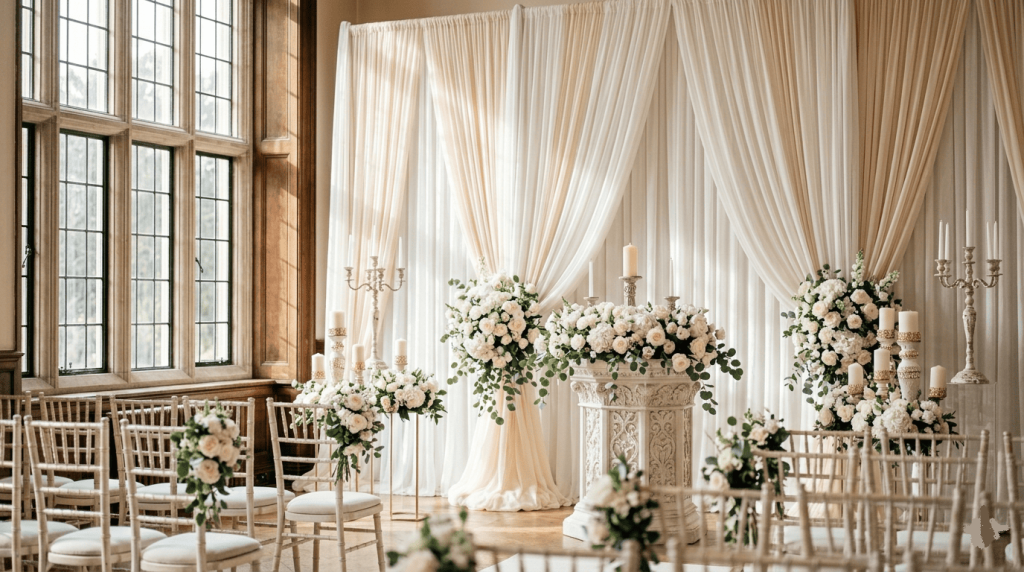
A unity candle set is just three candles: one larger center pillar and two tapers, usually arranged on a small stand or table. You don’t need a branded “unity” kit, since any pillar plus two coordinating tapers will do, and I always pack a backup votive in case the venue can’t supply one. Plain ivory or white reads cleanest in photos, though some couples personalize the pillar with their names or wedding date.
If open flame isn’t practical, the symbolism transfers easily. A unity sand ceremony, where you each pour a different color of sand into one vessel, is my go-to for windy or beachfront weddings, and it leaves you with a keepsake. Couples also love handfasting, a sealed wine or love-letter box you open on a future anniversary, or planting a tree together. Any of these, and plenty of other ways to personalize your ceremony, carry the same two-becoming-one meaning without a lighter in sight.
Frequently asked questions
The questions I hear most about unity candles, answered the way I’d answer them in a planning session.
Is a unity candle religious?
It began as a Christian symbol and still carries that meaning for many couples, but you don’t have to be religious to use one. Plenty of the secular and interfaith weddings I plan include a unity candle purely for the image of two lives becoming one. If you’re marrying in a church, check with your pastor first, since a few don’t include it in their service.
Do you blow out the taper candles after lighting the unity candle?
It’s your call, and the choice is symbolic. Blowing out the side tapers signals that two lives are now permanently one. Leaving them lit beside the center candle signals that you’re united while keeping your own individuality. Most couples I work with leave them burning, but both readings are perfectly traditional.
Can you do a unity candle ceremony outside?
You can, but wind is the enemy. Even a gentle breeze will put out a taper before it reaches the center wick, so I either shield the flames inside hurricane vases or suggest a unity sand ceremony, which gives you the same symbolism with nothing to extinguish. If your heart is set on candles outdoors, do a quick wind test at the ceremony spot the day before.
What do you do with the unity candle after the wedding?
Most couples keep the center candle as a keepsake and relight it on their anniversary, which is a sweet small ritual to carry forward. If you personalized the pillar with your names or date, it doubles as decor. There’s no rule, so keep it, display it, or burn it down over the years, whatever feels right to you.
Sources
- The Knot, When do you light the unity candle
- Root Candles, The unity candle tradition
- American Marriage Ministries, How to perform a unity candle ceremony
- Wikipedia, Unity candle: history and customs
Written by Madison Cole, Certified Wedding Planner
Madison has planned more than 200 weddings across the East Coast and now writes the ceremony and planning guides at One Stop Wedding Planner. She covers the traditions couples actually ask about, with the day-of logistics most guides leave out.
— Madison Cole, Certified Wedding Planner