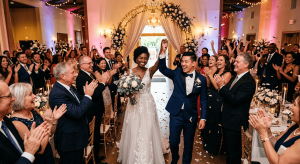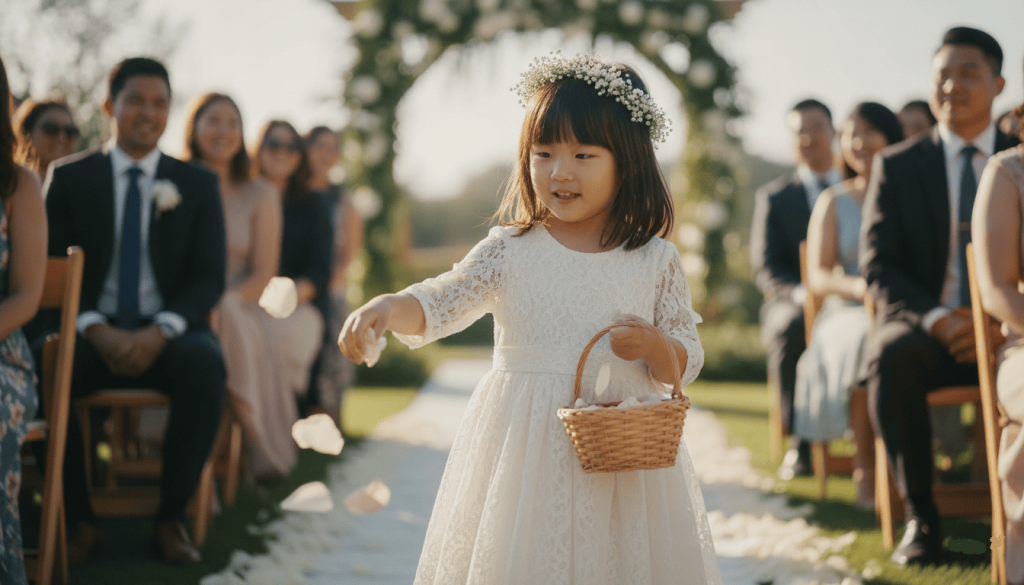
A flower girl is a young child — most often a girl between 3 and 8 years old — who walks down the aisle just ahead of the bride during the wedding processional, scattering flower petals along the way. It’s one of the oldest and most recognizable roles in a Western wedding, and also one of the most flexible: the petals are optional, the age is a guideline, and these days the role isn’t even limited to little girls. Across the 200-plus weddings I’ve planned, the flower girl is the moment guests reach for their phones — so it’s worth knowing what the role actually involves before you hand it to your favorite five-year-old. Here’s the full picture: what she does, how old she should be, where the tradition comes from, and what to do instead if a tiny attendant isn’t your style.
Definition
Flower girl — a young child, usually between 3 and 8, who walks down the aisle just ahead of the bride and scatters flower petals (or carries a small bloom, bubbles, or a sign) as part of the wedding processional.
What a flower girl is, exactly
The flower girl is one of the youngest members of the wedding party, and her job is mostly symbolic. She walks near the end of the processional — typically right after the maid of honor and immediately before the bride — and is often paired with a ring bearer of a similar age. If you want to see exactly where she falls in the lineup, I break down the full wedding processional order elsewhere on the site.
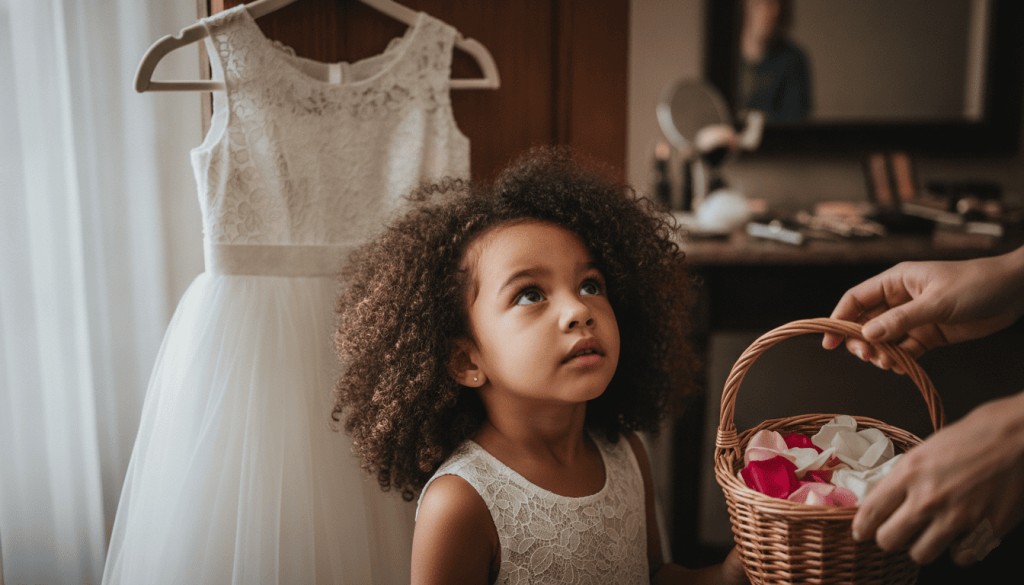
Her outfit usually echoes the bridal look in miniature: white, ivory, or a color pulled from the wedding palette, often with a sash. The symbolism is sweet and a little old-fashioned — she’s traditionally read as the bride’s younger self, a nod to the move from childhood toward marriage and a new family. Vogue and most wedding editors frame her the same way: charm first, ceremony second.
What does a flower girl do? Her duties
Despite the build-up, the flower girl’s responsibilities are short. The aisle walk is the headline, and for most kids it’s the only real task:
- Walk down the aisle ahead of the bride during the processional, scattering petals (or carrying her alternative) as she goes.
- Attend the rehearsal. One calm practice run the day before does more than ten lectures — it lets her see the space and the people.
- Pose for a few photos. She’ll usually be pulled into bridal-party and family shots, candid and posed.
- Settle in after her walk. Once she reaches the front, she either stands with the wedding party or — far more reliable with little ones — sits with her parents in the front row.
- Join the reception (optional). Depending on her age and stamina, she may stay for dinner and dancing, often at a kids’ table.
That’s genuinely it. The Knot describes throwing petals as the main and usually only duty, and I’d agree — the kindest thing you can do is keep her job small.
Madison’s note
“With a child under 5, I plan for the walk to not go to plan. Some of mine freeze halfway, a few sit down in the petals, and one year a flower girl sprinted straight to her mom. I station a parent in the front row holding something she wants, and I tell the couple to laugh, not fix it — those are the photos everyone loves later.”
— Madison Cole, Certified Wedding Planner
How old is a flower girl, typically?
The standard range is 3 to 8 years old, though you’ll see slightly different numbers depending on the source — some put the sweet spot at 3 to 7. There’s no hard rule. Under 3, the walk is a coin toss and you may need a parent walking alongside; from about 4 to 7 is the range where kids are old enough to follow a simple instruction but still young enough to be the showstopper everyone expects.
If your only candidate is 9, 10, or older, you’re not stuck — that child often slots in better as a junior member of the bridal party rather than a flower girl, which I cover more in the FAQ below.
Who can be a flower girl?
Traditionally she’s a daughter, niece, cousin, or the child of a close friend — someone with a real connection to you or your partner. But “tradition is what you make it” applies hard here. The role isn’t fixed to a specific gender, and it isn’t even fixed to childhood: I’ve planned weddings with a “flower grandma” tossing petals, with flower nephews, and with two best-friend kids walking together so neither felt left out. If including a particular person matters more than the textbook version, bend the role to fit them.
Where the flower girl tradition comes from
The role is old — far older than the petals. In ancient Greece and Rome, young attendants walked ahead of the bride carrying sheaves of wheat and herbs rather than flowers, meant to bless the couple with fertility and prosperity at a time when marriages were largely about producing heirs.
From there it shifted with the centuries. During the Renaissance, attendants sometimes carried garlic, believed to ward off evil spirits and bad luck. In the Elizabethan era, the now-familiar petals appeared: the path from the bride’s home to the church was strewn with rose petals, and a young girl walked the procession carrying a gilded rosemary branch and a silver “bride’s cup.” By the Victorian era, the flower girl looked much like she does today — a young child in a simple white dress, sometimes with a colored sash, carrying a basket of fresh blooms or wearing a floral hoop that symbolized love without end. Over that same stretch, her meaning drifted from fertility toward innocence and hope, the bride’s younger self made visible. Mental Floss and several wedding historians trace the same four-stage arc.
Etiquette note
Ask the child’s parents before you ask the child — they’re the ones signing up for fittings, travel, and a rehearsal. Traditionally the couple’s families covered the outfit; today it usually falls to the flower girl’s parents, so give them a price range or a few dress options up front rather than a surprise bill. A small thank-you gift for the child after the wedding is a nice touch, not an obligation.
Flower girl alternatives
“Alternatives” comes up two ways, so here’s both.
Alternatives to petals
Despite the name, she doesn’t have to throw flowers — and plenty of venues ban loose petals outright because of cleanup or slip risk. Reliable swaps I’ve used include:
- Bubbles — easy, mess-free, and toddlers love the job.
- A single bloom or small bouquet she simply carries instead of scatters.
- A pomander (a ball of flowers on a ribbon loop) — no scattering required.
- A sign such as “Here comes the bride,” which doubles as a built-in cue for guests to stand.
- A lantern, ribbon wand, or wrapped confetti where the venue allows it.
Alternatives to the role itself
If a small attendant isn’t your style, you have options. Some couples appoint a “flower grandma” or a beloved older relative; others give the job to a calm, well-trained dog with a floral collar; some skip the role entirely and have the wedding party simply process in. None of it breaks anything — the flower girl has always been optional.
How I set a flower girl up for success
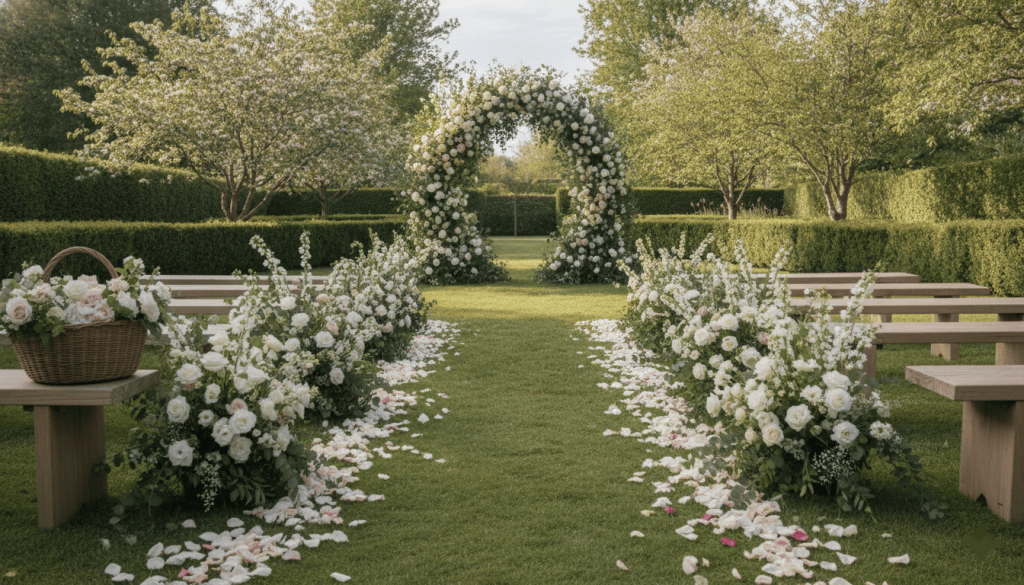
The advice you’ll read most often is to drill the walk over and over. After years of doing this, I’d push back: over-rehearsing a four-year-old backfires. One relaxed run at the rehearsal, plus a familiar adult planted at the front holding something she wants, beats a dozen anxious practice laps that just make the moment feel high-stakes.
A few things that actually move the needle on the day: feed her shortly before the ceremony so the walk doesn’t collide with a hunger meltdown; keep a parent or sibling in the front row in her sightline; have quiet toys or a small snack ready for the rest of the ceremony once her job is done; and set the couple’s expectations low and warm — the wobble is the memory, not the mistake. If you’re mapping out when to lock all of this in, it pairs naturally with the rest of your wedding planning checklist, and the family-side logistics often run through the mother of the bride’s role on the day.
Frequently asked questions
Does a flower girl have to throw petals?
No. Petals are optional, and many venues don’t allow loose ones. She can carry a single bloom or a pomander, blow bubbles, hold a “Here comes the bride” sign, or simply walk and wave. The walk matters; the petals are just decoration.
What’s the difference between a flower girl and a junior bridesmaid?
Age and job. A flower girl is usually 3 to 8 and mainly handles the aisle walk, while a junior bridesmaid is roughly 8 to 16 and stands with the bridal party in a scaled-down bridesmaid role. If your young relative is too old to feel like a flower girl, the junior bridesmaid title is the natural next step.
Can you have more than one flower girl?
Yes, and it’s common — especially when you’re blending families or have several young relatives you don’t want to choose between. Two or three can walk together or in a short line. Just keep the aisle moment brief so a long parade of small kids doesn’t stall the processional.
Who pays for the flower girl’s dress?
Traditionally the couple’s families covered it, but today the flower girl’s parents usually pay for the outfit. The polite move is to set the budget and give a color or style guideline so no one is caught off guard — and to offer to chip in if you’re requesting something pricier than they’d planned.
The short version: a flower girl is a small, optional, deeply traditional touch that’s far more relaxed than it looks — pick a child you love, keep her job tiny, and let the walk be whatever it’s going to be.
— Madison Cole, Certified Wedding Planner