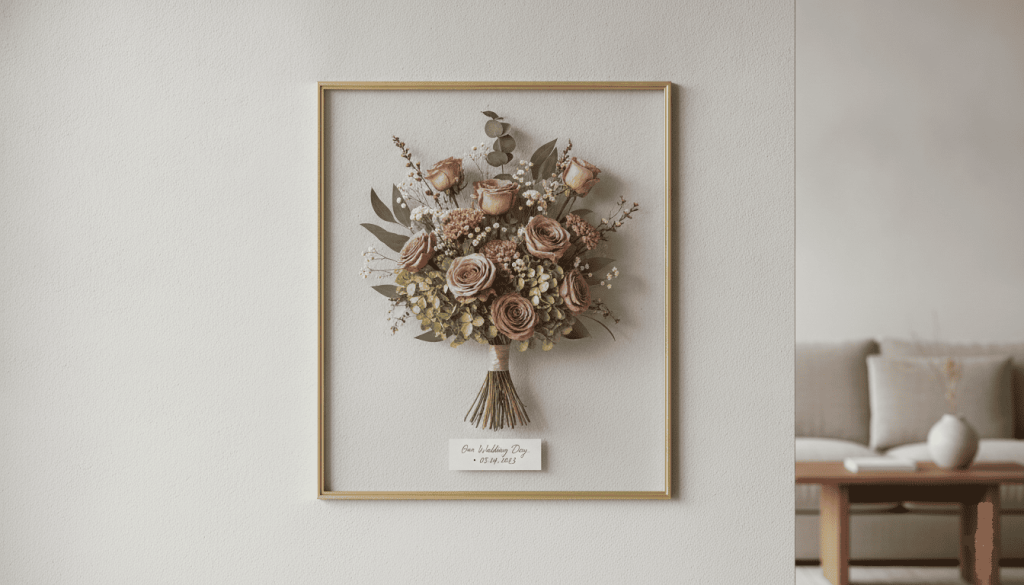
Your bouquet is the one piece of your wedding you hold in your hands all day. It walks down the aisle with you, it shows up in nearly every photo, and then, a few days later, it starts to wilt on the kitchen counter. I have watched more brides than I can count realize this too late and scramble. So let me save you the panic.
After planning 200-plus weddings, I can tell you the flowers are rarely an afterthought. The Knot Real Weddings Study puts the average spend on wedding flowers at around $2,800, and The Knot also found that as many as 63% of couples want to keep something physical from the day, from blooms to invitations. Preserving your bouquet turns that one-day arrangement into something you can actually live with.
Here is the part most guides skip: the method you choose matters far less than what happens to your flowers in the first 48 hours. I have seen a beautifully chosen freeze-dry job come out brown because the bouquet sat in a hot car overnight. Below, I will walk you through the prep that protects your flowers, then the 11 ways to preserve them, from a free DIY hang-dry to a professional resin heirloom.
How to preserve your wedding bouquet, step by step
Assign a bouquet keeper before the wedding
You will be too busy to think about flowers at the reception. Ask a parent or bridesmaid to grab the bouquet at the end of the night and follow your plan.
Keep it cool, out of the sun, in fresh water
Trim the stems, set them in cool water, and refrigerate overnight if you can. Heat and direct light are what brown your petals before you ever start.
Decide DIY or professional ahead of time
If you want a pro to freeze-dry or set your flowers in resin, book and confirm shipping before the wedding. The good studios fill up fast in peak season.
Start within 2 to 4 days
This is the window that makes or breaks the result. The longer fresh flowers wait, the more color and shape you lose, no matter the method.
Pick the method that matches the look you want
Soft and vintage, flat and framed, or close to fresh in 3D. The 11 options below each give a different finish, cost, and effort level.
Why the first 48 hours matter more than the method
I will say it plainly because it is the single most useful thing in this guide: preservation starts on your wedding day, not the week after. The most common reason a preserved bouquet disappoints is not a bad method. It is that the flowers were already damaged before anyone touched them.
Fresh flowers are mostly water. The minute they leave the florist cooler, heat, dry air, and sunlight start pulling color and structure out of every petal. By the time a bride remembers her bouquet on day five, sitting on a windowsill, the roses have browned at the edges and the peonies have collapsed. No amount of silica gel fixes that.
So treat the bouquet like the keepsake it is going to become. Trim the stems, give it fresh cool water, and store it somewhere dark and cold, ideally a refrigerator, for the night or two before you start. If you are hiring a professional, build the hand-off into your wedding-day timeline so it does not get forgotten in the after-party blur.
Madison’s note
“My favorite trick: have the florist make a small, inexpensive tossing bouquet for the bouquet toss, and keep your real one tucked safely in water. I have lost count of how many brides threw their actual bouquet into a crowd, then asked me the next morning how to preserve it. You cannot preserve what you do not have.”
— Madison Cole, Certified Wedding Planner
One more reason to plan ahead: cost. You have already put real money into your flowers, and probably into your cake too. If you are still working through those line items, my breakdown of what a wedding cake actually costs shows how the day’s perishable splurges add up. Spending a little to keep your bouquet is one of the few wedding expenses you get to enjoy for years.
Did you know
As many as 63% of couples want to hold on to a physical piece of their wedding, from flowers to invitations, yet most never plan for it before the day arrives. Source: The Knot.
Which preservation method fits you?
Before you commit, decide what you actually want at the end. A soft vintage look? A flat framed piece? Something close to the fresh bouquet in 3D? Your answer narrows the 11 options down to two or three fast. Cost and effort do the rest.
Here is the honest trade-off I give my brides. DIY methods are cheap and hands-on but unpredictable. Professional services cost more and take weeks, but they hold color and shape far better. The table below lays out all 11 at a glance so you can find your lane before you read the details.
The 11 ways to preserve a bouquet, compared
| Method | Finished look | Cost | Effort |
|---|---|---|---|
| 1. Air-drying | Soft, muted, vintage | Free | Low, but slow |
| 2. Silica gel | Keeps shape and color | Low (around $10-$20) | Medium |
| 3. Pressing | Flat, framed art | Low | Medium |
| 4. Microwave drying | Flat or dried, fast | Low | Low, quick |
| 5. Glycerin | Supple, slightly darker | Low | Medium |
| 6. Shadow box | Wall display, 3D | Low to medium | Medium |
| 7. Ornament or dome | Small, enclosed keepsake | Low | Low |
| 8. DIY resin | Glossy 3D, small items | Low to medium | High, fussy |
| 9. Pro pressing studio | Polished framed piece | Medium to high | Hands-off |
| 10. Freeze-drying | Closest to fresh | Highest | Hands-off |
| 11. Pro resin art | Sculptural heirloom | High | Hands-off |
Five DIY ways to dry and keep the real flowers
These are the budget-friendly, do-it-yourself routes. They keep the actual blooms, they cost little, and they work best on sturdy flowers like roses, peonies, hydrangeas, lavender, and baby’s breath. Delicate ones like lilies and daisies are harder to save, so talk to your florist about what is in your arrangement.
1. Air-dry it by hanging it upside down
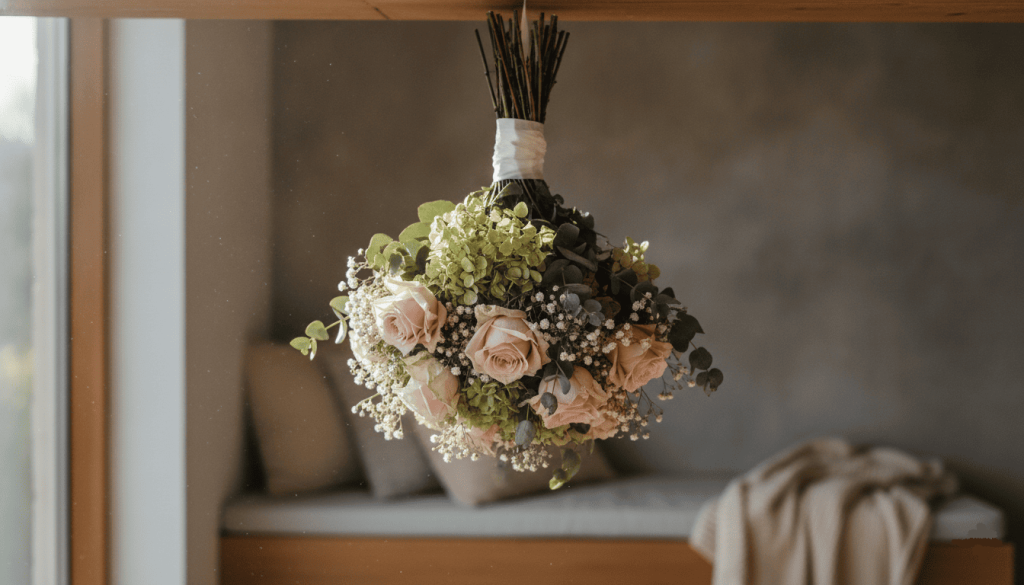
The oldest method, and free. Hang the bouquet upside down in a dark, dry, well-ventilated spot for two to three weeks. Darkness keeps the color from bleaching, and hanging upside down helps the heads keep their shape as they dry.
The finish is soft and a little faded, the classic dried-flower look. Expect some shrinking and browning, and handle the result gently, because dried stems get brittle. Best for hardy blooms and brides who like a vintage, rustic feel.
2. Dry it in silica gel
If you want to keep more of the original color and shape, silica gel is the strongest DIY option. The crystals pull moisture out of the petals while supporting their form. Bury the flower heads in gel inside an airtight container and wait one to two weeks.
A bag of silica gel runs around $10 to $20 and is reusable. Dry each bloom type separately, since a dense rose and a thin ranunculus finish at different speeds. The petals can stay fragile, so this one rewards a careful hand.
3. Press it flat
Pressing gives you a flat, two-dimensional keepsake you can frame or slip into a wedding scrapbook. Use a flower press or a stack of heavy books with parchment paper, and leave it two to four weeks until the flowers are paper-dry.
Pressing shines with thin, flat flowers like daisies, ferns, ranunculus, and single petals. Bulky blooms such as peonies do not press cleanly, so pick a few representative flowers rather than forcing the whole bouquet flat.
4. Speed-dry it in the microwave
Short on time? You can dry small flowers in minutes using a microwave flower press, or silica gel in a microwave-safe container worked in short bursts. It is the fastest route to a pressed or dried bloom.
The catch is control. Microwaves scorch flowers easily, so go low and slow, checking between each burst. This works for small, thin flowers and for brides who want a keepsake this week, not next month.
5. Preserve it with glycerin
Glycerin keeps flowers and foliage supple and pliable instead of brittle, by replacing the water in the stems. Mix glycerin with warm water, stand the stems in the solution, and let them drink it up over one to two weeks.
Colors usually darken or shift, so glycerin is better for greenery, eucalyptus, and hardy stems than for pale petals. If your bouquet leans heavily on foliage, this gives it a soft, living-looking finish that lasts.
Three ways to display or repurpose your blooms
Once your flowers are dry, the question becomes how you want to see them every day. These three turn preserved blooms into something you can hang, set on a shelf, or wear. For more keepsake inspiration, my roundup of wedding ideas worth stealing has plenty of ways to carry the day into your home.
6. Frame it in a shadow box
A deep shadow box lets you mount the dried arrangement in three dimensions and keep dust off it. You can recreate the bouquet shape or lay the blooms out as a design. Hang it where you will pass it often, but away from direct sunlight, which fades dried petals. UV-protective glass helps if your wall gets afternoon light.
7. Turn it into an ornament or glass dome
Tuck a few dried petals or small blooms inside a glass ornament, bauble, or cloche. It makes a sweet year-round keepsake or a holiday ornament you unwrap every December. The one rule: the flowers must be completely dry before you seal them in, or trapped moisture turns to mold.
8. Set a few blooms in resin (DIY)
Clear epoxy resin captures flowers in glossy 3D form, from a coaster or paperweight to a ring dish or pendant. It is the most durable DIY keepsake and surprisingly fun to make. It is also the fussiest: flowers must be bone-dry or they brown in the resin, bubbles love to form, and curing takes patience. Start with a handful of well-dried blooms, not the whole bouquet.
Three professional preservation options
If you want a result that looks close to the fresh bouquet and you would rather hand it off, these are worth the spend. In my own bookings, professional preservation has run anywhere from around $150 for a simple framed press to $1,000 or more for freeze-drying or a large resin block, depending on the studio and bouquet size. Book before the wedding and ship within a few days.
9. Hire a professional pressing-and-framing studio
A pressing studio does the drying, pressing, and design for you, then returns a framed piece arranged with an artist’s eye. You get a polished, display-ready result without the trial and error. Turnaround usually runs several weeks to a few months, so confirm timing and shipping before the wedding.
10. Freeze-dry it (professional)
Freeze-drying is the most lifelike way to keep the real flowers. A specialized machine removes moisture while holding shape and most of the color, and the result is usually displayed in a dome or shadow box. It is the priciest option and the one brides are most often thrilled with, because the bouquet looks almost as it did on the day. The trade-offs are cost and turnaround.
11. Commission a resin art piece (professional)
Professional studios can encase your full bouquet in a resin block, bookend, heart, or sculptural piece. It becomes a low-maintenance heirloom with no fading or dust to worry about. Turnaround commonly runs about 10 to 12 weeks, and the studio will need your flowers within days of the wedding, so the booking has to happen in advance.
Mistakes I see brides make with bouquet preservation
Most preservation regrets trace back to the same handful of slip-ups. Here are the ones I watch for every season.
1. Waiting past the 3 to 4 day window
By day five or six, fresh flowers have already lost color and structure. Start within a few days, and keep the bouquet cold until you do.
2. Leaving the bouquet in a hot car or sunny windowsill
Heat and light are the fastest way to brown your petals before you begin. Cool and dark is the rule from the moment the reception ends.
3. Trying to save the whole bouquet when a few blooms would look better
A dense arrangement rarely dries or presses evenly. Choosing your best five or six flowers often gives a cleaner, prettier keepsake, and it cuts the cost.
4. Sealing flowers in resin or glass before they are fully dry
Any leftover moisture turns to browning or mold once it is trapped. Dry the blooms completely before any resin, ornament, or sealed frame.
5. Booking the professional studio after the wedding
The best studios fill their calendars in peak season, and they need your flowers fast. Reserve your spot before the day, not after.

Frequently asked questions
How long do preserved wedding flowers last?
It depends on the method. Air-dried flowers look their best for a few years before they fade and grow brittle. Silica-dried, freeze-dried, and resin pieces last far longer, often a decade or more, as long as you keep them out of direct sunlight and away from humidity. Resin keepsakes are the most durable because the flowers are fully sealed.
How much does professional bouquet preservation cost?
It varies widely by studio, method, and bouquet size. In my own bookings, a simple framed press has started around $150, while freeze-drying or a large resin block has run $1,000 or more. Get a quote before the wedding so you can budget for it, and ask what is included, such as the frame or display dome.
How soon after the wedding do I need to start?
Within 2 to 4 days, and sooner is better. The longer fresh flowers sit, the more color and shape they lose. Keep the bouquet in cool fresh water and refrigerate it overnight when you can, then begin your chosen method or ship it to your studio right away.
Can you preserve a bouquet that has already wilted?
Partly. Freeze-drying and resin need flowers in reasonably good shape, so a badly wilted bouquet is a tough candidate. Pressing can still rescue a few blooms even if they are past their best, since you only need the petals to lie flat. If your flowers have turned, save your favorite one or two rather than the whole arrangement.
Should I preserve my real bouquet or use a tossing bouquet?
Use a separate, inexpensive tossing bouquet for the toss so your real one stays intact for preservation. I ask my florists to make a small toss version for exactly this reason. It saves the bouquet you actually walked down the aisle with from getting thrown into a crowd.
Sources
Sources
- The Knot, How to Preserve Your Wedding Bouquet. theknot.com
- The Knot, The Average Cost of Wedding Flowers. theknot.com
- The Knot Real Weddings Study. theknot.com
The bouquet you keep
If I had to send you off with one thing, it would not be a method. It would be a reminder to plan the hand-off before the wedding and start within a few days. Do that, and almost any of these 11 ways will give you something worth keeping. Skip it, and the fanciest freeze-dry in the world cannot save flowers that already turned.
My honest pick for most brides: silica gel if you want to do it yourself, or freeze-drying if you want it to look like the day you carried it. Either way, your bouquet gets a second life on your shelf instead of a slow goodbye on the counter.
— Madison Cole, Certified Wedding Planner