
Beach formal is the dress code couples reach for when they want their seaside wedding to feel polished, not flip-flop casual — but they also don’t want you sweating through a three-piece suit on the sand. After planning more than 200 weddings, plenty of them on actual beaches, here’s the read I give every guest who texts me a photo of the invite with a question mark: dress up, but dress for the elements. Lightweight, breathable, a notch below black-tie.
Definition
Beach formal — a dress code that pairs formalwear polish with breathable, beach-friendly fabrics: a long or midi dress (or dressy jumpsuit) for women, a lightweight suit for men, and shoes that survive sand.
So what does “beach formal” actually mean?
Think of beach formal as black-tie’s relaxed cousin who moved to the coast. It asks for the same intentional, put-together look you’d bring to a nice indoor wedding — but with the fabrics, lengths, and footwear adjusted for wind, heat, and sand underfoot. You’re a clear step above resort casual and sundress territory, and a clear step below a tuxedo or a heavy floor-sweeping ballgown.
The practical translation: structure stays, weight drops. A guest in a flowing chiffon maxi or a man in an unlined linen suit reads as beach formal. The same guest in cutoffs and a tank, or in a wool three-piece, has missed in opposite directions. According to The Knot’s beach wedding guidance, the setting itself does most of the talking — an evening ceremony at an upscale resort skews dressier than a morning gathering right on the sand.
If you’ve already worked out the broader rules of dressier weddings, beach formal is mostly a fabric-and-footwear edit of those. My full breakdown of what formal attire means for wedding guests is the baseline; everything below is how I’d soften it for the coast.
What women wear to a beach formal wedding
For women, beach formal opens up more length and movement than an indoor formal wedding usually does. This is the one wedding where a long, breezy dress is almost always the right answer.
- Length: floor-length or maxi works beautifully, and so does midi or tea-length. A subtle thigh slit is welcome — it photographs well and lets you actually walk on uneven ground.
- Fabric: chiffon, crepe, georgette, linen blends, anything with drape and airflow. Skip heavy satin and stiff structured gowns that wilt in humidity.
- Color and print: this is your moment for a lighter palette — soft brights, pastels, florals, watercolor prints. The staple little black dress can feel heavy against a daytime beach, so I usually steer guests toward color.
- Jumpsuits: a polished, wide-leg jumpsuit is fully beach formal and often more comfortable on sand than a long hem.
- Accessories: gold or pearl jewelry, a woven or neutral clutch, and a wrap or lightweight shawl for when the sea breeze picks up after sunset.

Footwear is where guests trip up — sometimes literally. Stilettos and sand do not coexist. Go for wedges, block heels, dressy flats, or embellished sandals. If the ceremony is fully on the sand, plan to be barefoot or in flat sandals for the vows and switch to heels on the deck for the reception. Brides makes the same call: comfort and stability win on the beach without giving up the polish.
Beach dress codes, from casual to formal
| Dress code | What to wear | What to skip |
|---|---|---|
| Beach casual | Sundress, romper, linen shirt and chinos, dressy sandals | Swimwear, cutoffs, flip-flops |
| Beach semi-formal | Tea-length or midi dress, button-up with slacks, optional blazer | Shorts, T-shirts, sneakers |
| Beach formal | Long or midi dress, dressy jumpsuit, lightweight suit, wedges or loafers | Tuxedo, heavy gown, stilettos, wool suiting |
What men wear to a beach formal wedding
For men, beach formal still means a suit — just a smarter, lighter one than you’d wear to a ballroom. The silhouette is tailored; the fabric and color do the beach part of the work.
- The suit: a lightweight, unlined or half-lined suit in linen, cotton, or seersucker. Light and mid tones — tan, stone, light blue, sage, soft gray — read coastal. Save your charcoal and black for the ballroom.
- The shirt: a long-sleeve button-up, always. You can roll the sleeves if it’s hot, but a short-sleeve shirt under a jacket undercuts the formal half of the dress code.
- Tie or no tie: optional. A patterned tie or a linen pocket square adds polish; an open collar is fine for a daytime ceremony. Let the time of day and the couple’s own style guide you.
- Shoes: loafers, suede drivers, or dressy leather sandals. No tuxedo shoes, and absolutely no flip-flops — even on sand, where you’ll likely go barefoot for the vows and slip shoes back on for the reception.
One line I repeat to every groom and groomsman: a beach formal wedding almost never expects a tuxedo. If the invite says beach formal and your instinct is black-tie, dial it back a notch. Menswear specialists land in the same place: lighter fabrics, lighter colors, structured but breathable.
Madison’s note
“The detail couples forget to tell guests is whether the ceremony is on the sand or on a deck. It changes everything. On sand, I tell guests to keep hemlines off the floor and to bring a second pair of flat shoes — I’ve watched too many beautiful gowns pick up a wet, gritty hemline before the first photo.”
— Madison Cole, Certified Wedding Planner
The things people actually get wrong
Beach formal looks simple on paper and gets complicated the moment you’re standing on a windy shoreline. Here’s where I see guests miss, every season:
- Dressing for the photo, not the terrain. A dramatic train or a strapless stiff bodice looks great in the mirror and fights you all night on sand. Choose pieces that move.
- Forgetting the wind. Lightweight is the whole point of beach formal, but very light fabrics and a sea breeze can turn a ceremony into a styling emergency. A bit of weight in the hem, or a slip underneath, saves you.
- Treating “formal” as a license to overdress. Sequined floor gowns and full tuxedos read as trying too hard against a daytime beach. Formal here means refined, not maximal.
- Ignoring sun and time of day. A midday ceremony calls for a sunhat and lighter colors; an evening one runs cooler and dressier, so pack that wrap.
Etiquette note
When the dress code is unclear, the invitation and the couple’s wedding website are the final word — always check them before you shop. If they’re silent, let the venue and the start time decide: a sunset ceremony at a resort leans dressier than a morning gathering on open sand. When you still can’t tell, err slightly elevated. You can always shed a jacket or a wrap; you can’t add polish you didn’t bring.
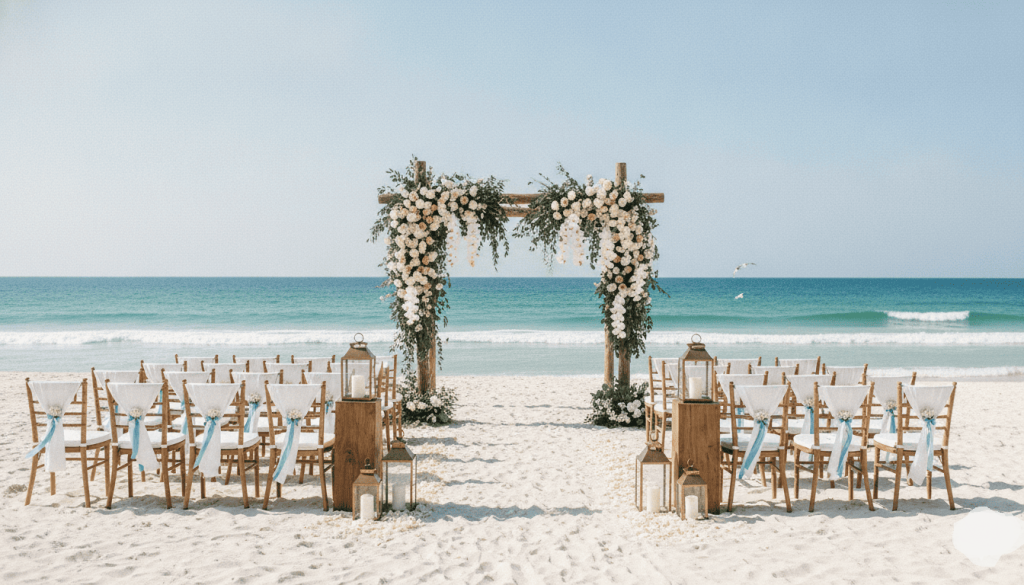
Beach formal vs the other dress codes you’ll see
Wedding dress codes blur together fast, and beach formal sits in a crowded middle. A quick map: if the same couple held this wedding indoors, the equivalent would land near cocktail attire in spirit but with more length allowed and softer fabrics. It’s dressier than semi-formal attire, and it’s the coastal translation of true formal. And yes — you can wear black to a beach wedding, but I’d usually save it for an evening ceremony; if you’re weighing it, my take on whether black is fair game at a wedding applies here too.
Frequently asked questions
Can you wear jeans to a beach formal wedding?
No. Beach formal is still a formal dress code — denim of any kind reads as casual and will look underdressed against suits and long dresses. Reach for tailored trousers or a dress instead.
Do women have to wear long dresses for beach formal?
A long or maxi dress is a natural fit, but it isn’t required. Tea-length and midi dresses, as well as polished wide-leg jumpsuits, are fully appropriate. The priority is a dressy, breathable fabric and a clean silhouette, not the exact hemline.
Do men need a tie for beach formal?
A tie is optional for beach formal. A lightweight suit with a long-sleeve button-up is the core of the look; a patterned tie or a linen pocket square adds polish for an evening ceremony, while an open collar suits a daytime one.
What shoes are best for a beach formal wedding?
Choose shoes that handle sand: wedges, block heels, dressy flats, or embellished sandals for women, and loafers, suede drivers, or leather sandals for men. Skip stilettos and tuxedo shoes. If the ceremony is on the sand, plan to go barefoot or in flat sandals for the vows and switch on the deck.
Beach formal, boiled down: bring the polish of a formal wedding, leave the weight at home, and dress for the sand you’ll actually be standing on. Get the fabric and the footwear right, and the rest falls into place.
Sources
- The Knot — What to Wear to a Beach Wedding. theknot.com
- Brides — Beach Wedding Attire Guide. brides.com
- Zola — Women’s Beach Wedding Outfits. zola.com
- Emily Post Institute — Wedding Guest Etiquette. emilypost.com
Written by Madison Cole, Certified Wedding Planner. Madison has planned 200+ weddings across the US East Coast, including more beachfront ceremonies than she can count, and now writes One Stop Wedding Planner’s guest attire and planning guides.