I’ve planned more than 200 weddings, and “who’s actually supposed to give a speech?” is one of the questions I field most — usually from a bride three weeks out or a best man who just realized he’s on the hook. The short version: a handful of key people traditionally speak, but you get the final say on the list. Here’s the cheat sheet I give my couples.
The short answer
At a traditional US wedding, the people who give speeches are the host (usually a parent), the best man, the maid of honor, and the couple themselves — often with a few words from the parents of the bride and groom. Nothing is mandatory, though: you decide who holds the mic, and plenty of couples now keep the list short.
The short answer — who traditionally speaks
Across the weddings I plan, the speaking lineup almost always pulls from the same short list: the host (most often a parent of the couple), the best man, the maid of honor, and the couple themselves. Parents of the bride and groom frequently add a few words on top, especially when they’re the ones hosting.
The Knot frames it the same way: host parents tend to give a welcome, the honor attendants deliver the headline toasts, and the couple closes with a thank-you.
What I want you to take away first, though: none of this is a rule. Emily Post’s own guidance is that it’s perfectly fine for the best man’s toast to be the only speech of the night — everything after that is your call. I’ve run receptions with two toasts total and receptions with six. Both work when the list is intentional. The truth most guides bury is that the only “required” speaker at your wedding is whoever you choose to ask.
The traditional wedding toast order
If you do want a running order, here’s the sequence I set up most often. It walks the emotional temperature up gradually and ends on the two people the day is about.
The traditional US wedding toast order
The host welcome
Whoever is hosting — usually a parent of the couple — welcomes guests and thanks them for coming, often right after everyone is seated for dinner.
The best man
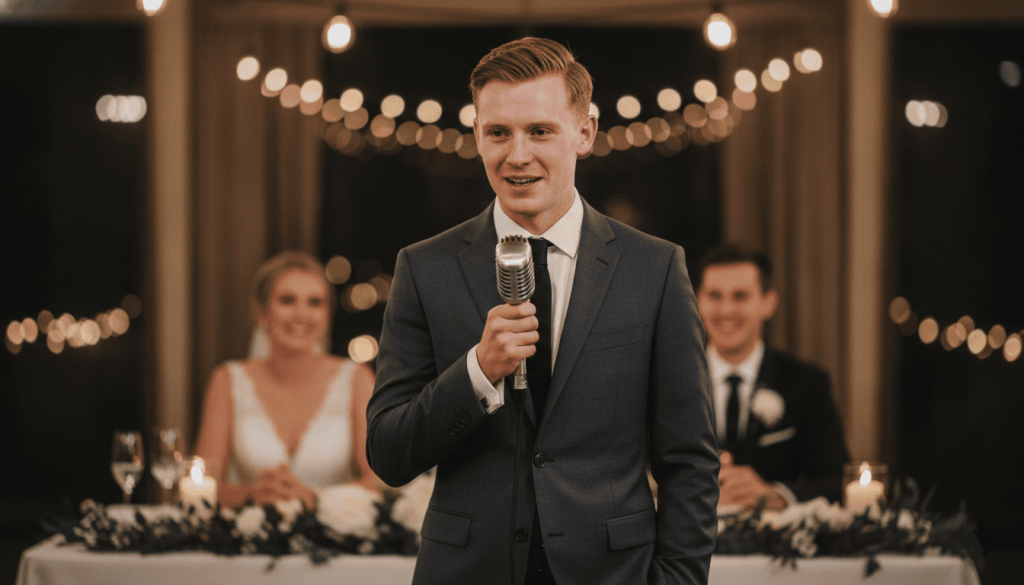
The first real toast of the reception, traditionally given once every guest has a glass in hand. Short, warm, usually with one good laugh.
The maid of honor
The companion toast to the best man’s, leaning personal and heartfelt — how she knows the bride, what the couple is like together.
Parents and other family
Fathers and mothers of the bride and groom who want to say a few words usually go here, after the honor attendants.
The couple’s thank-you
The newlyweds close the speeches, side by side, thanking guests and each other. The natural last word of the night.
A note on that very first toast: etiquette tradition holds that the host gives it. Emily Post points out that at a formal dinner the host opens the toasting, usually once everyone has a full glass. At most modern receptions I run, that “host” slot has simply become the welcome from a parent, with the best man’s toast following.
Who gives each speech — and what they say
The host (usually a parent)
The welcome belongs to whoever is hosting, and that’s most often a parent of the couple. It’s short: thank everyone for traveling in, say something warm, and hand the night over. Zola notes this welcome slot is usually reserved for the parents — it sets the tone for everything that follows.
The best man
Traditionally, the best man makes the first real toast of the reception, after the welcome and once guests have a glass in hand. Inside Weddings recommends keeping it to a minute or two; the best ones balance a laugh with a genuine moment. If your best man is nervous, point him to my roundup of best man speech examples for structure he can borrow.
The maid of honor
The Maid of Honor (MOH) toast has gone from optional to near-standard — Emily Post’s institute calls the companion MOH toast a tradition in the making. Hers usually leans warm and personal: how she knows the bride, a story that says something true about the couple. If your MOH is still figuring out everything on her plate, what a maid of honor actually does walks through the full role, speech included.
The parents
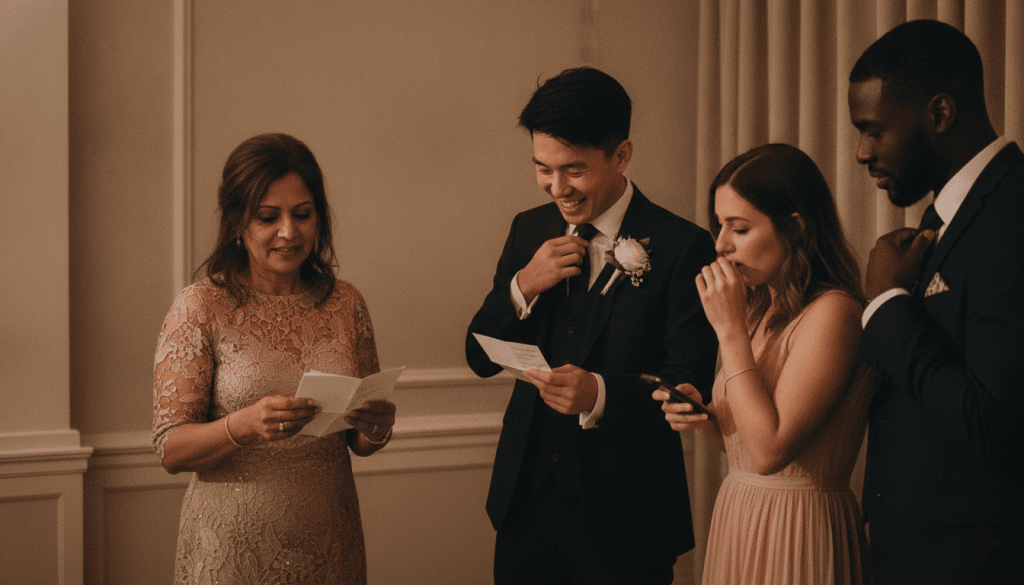
Beyond the welcome, fathers and mothers of the bride and groom often say a few words — especially the Father of the Bride (FOB), whose toast is the classic tearjerker. Mothers are stepping up to the mic more and more, too. There’s no fixed slot for them; I usually place parent toasts right after the honor attendants. For more on that side of the family, see my guide to the Mother of the Bride role.
The couple
Modern couples almost always close the speeches themselves, side by side, thanking their guests and each other. It’s the natural last word — and at a wedding the couple is hosting, Emily Post considers a toast from the newlyweds entirely appropriate.
Madison’s note
“The lineup that goes wrong is always the one nobody mapped out. At a Newport reception a couple of years ago, three uninvited ‘just a quick word’ toasts ran the speeches past forty minutes and the dance floor never recovered. Now I lock the speaker list at the rehearsal and tell the DJ to guard the mic.”
— Madison Cole, Certified Wedding Planner
Rehearsal dinner vs. reception speeches
Here’s the shift I’ve watched happen over the last decade: more couples move the longer, more personal toasts to the rehearsal dinner and keep the reception lineup tight. The Knot notes the same trend — many couples now have the honor attendants speak at the rehearsal dinner instead of the reception.
It’s a smart move. The rehearsal dinner is smaller and more intimate, so a five-minute story from the maid of honor lands beautifully there; at a 150-person reception, that same speech can stall the whole party. The rehearsal-dinner lineup also tends to widen out — parents, siblings, close friends, sometimes the couple. Zola points out that rehearsal toasts often come from the parents or guardians of the couple. If you’re mapping out where each of these moments falls, my wedding timeline guide shows where speeches sit in the reception flow.
What I tell my couples about speeches
A few hard-won rules from the planning binder:
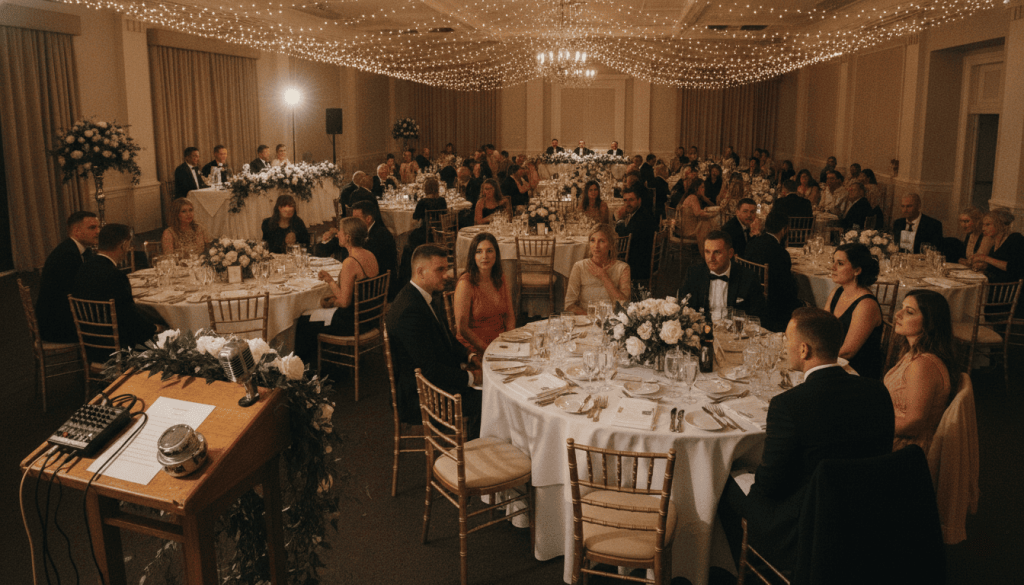
- Decide the list in advance. Etiquette agrees with me here: know who’s speaking and in what order, and ask anyone not on the list to clear it with you before grabbing the mic. An open mic at a reception is how you end up with a tipsy college roommate telling a story you’ll regret.
- Cap the length. Two to three minutes per speaker is my ceiling. Past that, you lose the room.
- Brief your speakers. Give them a heads-up on timing and running order about a week out, not the day of.
- Coordinate the content. When the best man and MOH compare notes, you avoid two versions of the same “remember when” story.
- Writing one yourself? The same instincts that make a good toast make good vows — my guide to writing wedding vows works for both.
Etiquette note
Settle the speaker list before the day and share the order with your speakers and your DJ. Emily Post’s guidance is the same: anyone not on the list should check with the couple before making an impromptu toast at the reception. It protects the flow of your night — and the guest who would have winged it.
Frequently asked questions
Does the groom give a speech at a wedding?
He can, and more grooms do now. The groom’s speech usually thanks both families and the guests and toasts the bride. At a wedding the couple is hosting, Emily Post considers a toast from the newlyweds completely appropriate — and many couples now speak together rather than separately.
Do the bridesmaids or groomsmen give speeches?
Usually only the maid of honor and best man speak on behalf of the wedding party. Other bridesmaids and groomsmen don’t traditionally toast at the reception, though they’re welcome to at the rehearsal dinner, where the lineup is more relaxed. Either way, clear any extra speech with the couple first.
Who speaks first at a wedding?
At most US receptions, the host — usually a parent — gives the welcome first, followed by the best man’s toast. Etiquette tradition holds that the host opens the toasting, typically once everyone has a full glass in hand.
How long should a wedding speech be?
Keep it to two to three minutes at the reception. Inside Weddings suggests the best man’s toast run no more than a minute or two. Save the longer, story-heavy speeches for the rehearsal dinner, where a smaller room can carry them.
Every etiquette and timing point above is drawn from the US wedding sources I lean on most:
Sources
- The Knot — Rehearsal Dinner vs. Reception Speeches. theknot.com
- Zola — Who Gives Speeches at Weddings. zola.com
- Inside Weddings — The Must-Know Rules for Making a Wedding Toast. insideweddings.com
- Emily Post Institute — All About Toasting. emilypost.com
The bottom line
So, who gives speeches at a wedding? Traditionally the host, the best man, the maid of honor, and the couple — with the parents often adding a few words. But the only real rule is that you choose. Keep the list short, brief your speakers, decide the order in advance, and let the night breathe.
Written by Madison Cole, Certified Wedding Planner