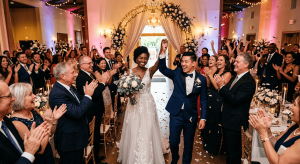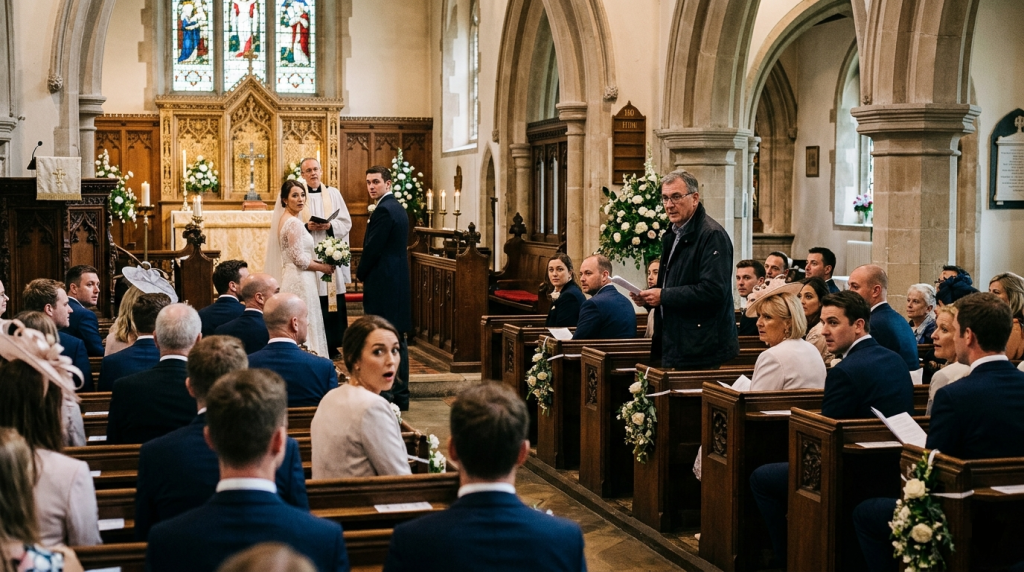
In nine years and more than 200 weddings, I have never once had a stranger leap up and try to stop a ceremony — and you almost certainly won’t either. If someone does object at a wedding today, the officiant pauses, the couple decides how to handle it, and unless there’s a real legal reason the marriage can’t go ahead, the ceremony continues. Here’s exactly how that moment plays out in real life, and how I make sure it never does.
The short answer
Almost nothing — and I mean that. In a modern US wedding, if someone objects the officiant simply pauses, the moment is handled quietly, and the ceremony keeps going. A personal or emotional objection carries no legal weight, so it can’t stop the marriage. Only a genuine legal reason — like one person already being married — would actually halt things, and that’s caught at the marriage-license stage long before anyone reaches the aisle.
Here’s what actually happens in the moment
Forget the movie version, where the doors fly open and the bride drops her bouquet. A real objection is far quieter, and a good officiant has three plays ready depending on what the couple wants.
The first, and most common, is to acknowledge it and keep going. If the comment is clearly personal — someone muttering that they don’t think the couple is right for each other — the officiant can note it and move straight on with the ceremony. The second play is to pause and step aside: the officiant calls a short break and speaks privately with the couple, and sometimes the objector, to find out what’s actually being raised. The third only happens if a person won’t settle down — at which point they’re quietly walked out, usually by an usher or venue security, while the ceremony resumes.
Which play gets used isn’t decided in the heat of the moment. It’s decided in advance, by the couple, and that’s the part most people don’t realize. The “does anyone object” line is mostly ceremonial today, and seriously objecting at a wedding is genuinely rare. I’ve planned everything from backyard ceremonies to historic Charleston mansions, and the real-life version of this scene is almost always a non-event.
Why do they even ask, “Does anyone object?”
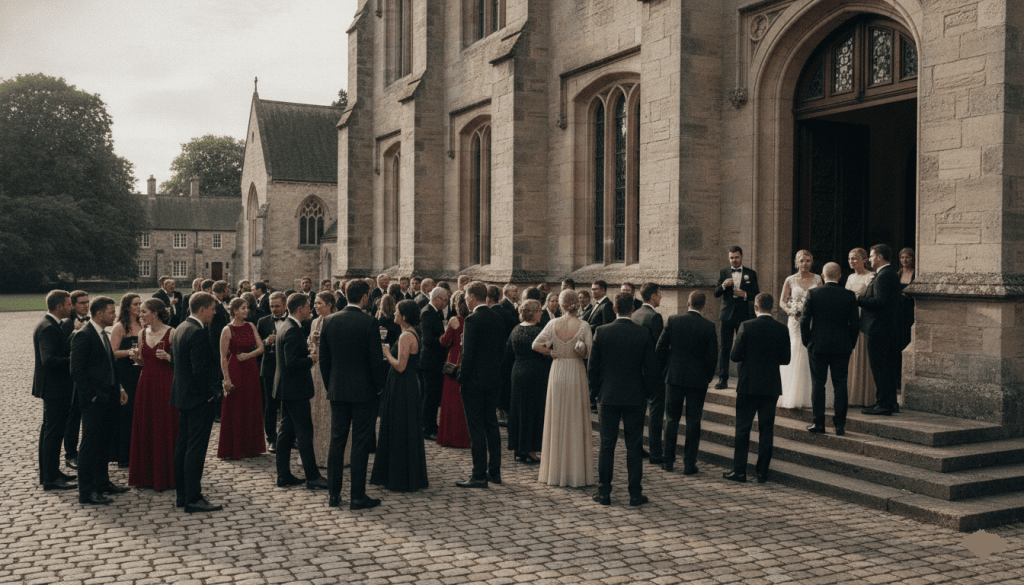
The line you’re picturing — “speak now or forever hold your peace” — comes from old Christian liturgy. The version most of us recognize traces back to the Anglican Book of Common Prayer in the 1500s, built on the even older practice of reading the banns: announcing an upcoming marriage publicly so the community could flag a problem.
And there was a practical reason for it. Centuries ago there were no databases, no marriage records you could look up, no easy way to confirm that someone wasn’t already married, underage, or marrying a close relative. So the church gave the community one last chance to speak up before the union became official. Today, that job is done quietly and in advance by the marriage license — which is exactly why the spoken line has become a tradition rather than a real safeguard.
A legal objection versus an emotional one
This is the distinction that decides everything, so it’s worth being clear about it. An emotional objection — “I’m still in love with her,” “they’re making a mistake,” “I never liked him” — has no power to stop a marriage. A personal opinion simply isn’t grounds to halt a legal ceremony, and the wedding goes on.
A legal objection is different. Historically, the kinds of things that count as a genuine impediment are narrow and specific:
- One person is already legally married (bigamy) — in the US you can only be married to one person at a time.
- A party can’t truly consent — because of coercion, intoxication, or incapacity.
- One person is underage and lacks the consent their state requires.
- The two are too closely related by blood or adoption.
- Fraud about something material to the marriage itself.
I plan weddings — I’m not an attorney, and marriage laws vary from state to state, so this isn’t legal advice. But here’s the practical reality every officiant I work with operates by: these issues are almost always caught when the couple applies for their license, showing ID and signing paperwork weeks earlier. By the time you’re standing at the altar, the legal box is already checked. That’s why a mid-ceremony objection on legal grounds is so vanishingly rare.
What I do — as the planner — to keep that moment drama-free
This is where having a planner in the room actually earns its keep, and it’s the part the officiant-focused articles tend to skip. My job isn’t to react to a disruption; it’s to design it out before the day ever arrives.
It starts at the rehearsal. The very first thing I do with a nervous couple is settle the objection question then and there: do we keep the “speak now” line in the script, or cut it? Most modern and civil ceremonies leave it out entirely, and plenty of couples building a personal, vow-centered ceremony script never miss it. No line, no opening — the simplest fix there is.
If there’s a specific guest the couple feels uneasy about, we go a layer deeper. I’ll seat that person on an aisle for an easy exit, station an usher within arm’s reach, and agree a quiet signal with the officiant so the ceremony can keep flowing no matter what. At a staffed property, security handles a belligerent guest discreetly and the couple never has to lift a finger — one more reason I steer anxious couples toward choosing the right wedding venue over a fully DIY setup. Keeping the ceremony itself tight helps too; there’s simply less open space for a moment to go sideways, which is part of why I coach couples on how long a wedding ceremony should actually run.
Madison’s note
“The single best thing I do for a nervous couple is settle the ‘speak now’ question at the rehearsal, not on the wedding day. Nine times out of ten we just cut the line, and the worry goes with it. The rare times we keep it, I seat the guest you’re unsure about on an aisle, put an usher within arm’s reach, and agree a quiet nod with the officiant. The room never feels a thing.”
— Madison Cole, Certified Wedding Planner
If you’re the guest with a real concern
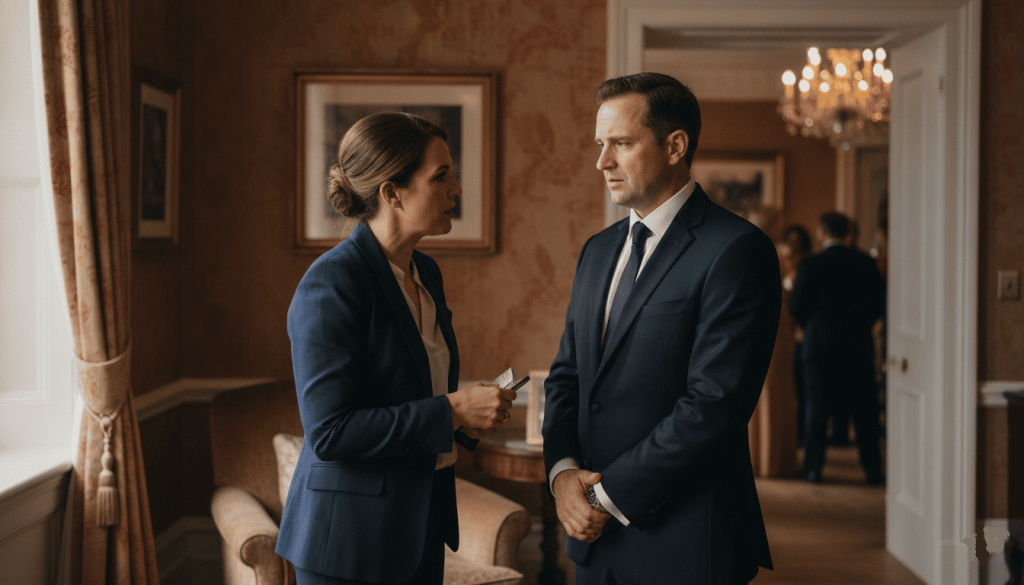
Maybe you’re reading this from the other side — you genuinely believe a marriage shouldn’t happen, and you’re wondering whether the ceremony is your moment to say so. In almost every case, it isn’t.
The wedding day is the worst possible place to raise a serious concern. The kind move, and the far more effective one, is to talk to the couple privately and well before the date. Say it plainly and respectfully, in a calm setting where they can actually hear you. If what you’re worried about involves someone’s safety, skip the ceremony entirely and contact the right authorities. Standing up mid-vows rarely changes the outcome — it just detonates relationships and hands everyone a story they’ll be retelling for years.
Etiquette note
A public objection breaks one of the oldest rules in the book, and it puts the couple, both families, and every guest in an impossible spot. If your concern is genuine, raise it privately before the day. If it’s about safety, go to the proper authorities instead. The altar is for the couple — not for settling a doubt that could have been a quiet conversation a month earlier.
A few more questions I get
Can a wedding legally be stopped if someone objects?
Only if the objection points to a real legal impediment — for example, one person is already married, a party can’t legally consent, or the two are too closely related. A personal opinion, however heartfelt, has no power to stop a US wedding. And those legal issues are almost always flagged when the couple applies for their marriage license, not at the ceremony.
Do officiants still say “speak now or forever hold your peace”?
Many don’t anymore. The line is a holdover from old church liturgy, not a legal requirement, so plenty of modern and civil ceremonies leave it out completely. When a couple keeps it, it’s usually for tradition or a touch of charm — not because the officiant expects anyone to actually speak up.
What happens to the person who objects?
That’s up to the couple. They might sit through the rest of the ceremony, be asked to step outside to explain themselves privately, or — if they won’t settle — be quietly escorted out. One officiant I know had a couple ask security to walk out an uninvited ex before he finished his sentence. The marriage went ahead right on schedule.
Can you remove the objection line from your wedding ceremony?
Absolutely, and most of my couples do. Tell your officiant at the rehearsal that you’d like to skip the “does anyone object” moment, and they’ll simply write it out of the script. No line means no opening — it’s the easiest way to take the whole worry off the table.
For the bigger picture on how all the pieces of your day fit together, here are the sources I leaned on and a place to start planning.
Sources
- The Knot — What Happens If Someone Objects at a Wedding. theknot.com
- Reader’s Digest — What Happens If Someone Objects at Your Wedding? Officiants Explain. rd.com
- LegalShield — What Happens If Someone Objects at a Wedding. legalshield.com
The bottom line
If you’re lying awake picturing a dramatic interruption, let it go — a serious objection at a modern wedding is one of the rarest things in this business, and the few that happen are handled in seconds. Decide the “speak now” question at your rehearsal, brief whoever’s at the door, and you’ve removed the risk almost entirely. When you’re ready to map out the rest of it, my full walkthrough on how to plan a wedding from start to finish picks up where this leaves off.
Written by Madison Cole, Certified Wedding Planner