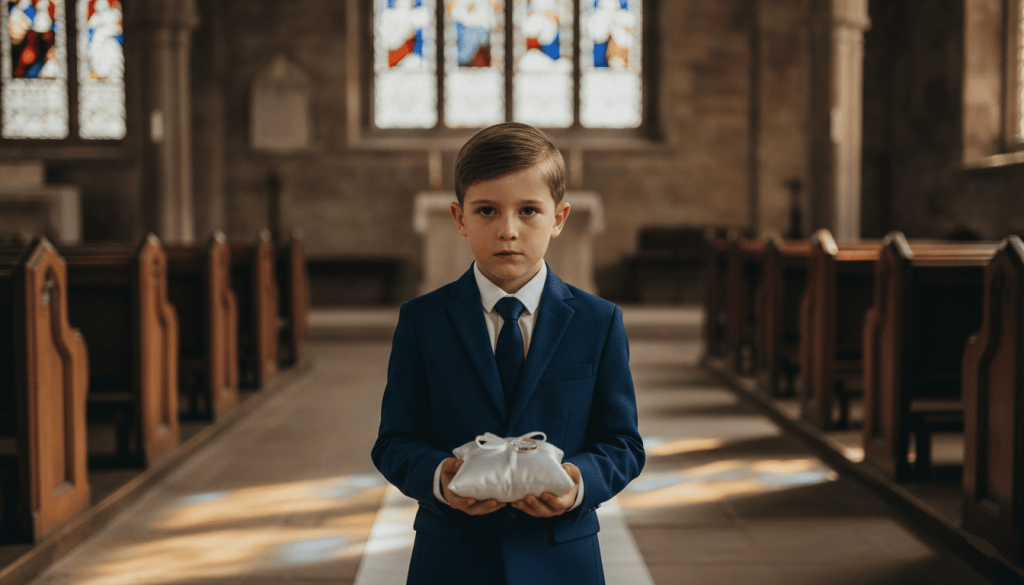
A ring bearer is the young member of the wedding party who carries the rings down the aisle during the ceremony. The role usually goes to a child between three and eight, though there are no hard rules about who can do it. I’ve planned more than 200 weddings across the Carolinas and the East Coast, and the ring bearer is one of those small roles that turns a processional into a family moment — here’s exactly what it involves, what age works, and whether anyone hands a four-year-old the actual rings.
Definition
Ring bearer — a young member of the wedding party, usually a child aged 3 to 8, who carries the wedding rings down the aisle during the ceremony.
What a ring bearer actually does
The job is simpler than the title makes it sound. The ring bearer walks down the aisle near the end of the processional, carrying the rings on a small pillow or in a box, and presents them when they reach the front. After that, their part is over — they hand the pillow to the best man or an officiant and go sit with their family for the rest of the ceremony.
Boiled down, here’s the whole role:
- Walk the rings down the aisle — slowly, ideally, though “slowly” is negotiable with a five-year-old.
- Hand off the pillow or box to a designated grown-up once they reach the front.
- Take their seat with a parent or chaperone in the front row.
That’s it. The ring bearer doesn’t have lines, doesn’t stand up front for the whole ceremony, and doesn’t need to do anything with the rings beyond delivering them. The single most useful thing you can do is give them one practice run at the rehearsal so the music and the crowd aren’t a surprise on the day.
How old should a ring bearer be?
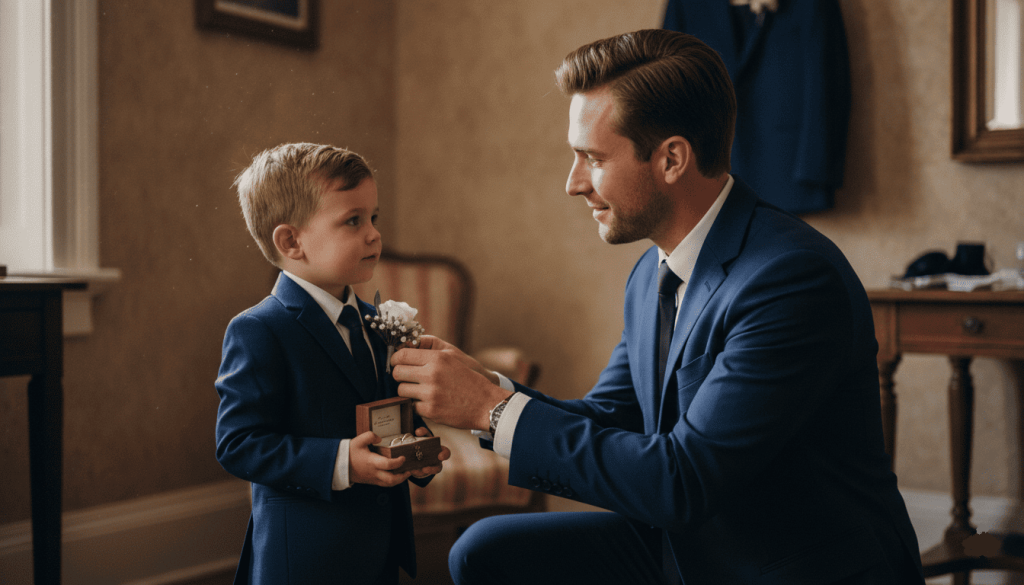
The sweet spot is three to eight years old. Younger than three, and the aisle starts to feel very long and very public for a toddler. Older than eight, and a lot of kids would rather be a junior groomsman than carry a pillow. But age is a guideline, not a rule.
What matters more than the number is the child’s temperament. I’ve watched a poised three-year-old nail it and a distractible seven-year-old freeze halfway down. Before you ask, think about whether the child is comfortable in front of a crowd, whether they’ll follow a simple cue, and whether you have a backup plan — a parent waiting at the front, or a flower girl to walk beside them — if nerves take over. None of that means skipping a younger child. It just means deciding with their personality in mind, not the calendar.
Does the ring bearer carry the real rings?
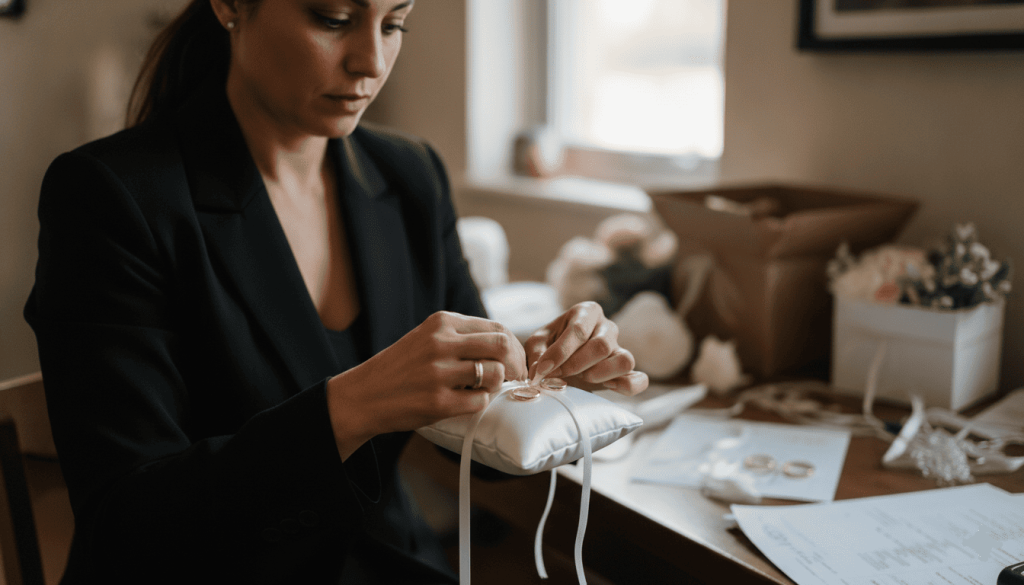
Almost never, and you shouldn’t ask them to. In most weddings, a decoy pair is tied to the pillow or tucked into the box, while the real rings stay with the best man or your maid of honor until the exchange. It removes the one genuine risk this role carries: a small child wandering off-script with two irreplaceable bands.
If you want a child to hand over the real rings during the vows, that’s lovely — just do it at the front, from a grown-up’s hand, not as a solo trip down the aisle. And if you’re still sorting out the rings themselves, it’s worth knowing which finger the wedding ring actually goes on before the big exchange, so nobody’s fumbling in the moment.
Madison’s note
“In 200-plus weddings, I’ve never once sent the real rings down the aisle with a five-year-old. Tie a decoy pair to the pillow, keep the real ones in the best man’s pocket, and you’ve removed the only thing that can actually go wrong with this role.”
— Madison Cole, Certified Wedding Planner
Who can be a ring bearer?
Anyone you want. The tradition leans toward a young boy, but there’s no rule, and I’ve seen the role filled every way you can imagine. A niece or daughter is a ring bearer just as easily as a nephew — some couples keep the title “ring bearer” regardless of gender, others say “ring girl.” A pair of cousins can walk together. A grandparent can do the honors with a “ring security” sign and get the biggest laugh of the day. And yes, the family dog counts, if someone’s willing to manage the leash.
The same logic applies to every junior role you’re filling, the way you’d weigh the mother of the bride’s role or any other spot in the party: choose the person you actually want in your photos and standing beside you, not the one who fits an old template. If there’s no child in your life to ask, you don’t need to invent one — more on that below.
Ring bearer vs flower girl: what’s the difference?
They’re a matched set in most people’s minds, but the two roles aren’t the same. The ring bearer carries the rings; the flower girl carries petals, a bloom, or a sign. Here’s the quick comparison:
On order: in the most common US processional, the ring bearer walks just ahead of the flower girl, who’s the last one down the aisle before the bride. Plenty of couples have them walk together, hand in hand, or swap the order entirely — there’s no wrong call. If you want to see exactly where these two slot in alongside the rest of the party, map it out on your wedding-day timeline so the rehearsal isn’t the first time anyone hears the plan.
Frequently asked questions
Can a girl be a ring bearer?
Yes. There’s no rule that the ring bearer has to be a boy. I’ve had couples use a niece, a daughter, or a pair of cousins. Some keep the title “ring bearer” regardless of gender; others use “ring girl.” Pick the child you actually want in the moment.
Does the ring bearer hold the real wedding rings?
Usually not. In most weddings a decoy pair is tied to the pillow or box, and the real rings stay with the best man or maid of honor until the exchange. It saves you the only real stress this role carries.
What age is best for a ring bearer?
Three to eight is the sweet spot. Younger than three and the aisle feels very long; older than eight and many kids would rather be a junior groomsman. Maturity matters more than the number, so weigh the child’s temperament over their exact age.
Who walks first, the ring bearer or the flower girl?
In the most common US order, the ring bearer walks just before the flower girl, who is the last one down the aisle before the bride. Couples often have them walk together or swap the order — there’s no wrong answer.
Can you have a wedding without a ring bearer?
Absolutely. It’s a sweet tradition, not a requirement. If there’s no child you’d like to ask, or you’d rather keep the processional simple, skip it. The best man and maid of honor can carry the rings instead.
So that’s the whole role: a child, usually three to eight, who walks a decoy pair of rings down the aisle and then gets to sit down and enjoy the cake. Keep the real rings with a trusted adult, give your ring bearer one rehearsal, and pick the kid you genuinely want beside you. If you’re still assembling the rest of the party, my month-by-month wedding timeline shows where every role lands.
Sources
- The Knot — Ring Bearer Duties. theknot.com
- Emily Post Institute — Wedding Etiquette. emilypost.com
Written by Madison Cole, Certified Wedding Planner. Madison planned more than 200 weddings across the Carolinas and the East Coast before launching One Stop Wedding Planner. Updated June 2026.