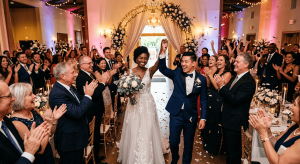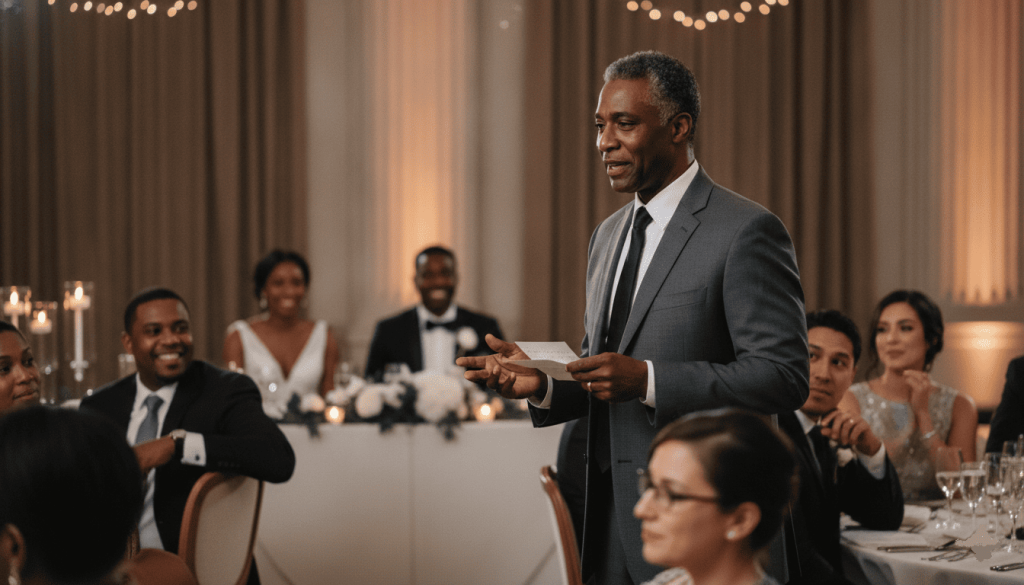
If you want the short version: at most US weddings, the best man toasts first, the maid of honor follows, a parent or host speaks next, and the couple closes with a thank-you. That is the backbone of the traditional wedding speech order. But after planning more than 200 weddings, I can tell you almost nobody runs it exactly by the book anymore, and honestly, that is fine. Here is how the order actually works, and how I sequence it on the day.
Quick answer
In the US, the most common toast block runs best man first, then maid of honor, then a parent or host, and the newlyweds close with a thank-you. Plenty of couples open the reception instead with a welcome toast from the father of the bride or from the couple. There is no fixed rule, so the smart move is to sequence speakers by tone and let the night build from heartfelt to funny.
The traditional order of wedding toasts, start to finish
The classic US sequence is built around the wedding party and the people who, by tradition, host the day. Run top to bottom, the traditional speech order looks like this:
- The best man opens the reception toasts, usually once everyone is seated for dinner. His is light and funny and ends on a real toast to the couple.
- The maid of honor follows right after, balancing him with her own stories about the bride or the couple.
- A parent or host speaks next, most often the father of the bride, who welcomes guests and toasts as the traditional host. The mother of the bride or the groom’s parents sometimes join here.
- The couple close the speeches with a short thank-you to guests and to everyone who helped pull the day together.
Here is the catch: that order is not universal, even among the big US wedding sites. The Knot‘s planners often start the sequence with the father of the bride as host, then move to the wedding party. WeddingWire puts the best man and maid of honor first, then the parents, then the couple. Both are correct. The reason they disagree is that there has never been one binding rule for the order of wedding toasts in America, only well-worn habits.
Who speaks first at a wedding, and why it’s usually the best man
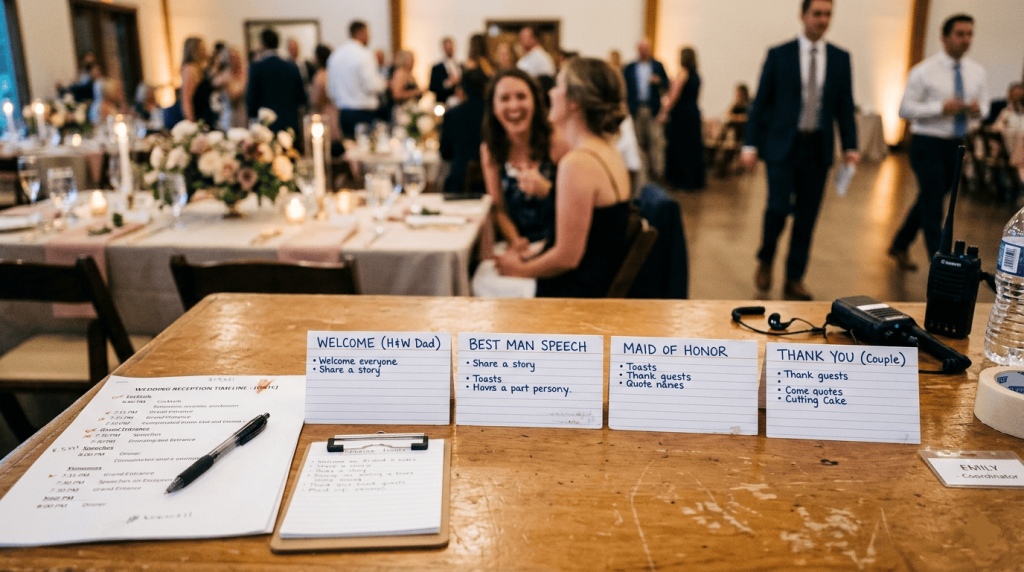
When people ask me who speaks first at a wedding, they are usually picturing two different moments and do not realize it. There is the welcome toast at the very start of the reception, and there is the toast block during the meal. They are not the same slot.
The welcome belongs to whoever is hosting, classically the father of the bride, increasingly the couple themselves. It is short, it thanks everyone for coming, and it sends people to their seats or to dinner.
The toast block is the run of speeches during the meal, and that is where the best man traditionally goes first. Inside Weddings notes that the best man makes the first reception toast, often answered by a return toast from the father of the bride. The maid of honor has since become an expected fixture right behind him.
I keep the best man and maid of honor back to back on purpose. Two wedding-party speeches in a row play off each other, and if your maid of honor is the stronger speaker, I flip the pair and let her close it. If your best man wants a head start, my best man speech examples give him a structure to steal. And if you are still deciding who to hand the mic to, my full breakdown of who gives speeches at a wedding walks through every role.
How modern couples reshuffle the order
The traditional speech order assumes a very specific cast, and most of my couples do not fit it cleanly. The change I see most often: the bride takes the mic, either on her own or in a joint toast with her partner. A generation ago that was rare. Now it is closer to standard.
Other common swaps: a mother of the bride or groom speaks, siblings or close friends are added, or the groom’s father says a few words. Traditionally the father of the groom sat this out, but if the groom wants to hear from his dad, I add him in. At a wedding with two grooms or two brides, both sets of parents can speak.
Two rules I actually hold to. First, save your strongest speaker for last, since it is the cheapest way to make the speeches feel like they built to something. Second, nobody is required to speak. If your best man freezes at the thought of a microphone, one confident toast beats four nervous ones. You can also move longer speeches to the rehearsal dinner and keep the reception tight.
When speeches happen at the reception
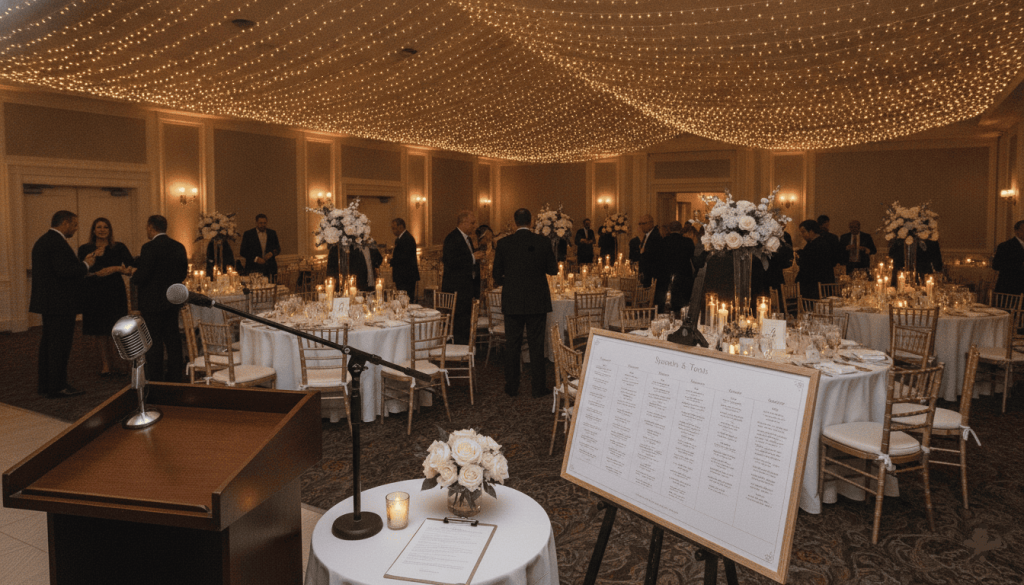
When speeches happen matters as much as the order. Most US couples slot the toasts into the reception meal, and the standard advice is to wait until roughly three-quarters of the way through dinner so guests are seated and fed before anyone taps a glass.
In my own reception timeline, I usually run the toasts right after the first course. Speakers get to relax and eat afterward instead of pushing a plate around while they panic. Doing speeches before the meal works well too, especially for nervous speakers who would rather have them over with.
What I steer couples away from is stacking speeches between every course. It reads tidy on paper, but it stalls the kitchen, breaks the room’s momentum, and turns a 30-minute block into a 90-minute one. Keep the toasts together and keep them moving. For where this all sits in the rest of the evening, see my wedding day timeline guide.
Madison’s note
“The best thing I do for speeches is order them by tone, not by title. I put the most emotional speaker in the middle and let a funny one land last, so the room is laughing right before the dancing starts. And every speaker gets a hard time cap, because the toast that runs ten minutes is the one nobody remembers fondly.”
— Madison Cole, Certified Wedding Planner
How I sequence speeches so they actually land
Order by tone, not by title. Map who is funny and who is going to make people cry, then arrange the speakers so the night rises and falls instead of flat-lining through five sweet-but-similar toasts.
Give everyone a time cap and mean it. Two to three minutes is plenty. I tell speakers the goal is one good story told well. Anything longer and you are into highlight-reel territory.
Brief your MC, DJ, or band leader to cue each speaker and close the block cleanly, because dead air between toasts is what makes a reception sag. And if your family is also sorting out titles, here is the difference between a maid of honor and a matron of honor so the title and the speaking role are settled long before the day.
Common questions about wedding speech order
Who speaks first at a wedding?
In the US, the best man traditionally gives the first toast at the reception, usually right after everyone is seated for the meal. Many couples open instead with a short welcome toast from the father of the bride or from the couple. Both are correct, so it comes down to who you want setting the tone.
Does the maid of honor or the best man go first?
The best man traditionally goes first, with the maid of honor right behind him. It is more about flow than rule: putting the two wedding-party speeches back to back lets them play off each other. If your maid of honor is the stronger speaker, flip the pair and let her close it.
When do speeches happen at a wedding?
Most US couples schedule the toasts during the reception meal, often about three-quarters of the way through dinner once guests are seated and fed. I usually run them right after the first course so speakers can relax and eat afterward. Spreading speeches between every course tends to stall the kitchen and drag the timeline.
How long should each wedding speech be?
Two to three minutes per speaker is the sweet spot. That is long enough to tell one good story and short enough to keep the room with you. Once a toast passes five minutes, guests start checking their phones.
Does the father of the groom give a speech?
Traditionally he does not, but plenty of families now include him. If the groom wants to hear from his dad, add him in. At a wedding with two grooms, both fathers can speak, either together or one after the other.
The bottom line on sequencing your toasts
If you remember one thing, let it be this: the order of wedding toasts is a starting point, not a seating chart handed down from heaven. Pick the speakers who matter, run the best man and maid of honor as your anchor pair, let the couple or the father of the bride bookend them, and protect the timing. The couples whose speeches people still quote a year later did not follow a stricter list. They chose well, sequenced for flow, and kept it short.
— Madison Cole, Certified Wedding Planner
Sources
- The Knot: Planning your wedding speech order. theknot.com
- WeddingWire: Who gives a speech at a wedding. weddingwire.com
- Inside Weddings: The must-know rules for making a wedding toast. insideweddings.com
About the author
Madison Cole is a Certified Wedding Planner who planned more than 200 weddings across the East Coast, from Charleston historic-mansion ceremonies to Outer Banks destination weekends, before founding One Stop Wedding Planner. She writes the same planning playbook she used to hand her own couples: no fluff, just what actually works on the day.