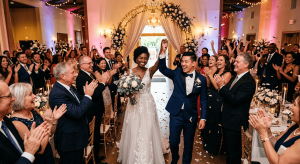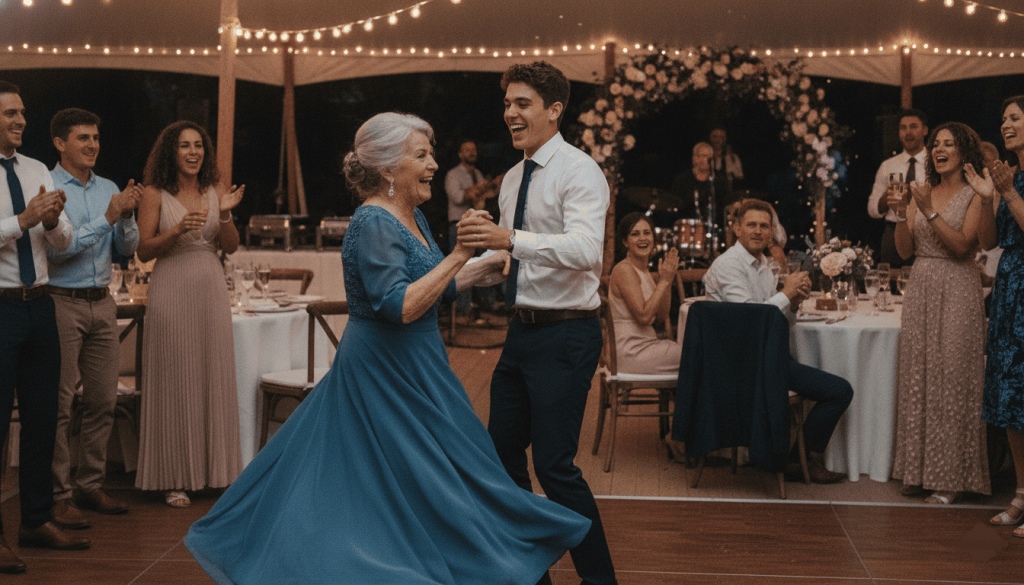
Most wedding receptions run four to six hours, and in my planning experience the sweet spot lands right around five. That covers a one-hour cocktail hour plus roughly four hours of dinner, toasts, and dancing. I’ve planned more than 200 weddings on the East Coast, and reception length is one of the first numbers a couple has to lock down, because your venue contract, your catering bill, and your guests’ stamina all hang on it. Below I’ll show you where those hours actually go, how the number shifts with your venue and guest list, and how to decide whether four hours or five fits your night. Here’s the version I give my own couples, minute by minute.
Quick answer
A wedding reception usually lasts 4 to 6 hours, with about 5 hours being the US standard: roughly 1 hour for cocktails and 4 hours of dinner and dancing. Drop below 4 hours and the night feels rushed once toasts and cake are factored in; push past 6 and most guests start fading. Your venue’s end time is usually the real deciding factor.
The short answer: 4 to 6 hours, with 5 as the safe default
When couples ask me how many hours a wedding reception should be, I give them a range and a default. The range is 4 to 6 hours. The default, if nothing about your day forces the issue, is 5 hours.
That default isn’t just my preference. The Knot puts the average reception at about 5 hours, broken into one hour of cocktails and four hours of dinner and dancing. WeddingWire frames it slightly differently: the reception itself (dinner and dancing) runs about four hours, while the full event from ceremony to last dance spans closer to six. Both are describing the same night from different starting points, and both land inside that 4-to-6 window.
The reason 4 hours is the floor is simple math. By the time you subtract cocktail hour, dinner service, a couple of toasts, and a cake cutting, a reception shorter than four hours leaves you almost no real dancing. The reason 6 hours is the ceiling is human: I have never planned a wedding where the dance floor was busier at hour six than it was at hour four. People love you, but they also have babysitters and early flights.
Did you know
The Knot pegs the average reception at about 5 hours: one hour of cocktails plus four hours of dinner and dancing. Source: The Knot, A Traditional Wedding Reception Timeline.
What’s in those hours: a reception timeline breakdown
The five-hour number only makes sense once you see where it goes. When I build a wedding reception timeline, I’m really budgeting minutes across six segments. Here’s the working template I start every couple on before we adjust for their venue.
What a typical 5-hour reception looks like
| Segment | Typical length | What’s happening |
|---|---|---|
| Cocktail hour | 60 min | Guests mingle over drinks and bites while you finish portraits. |
| Grand entrance and first dance | 15 min | Pulls everyone into the room and sets the energy. |
| Dinner service | 60 min | Plated or buffet, with conversation-friendly background music. |
| Toasts | 15-20 min | Best man and maid of honor, spread between courses so guests stay seated. |
| Open dancing | 90-120 min | The core of the night, and where most of your hours should go. |
| Cake cutting and send-off | 20-30 min | Cut the cake, last dance, grand exit. |
Times are a working template; your venue’s end time and dinner format will shift them.
Notice that dancing takes the biggest slice, around 90 minutes to two hours. That’s deliberate. The structured moments (entrance, dinner, toasts, cake) are what fill the timeline, but the open dance floor is what people remember. If you’re trimming hours, protect the dancing and tighten everything else. If you want a fuller picture of how the reception sits inside the rest of the day, I walk through it in my guide to what a wedding reception actually includes.
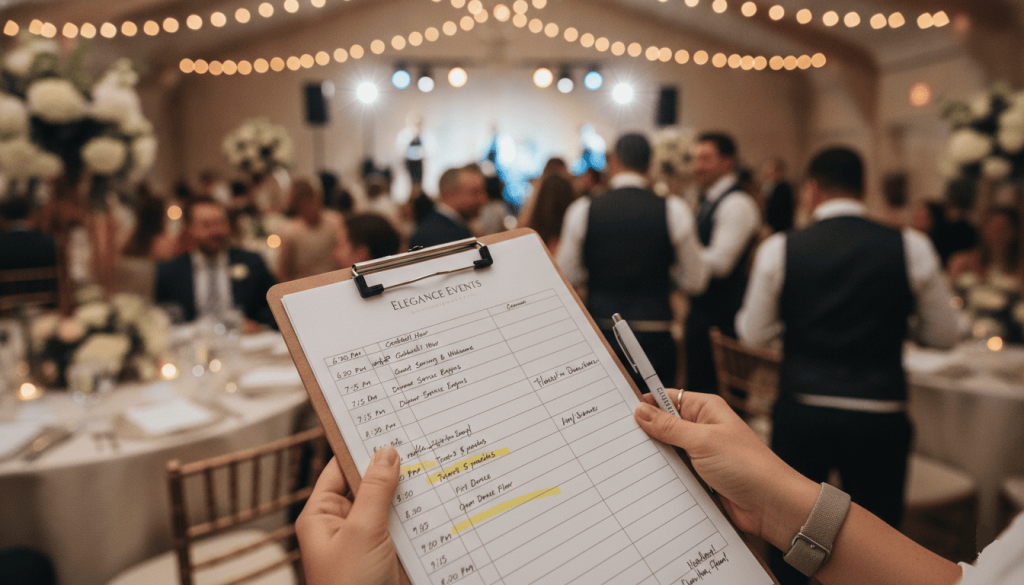
How reception length changes with your venue, style, and guest count
The 4-to-6 range is the starting point. Four things move you up or down inside it, and usually one of them decides the whole question for you.
Your venue’s end time
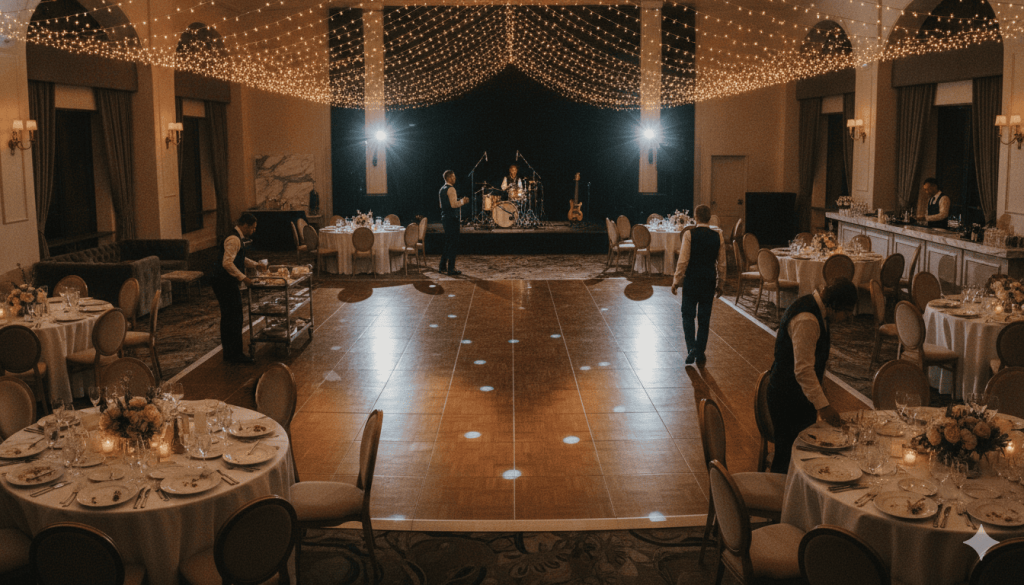
This is the big one. Plenty of venues, especially hotels, country clubs, and anything residential, write a hard end time into the contract, often 10 or 11 p.m. If your reception starts at 6 and the lights come up at 10, you have a four-hour reception whether you wanted one or not. Always read the contracted hours before you fall in love with a timeline. Many venues sell extra hours, but they’re rarely cheap. Vetting the contract is half the reason I tell couples to start with finding the right wedding venue before locking anything else.
Seated dinner vs. cocktail-style
A formal plated dinner eats more clock than people expect, easily 60 to 90 minutes of seated service, which pushes you toward the longer end of the range. A cocktail-style reception with heavy hors d’oeuvres and lounge seating instead of assigned tables can feel complete in four hours, because nobody is waiting on courses. If you want a long dance floor but a shorter total night, cocktail-style is the lever.
Guest count
More guests means more time spent in logistics: a longer buffet line, more tables to greet, a slower meal service. A 200-person seated wedding genuinely needs more runway than a 50-person dinner party, where the whole room moves as one. Big guest lists drift toward 5 to 6 hours; intimate ones are comfortable at 4.
Whether the ceremony and reception share a location
If your ceremony and reception are in the same place, you save the travel gap and your timeline tightens up. If guests have to drive between two sites, build in 30 to 45 minutes of transition that doesn’t count as reception time but still eats your venue window. I factor this into every month-by-month wedding timeline I build.
How to decide: 4 hours, 5 hours, or 6
Once you know your venue window, the choice between a 4-hour and a 5-hour reception usually comes down to two questions: how much dancing do you want, and how formal is the meal?
Here’s how I steer it. Choose a 4-hour reception if you have a shorter guest list, a cocktail-style or buffet meal, a crowd that isn’t built for late nights, or a venue that ends early anyway. Four hours done well never feels skimpy; it just runs lean. Choose a 5-hour reception if you’re doing a full seated dinner, hosting a larger group, or you simply want the extra 40 to 60 minutes of open dancing that the fifth hour buys you. That single hour is almost always spent on the dance floor, which is the best use of it.
I rarely steer couples to a 6-hour reception unless there’s a real reason: a big multicultural celebration with several traditions to honor, a destination weekend where this is the one event, or a guest list that genuinely parties late. Past five hours, you’re paying for vendor overtime, bar, and staff while the room slowly empties. Keeping the floor full for that long takes a deliberate plan and the right music; a tired wedding playlist is where long receptions go to die.
Madison’s note
“If you only have the venue until 10 p.m., build the timeline backward from there before you commit to a five-hour plan. I’ve watched couples lose 40 minutes of dancing because the toasts and cake cutting ran long and nobody budgeted a buffer.”
— Madison Cole, Certified Wedding Planner
Two reception-length calls couples almost always get wrong
After a couple hundred of these, I see the same two timing mistakes on repeat, and they pull in opposite directions.
The first is booking too short and not telling guests. I had a couple a few seasons back set a tight three-and-a-half-hour reception to save on the bar, which is fine, except they didn’t arrange a second spot. The music stopped at 9:30, fifty people were still dancing, and everyone stood in the parking lot deciding where to go. A short reception works beautifully, but only when there’s an after-party that guests know about in advance, or when the early end is clearly the plan.
The second is the opposite: over-buying hours. A bride last spring booked the venue an extra hour to 6 total “just in case.” By hour five, maybe fifteen guests were left, the band was playing to an empty floor, and she’d paid for vendor overtime across the board. If you’re unsure, book the shorter window and keep an extra hour as a paid option you can trigger night-of only if the floor is still packed. Most of the time, it won’t be, and that’s a good thing.
Where these numbers come from
The figures above aren’t a guess. The 5-hour average and the cocktail-plus-dinner-and-dancing split come from The Knot’s reception timeline guidance, which reflects data and planner input across a large volume of US weddings. WeddingWire’s breakdown, where the reception runs about four hours inside a six-hour total event, lines up with the same shape. Zola’s hourly breakdown lands a touch higher, putting most receptions in the 5-to-7-hour band and treating four hours as the practical floor. Across all three, the consensus is the same: 4 to 6 hours, clustered around five.
Sources
- The Knot, A Traditional Wedding Reception Timeline. theknot.com
- WeddingWire, How Long Is a Wedding Reception. weddingwire.com
- Zola, How Long Is a Wedding Reception: An Hourly Breakdown. zola.com
Frequently asked questions
What is the average wedding reception length?
The average wedding reception in the US runs about 5 hours, made up of roughly one hour of cocktails and four hours of dinner and dancing. Most fall somewhere between 4 and 6 hours depending on the venue’s end time and whether the meal is a formal seated dinner.
How many hours is a wedding reception from start to finish?
The reception itself is usually 4 to 5 hours. If you count the ceremony and cocktail hour on the front end, the full event spans closer to 6 hours, so a 5 p.m. start typically wraps around 11 p.m.
Is a 4-hour reception too short?
No. Four hours is the standard industry minimum and works well for cocktail-style receptions, buffets, or smaller guest lists. It only feels short if you try to fit a full seated dinner, long toasts, and two hours of dancing into it. If you want it shorter than four hours, plan an after-party and let guests know in advance.
What’s better, a 4-hour or 5-hour reception?
It depends on your meal and crowd. A 4-hour reception suits cocktail-style events, smaller groups, and venues that end early. A 5-hour reception fits a full seated dinner and larger guest lists, and it buys you roughly an extra hour of open dancing. The fifth hour is almost always spent on the dance floor, which is the best return on the cost.
When should a wedding reception end?
Most evening receptions end between 10 p.m. and midnight, with 11 p.m. being a common close. The deciding factor is usually your venue’s contracted end time, so confirm that before you set the schedule. A grand send-off also reads better earlier in the night, while you still have a crowd to fill the exit photos.
If there’s one number to lock first, it’s your venue’s end time, then build the rest of the night backward from it so the dancing never gets squeezed. For the full minute-by-minute version, including the ceremony and cocktail hour, walk through my month-by-month wedding timeline guide, or start from the top with how to plan a wedding.
Written by Madison Cole, Certified Wedding Planner. Updated June 2026.