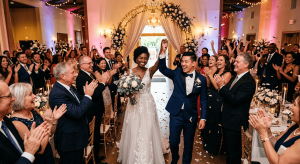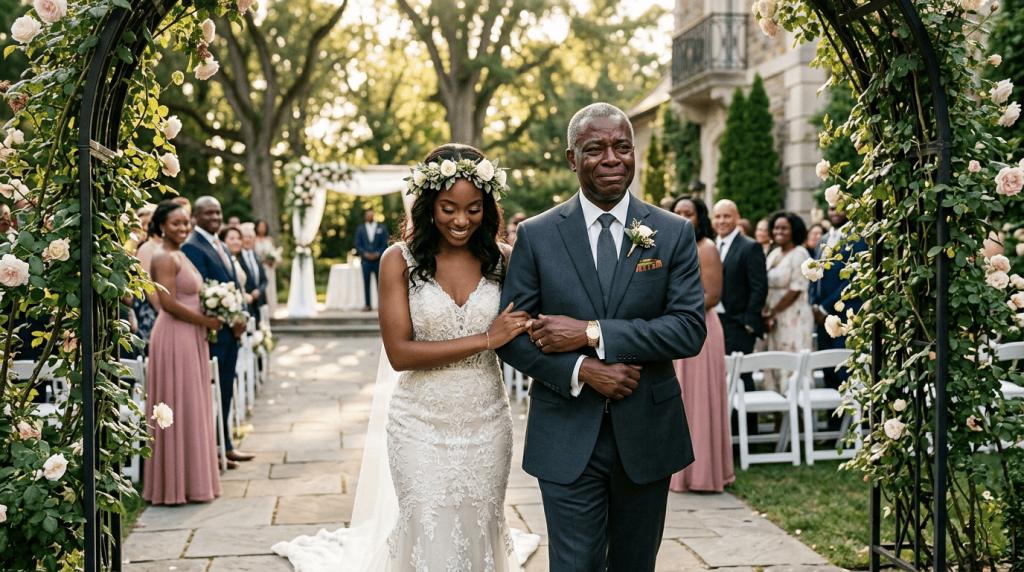
The father of the bride has one job above all the others: show up as support, in whatever shape the bride needs that day. In practice that means a handful of signature moments (walking her down the aisle, the first toast, the father-daughter dance) wrapped around a lot of quiet logistics. I’ve planned 200+ weddings, and the dads who get it right treat the role as presence, not performance.
The short answer
The father of the bride traditionally escorts the bride down the aisle, gives the first welcome toast, shares the father-daughter dance, and helps host the day. Historically he also covered much of the cost, though today most couples split the wedding or pay for it themselves. Beyond those set-piece moments, his real role is steady support before and during the wedding.
The short version of the father-of-the-bride role
Strip away the ceremony and the father of the bride (FOB) role comes down to two things: a few high-visibility moments on the day, and steady support through the planning months. The Knot puts it plainly in its rundown of traditional dad duties: once you set funding aside, the responsibility that matters most is simply being there for the bride.
What that looks like has loosened a lot. A generation ago the script was rigid: dad paid, dad walked, dad toasted, dad sat down. Today I see fathers as involved or as hands-off as the family wants, and both versions are completely fine. The role flexes to the relationship, not to a rulebook.
Before the wedding: where dad actually helps
Most of the father of the bride’s work happens long before anyone walks anywhere. While the bride and the mother of the bride are deep in the details, dad is often the one fielding the practical pieces that keep planning moving.
The most useful contributions I see: joining venue tours and lending a level head on contracts, weighing in (gently) on the guest list, hosting or co-hosting an engagement party, and arranging the first meeting between both sets of parents if they haven’t met. Play to his strengths. A dad who negotiates for a living is gold on a catering quote.
Mostly, though, the job before the wedding is emotional ballast. Planning gets tense, and a father who can defuse a guest-list standoff or talk the bride down after a vendor falls through is doing more than any line item on a checklist. It’s the same support backbone I’d map out for what a maid of honor does, just from a parent’s seat.
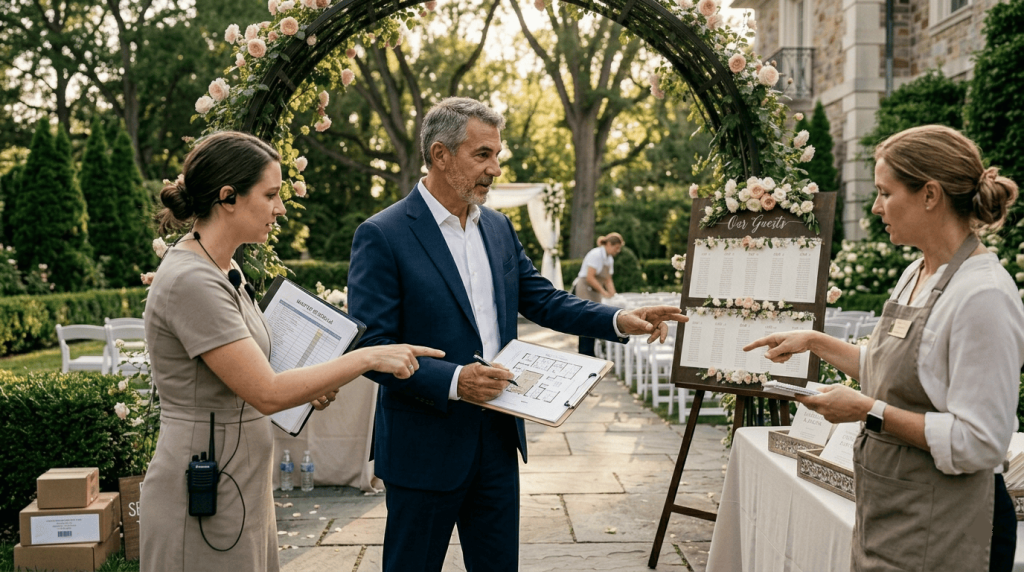
On the wedding day: his big moments
This is where the father of the bride earns the title. Here’s the run of show I hand most dads, in order.
Getting the bride to the ceremony on time
Before the aisle there’s a quieter duty: making sure the bride actually arrives, calm and on schedule. That can mean riding with her, keeping the morning light, and steering clear of heavy talk that smudges makeup. Many photographers also build in a private first look between dad and the bride here, and it’s often the most genuine photo of the whole day.
Walking her down the aisle
The escort down the aisle is the moment everyone pictures. Two practical notes I always give: practice the pace at the rehearsal, because mismatched stride lengths genuinely throw off the walk, and if there’s a veil or blusher to lift, rehearse that too. The “giving away” line is optional and increasingly skipped, which is the couple’s call, not tradition’s.
The first toast and welcome speech
Traditionally the father of the bride gives the first toast early in the reception, welcoming guests and the new in-law into the family. WeddingWire’s etiquette rundown lands in the same place: keep it short, warm, one story, done. The dads who bomb are the ones who treat it like a keynote. If yours wants a head start, our speech examples translate cleanly to a father’s toast.
Madison’s note
“The two FOB mistakes I see every season: a toast that runs past four minutes, and a dad who wanders off during family photos. Time his toast at the rehearsal dinner, and ask the planner exactly when he’s needed for portraits. Those two fixes save the timeline every time.”
— Madison Cole, Certified Wedding Planner
The father-daughter dance
After dinner comes the father-daughter dance, usually right after the couple’s first dance. It doesn’t need choreography. It needs a song that means something to the two of you, and a dad who’s willing to sway through it. If you’re stuck on the music, start with our list of father-daughter dance songs.
Across the reception, dad also acts as a host: greeting guests, making out-of-towners feel welcome, and in some families closing the night by checking that vendors are squared away. None of it is heavy lifting. The tone he sets ripples out to every table.
Does the father of the bride pay for the wedding?
Short answer: not the way he used to. The old etiquette assumed the bride’s family hosted and footed most of the bill, and the Emily Post Institute still publishes that classic division. But Emily Post itself notes that up to 70% of weddings today are paid by the couple, or by some mix of the couple and both families.
In my own bookings, a shared split is now the norm. Plenty of fathers contribute a set amount or cover one category, like the bar, the band, or the rehearsal dinner, rather than the whole event. If you want a realistic sense of the numbers before that conversation, here’s what a wedding actually costs now.
Etiquette note
Whoever hosts traditionally gets named first on the invitation, which is why the bride’s parents historically headed the wording. If money is being shared, settle it with one candid conversation early, not a running negotiation. And remember the Emily Post rule of thumb: the wedding belongs to the couple, no matter who contributes.
When the family doesn’t fit the traditional script
Plenty of weddings don’t have one tidy father of the bride, and the role bends easily. I’ve had brides walk with two dads, with a stepfather and a biological father splitting the aisle, with a brother or grandfather, with their mom, or alone by choice. Jewish tradition has both parents escort the bride, which is a graceful model to borrow from if the question of who walks feels loaded.
If parents are divorced, sort the seating and the walk early so nobody’s guessing on the day. There’s no etiquette rule that the escort has to be a father at all, and a mother, sibling, or close friend can fill the moment just as well. The point of the walk is the relationship, not the title of the person beside you.
Frequently asked questions
Does the father of the bride pay for the wedding?
Traditionally the bride’s family covered most costs, but that’s now the exception. The Emily Post Institute notes that up to 70% of couples pay themselves or split the bill with both families. Many fathers contribute a set amount or cover one category, like the bar or the rehearsal dinner, instead of the whole wedding.
Does the father of the bride give a speech?
Usually, yes. He traditionally gives the first toast early in the reception, welcoming guests and the couple’s new in-law. Keep it to two or three minutes, warm, and built around one story. It’s a toast, not a keynote, so practice it out loud before the day.
Who walks the bride down the aisle if her father isn’t there?
Anyone she’s close to: her mother, a stepfather, a sibling, a grandparent, both parents together, or no one at all. There’s no etiquette rule requiring a father. Decide early and practice the walk at the rehearsal so it feels natural on the day.
What does the father of the bride do during the ceremony?
He escorts the bride down the aisle, may lift her veil or take part in a giving-away line if the couple wants one, then takes his seat in the front row. Some officiants also invite him into a blessing or a unity moment, so check the ceremony order in advance.
The takeaway for the dad in your life
If you pass one thing along to the father in your wedding, make it this: the role is judged on warmth, not on a checklist. Walk slow, toast short, dance once, and let everything else be presence. The fathers my brides remember most weren’t the ones who paid the most or said the most. They were the ones who stayed close and stayed calm.
Written by Madison Cole, Certified Wedding Planner
Madison has planned 200+ weddings across the US East Coast and writes the etiquette and planning guides at One Stop Wedding Planner. She covers the real-world version of wedding roles, not the rulebook version.
Sources
- The Knot — Traditional Father-of-the-Bride Duties. theknot.com
- WeddingWire — Father & Mother of the Bride Duties. weddingwire.com
- Emily Post Institute — Wedding Expenses: Who Pays for What. emilypost.com