You opened the invitation, saw a phrase like “cocktail attire” or “black-tie optional,” and now you’re standing in front of your closet with no real idea what those words translate to. This is one of the most common questions I get from the guest side of the aisle, and it almost never comes from a lack of nice clothes. It comes from the fact that wedding dress codes for men are written as if everyone already knows the rules.
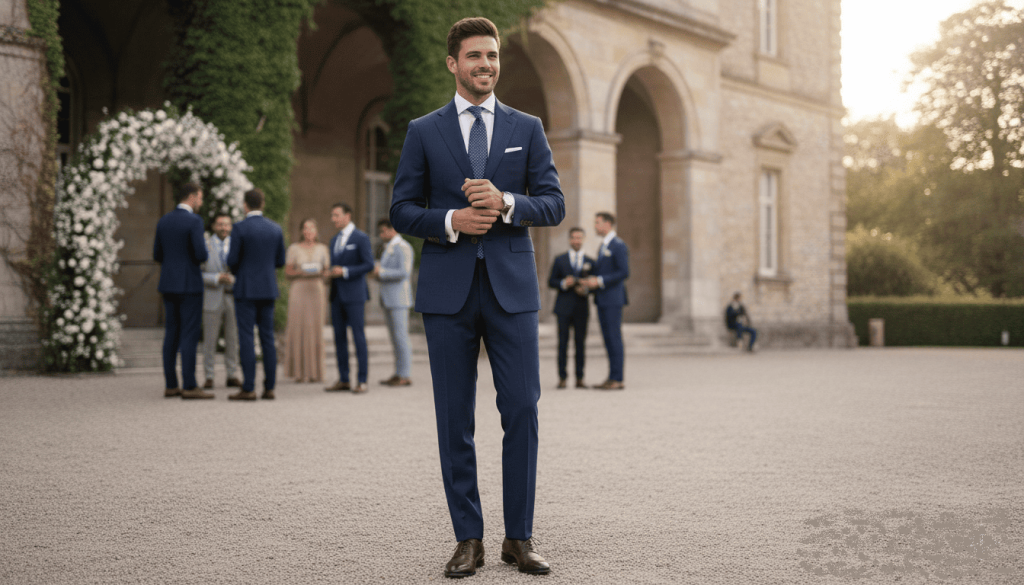
Here’s the short version. For the majority of weddings, a well-fitted suit in navy or charcoal with a tie is the correct, safe answer. The dress code on the invitation simply tells you whether to dress that up (a tuxedo for black-tie) or down (linen separates for a beach ceremony). When the wording is vague or missing, lean slightly formal. It is far easier to take off a tie than to find a jacket once you’re already there.
Across the 200+ weddings I’ve planned on the East Coast, I’ve seen men nail it with one good suit and seen others get tripped up by a single detail, usually the wrong shoes or a season-inappropriate fabric. This guide walks you through men’s wedding guest attire by dress code, then covers how the season, venue, and time of day shift your choices, what to do about shoes and accessories, the mistakes I see most often, and where to rent or buy when you need something new.
Your quick dress code cheat sheet
If you only read one thing before you shop, read this. The breakdown below is the same cheat sheet I hand guests who text me a photo of their invitation in a panic two weeks out. Each line maps a common wedding dress code to the outfit that reliably works.
The men’s dress code cheat sheet
- ✓ Black-tie means a tuxedo with a black bow tie, not your darkest business suit
- ✓ Black-tie optional lets you choose a tux or a dark suit and tie
- ✓ Formal calls for a suit in any color with a dress shirt and tie, dark for evening
- ✓ Cocktail and semi-formal both mean a suit or blazer with dress pants; a tie is smart but optional
- ✓ Beach and dressy casual call for lightweight separates in linen or cotton, often no tie
- ✓ When in doubt, match your leather and metals, skip white and ivory, and dress up rather than down
First, decode the dress code on the invitation
Before you think about a single garment, find the dress code. Most couples spell it out, and the most reliable place to look is the lower corner of the invitation or the details card tucked inside. If it isn’t printed, check the wedding website, because that’s where couples now put the bulk of their logistics, including attire notes that don’t fit on paper.
If you still come up empty, two clues fill the gap: the time of day and the venue. An evening reception at a hotel ballroom leans formal, while a 3 p.m. ceremony in a garden or on a lawn leans lighter. When neither the invitation nor the website says anything, a navy or charcoal suit is your default, and you can text the couple or a member of the wedding party if you want to be certain.
One thing I tell every guest: the dress code is a request from the people getting married, not a suggestion to interpret loosely. Honoring it is the easiest way to be a good guest, and it takes the guesswork off your shoulders entirely.
Men’s wedding guest attire by dress code
This is the heart of the guide. The dress codes below run from the most formal to the most relaxed. The further up the list, the stricter the expectations, so read the one on your invitation carefully and resist the urge to improvise on the formal end.
White-tie
White-tie is the most formal dress code in existence and the rarest you’ll ever see at an American wedding. If you get one, it’s specific: a black tailcoat, matching formal trousers, a white piqué bow tie, a white waistcoat, a stiff-front white shirt, and black patent leather shoes. There is almost no room for personalization here. White gloves and even a top hat are sometimes encouraged. If you’ve never owned tails, this is a rental situation, and you’ll want to book it early.
Black-tie
Black-tie means a tuxedo. According to The Knot, a black-tie wedding asks guests to wear a tux, full stop, and the safe read is that you can’t really be overdressed at one. The formula is a black or midnight blue dinner jacket with matching trousers, a crisp white tuxedo shirt, a black bow tie, and polished black shoes such as patent leather loafers or dark derbies.
The most common mistake I see is a guest treating his darkest navy business suit as close enough. It isn’t. A suit and a tuxedo read completely differently in photos, and black-tie photos are the ones that end up framed. If you’re weighing whether your situation calls for one or the other, my breakdown of a tuxedo versus a suit for a wedding sorts out exactly when each belongs.
Madison’s note
“If the invitation says black-tie and you genuinely can’t get a tuxedo in time, a very dark, very well-tailored suit with a black tie is the only acceptable fallback. I’ve seen it pass at evening weddings, but it reads as a compromise in every photo, so rent the tux if you possibly can.”
— Madison Cole, Certified Wedding Planner
Black-tie optional
Black-tie optional is the dress code couples choose when they want a formal evening but don’t want to require every guest to rent or buy a tux. It gives you a real choice: wear a tuxedo if you have one, or wear a dark suit in navy, charcoal, or black with a tie. Either reads as correct. If you go the suit route, keep it dark and keep the tie classic, since the evening still skews formal.
Formal
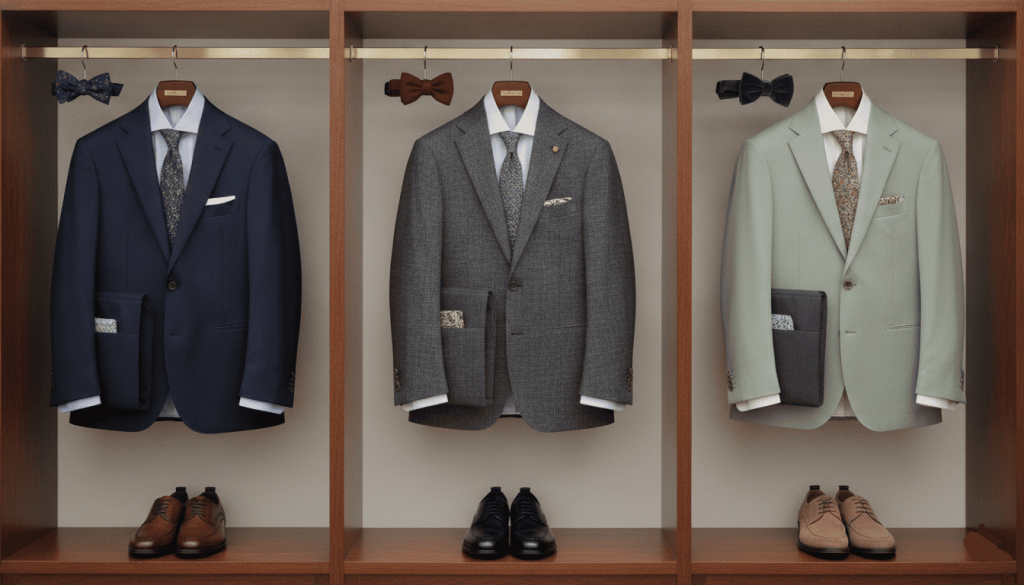
Formal attire opens the door to a suit in any color, paired with a dress shirt and a tie. For an evening wedding, dark colors still serve you best, but a deep green, burgundy, or rich blue is entirely fair game and often looks sharper than another black suit. Add a pocket square if you want a little polish. For a deeper walk through how formal differs from the codes just above and below it, see my full guide to what to wear to a formal wedding.
Cocktail and semi-formal
Cocktail attire and semi-formal are the codes guests confuse most, and the practical answer is that they call for nearly the same thing: a suit, or a blazer with dress pants. The Knot’s own guidance is that for cocktail and semi-formal weddings the call is genuinely yours, a coordinated suit or a blazer with slacks both work. A tie is a smart touch but not always required, and this is the zone where you have the most room to play with color and pattern.
If you want the line drawn precisely, I cover the distinction in semi-formal versus cocktail attire, and there’s a fuller breakdown of the code itself in what cocktail attire actually means. The short version: cocktail tilts a touch dressier and more evening-leaning, while semi-formal gives you slightly more latitude to relax the tie.
Dressy casual and festive
Dressy casual (sometimes labeled “festive” or “creative casual”) is where a blazer with chinos earns its keep. A jacket over a button-down with no tie, finished with loafers, hits the mark. This is also the code where a patterned blazer or a bolder shoe is welcome rather than risky, as long as you keep one foot in polished territory.
Beach and casual
A beach wedding rewrites the rules in favor of comfort and breathability. Skip the heavy suit and reach for lightweight separates: a linen or cotton suit, or dress pants with a crisp shirt, in lighter colors that suit the setting. A jacket is often optional, ties usually come off, and footwear leans toward loafers or clean leather shoes rather than anything you’d actually wear into sand. The one rule that survives the relaxed setting: it should still look intentional, not like you grabbed the first thing off the rack.
Dressing for the season, venue, and time of day
The dress code sets the floor. The season, venue, and time of day tell you how to execute it without being the guest sweating through a wool three-piece in July. These three factors do most of the fine-tuning.
By season
Spring and summer call for lighter fabrics and colors: linen, cotton, tropical-weight wool, and shades like tan, light gray, or soft blue for daytime. Fall and winter are the home of darker, heavier cloth, where flannel, tweed, and deeper tones such as charcoal, forest, and burgundy come into their own. Matching your fabric weight to the weather is the difference between looking comfortable and looking like you read the date but not the forecast.
By venue
A ballroom or historic mansion pushes you toward the more formal end of whatever the dress code allows. A garden, vineyard, or barn lets you soften the look with texture and lighter color. A beach or backyard ceremony invites breathable separates. Read the venue against the dress code, and when they seem to disagree, the printed dress code wins.
By time of day
Daytime weddings lean lighter in both color and formality, while evening weddings earn darker suits and a dressier finish. A 2 p.m. garden ceremony and an 8 p.m. ballroom reception can carry the exact same dress code label and still call for noticeably different outfits, so let the clock guide your shades.
Shoes, accessories, and the details that decide it
Most men get the suit roughly right and then lose points on the details. These are the elements that quietly separate a guest who looks put-together from one who looks like he’s wearing a costume.
Start with shoes. Oxfords are the dressiest and belong with formal and black-tie looks, derbies sit a notch down and cover formal through cocktail, and loafers have become the workhorse of wedding footwear because they pair with everything from a linen suit to a blazer. Save sneakers for codes that explicitly invite them, and even then keep them minimalist leather in white or black.
Then the matching rules, which are simple and unforgiving: match your leather (belt to shoes) and match your metals (watch, buckle, and cufflinks in the same family). A tie should suit the formality of the event rather than shout over it, and a black tie with a dark suit is a combination almost nobody can get wrong. Keep accessories restrained, one or two considered pieces read as style, while a pile of them reads as trying too hard.
Fit closes the deal. Your jacket sleeve should let a small band of shirt cuff show, the top button stays fastened when you stand and comes undone when you sit, and your trousers should just meet the top of your shoe. And the rule that has nothing to do with clothes but matters most: be well-groomed. A fresh shave or a neatly trimmed beard and a recent haircut do more for your look than any accessory.
Etiquette note
Two lines you don’t cross as a guest: don’t wear white, ivory, or cream, which are reserved for the couple, and don’t dress to pull focus. If the wedding party is in a specific color or style, steer clear of copying it so closely that you read as part of the lineup. The goal is to look sharp while letting the people getting married be the ones everyone notices.
Common mistakes male guests make
After enough seasons, the same handful of missteps show up again and again. None of them are catastrophic, but all of them are avoidable once you know to watch for them.
1. Treating a dark business suit as black-tie
The single most frequent error. Black-tie means a tuxedo, and a navy or charcoal suit, however nice, is a visibly different garment in person and in photos. If the invitation says black-tie, rent the tux.
2. Wearing white, cream, or the exact wedding-party look
White and ivory belong to the couple, and showing up in either is the one wardrobe choice guaranteed to get noticed for the wrong reason. The close cousin to this is dressing so much like the groomsmen that guests mistake you for one. If you’re tempted by an all-black, black-tie look, my piece on whether you can wear black to a wedding walks through when it works and when it reads as too funereal or too matchy.
3. Ignoring the season and the venue
A wool three-piece at a July beach ceremony is a long, uncomfortable afternoon, and a linen suit at a December evening reception looks underdressed. Read the date and the setting, then choose your fabric and color to match.
4. Skipping the dress code because “no one will notice”
Showing up in jeans to a wedding that asked for cocktail attire is noticed, every time. The dress code exists because the couple thought about how they wanted the day to look. Following it is the low-effort way to be the guest they’re glad they invited.
5. Over-accessorizing to stand out
A novelty tie, a loud pocket square, and a statement watch all at once turns a good outfit into a distraction. One considered detail beats three competing ones. Let the fit and the fabric carry the look.
Real planner tips for the guest side of the aisle
These are the things I find myself repeating to guests every season, the small habits that make the whole question of what to wear far less stressful.
- I tell every guest to own one good navy or charcoal suit that fits properly. It covers formal, cocktail, semi-formal, and most black-tie-optional weddings, which is the bulk of what you’ll be invited to.
- When the invitation is silent on dress code, I look at the start time first. An evening start almost always means dress it up, and a midday start gives you room to lighten the color and lose the tie.
- If you’re renting a tux, I tell clients to book it three to four weeks out during peak season (late spring through early fall), because the best sizes and styles go first.
- Buy your dress shoes before you need them and break them in at home. New leather at a wedding means blisters by the time the dancing starts.
- When two factors disagree, the printed dress code beats the venue, and the venue beats your personal preference. That order keeps you out of trouble.
- If you only have time to fix one thing, fix the fit of the shoulders and the trouser length. A modestly priced suit that fits looks better than an expensive one that doesn’t.
Where to rent or buy a suit or tux
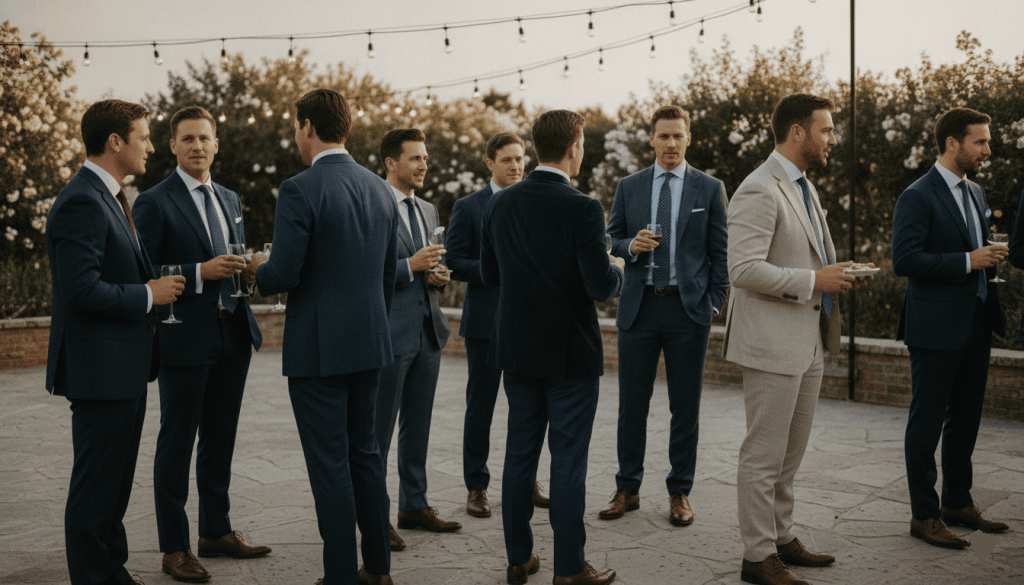
If your closet doesn’t already hold the right thing, you have two clean paths: rent or buy. Renting makes sense for a tuxedo you’ll wear a handful of times, while buying makes sense for a navy or charcoal suit you’ll reach for at every wedding, interview, and funeral for years.
For a rental tux or suit, services like Generation Tux and The Black Tux ship to your door and let you try on ahead of the date. If you’d rather see a full rundown before you commit, I’ve written detailed breakdowns of Generation Tux and of Men’s Wearhouse, which covers both rental and off-the-rack buying. Whichever route you choose, give yourself enough runway for one round of alterations, since the difference between fine and sharp is almost always in the tailoring.
Keep reading
Frequently asked questions
Can a male guest wear a black suit to a wedding?
Yes, with a little care. A black suit works well at evening and formal weddings, especially with a colored or patterned tie that keeps it from looking too severe or too funereal. Where it gets risky is an all-black look at a daytime or outdoor wedding, where it can read heavy. I break down the specifics in my guide on wearing black to a wedding.
Do I have to wear a tie to a wedding?
For black-tie, formal, and most cocktail weddings, yes, a tie is expected. For semi-formal, dressy casual, and beach weddings, it becomes optional, and skipping it is a recognized way to relax the look. When you’re unsure, wear one and loosen or remove it later if the room is clearly tieless.
What’s the difference between cocktail and semi-formal for men?
In practice they’re close enough that the same outfit covers both: a suit, or a blazer with dress pants. Cocktail tilts slightly dressier and more evening-leaning, while semi-formal gives you a touch more room to drop the tie. The full comparison lives in semi-formal vs cocktail attire.
Can I wear a navy suit to a black-tie wedding?
Black-tie specifically asks for a tuxedo, so a navy suit isn’t the intended choice. If you truly can’t get a tux, a very dark, well-tailored suit with a black tie is the accepted fallback, but it will read as a compromise. For a black-tie optional wedding, a dark navy suit and tie is perfectly correct.
What should a male guest wear to a beach wedding?
Reach for lightweight separates: a linen or cotton suit, or dress pants with a crisp shirt, in lighter colors. A jacket is usually optional and a tie usually comes off. Choose loafers or clean leather shoes over anything you’d wear into the sand, and keep the overall look intentional rather than truly casual.
Is it OK to rent a tuxedo instead of buying one?
Absolutely. Renting is the sensible move for a tuxedo you’ll wear only a few times, and modern rental services let you try on at home before the date. Buy instead when you expect to wear black-tie often. Either way, leave time for one round of alterations so the fit is right.
Sources
- The Knot: Wedding Dress Code for Guys. theknot.com
- The Knot: Black-Tie Attire Guide for Wedding Guests. theknot.com
- The Knot: Wedding Dress Code Wording Examples. theknot.com
- The Knot: What Cocktail Attire Means for Weddings. theknot.com
- Generation Tux: Black-Tie Wedding Attire for Guests. generationtux.com
- The Black Tux: Cocktail Attire for Men. theblacktux.com
Get the dress code right and the rest falls into place. Read the invitation, default to a navy or charcoal suit when the wording is vague, dress slightly up rather than down, and let the couple be the ones everyone is looking at. Do that, and you’ll be the guest who looks like he belonged in every photo.
— Madison Cole, Certified Wedding Planner