Formal means following an established custom, rule, or proper form, especially in a public or official setting. On its own, the word describes anything done by the book, from a formal apology to a formal contract. But if you typed it into a search bar, the odds are good you saw it on a wedding invitation or an event invite and you are trying to figure out what to actually wear. That is the version I get asked about most, so I will cover both here: the plain dictionary meaning, and what formal signals when it shows up as a dress code.
Definition
Formal — done according to established custom, rule, or proper form. On an invitation, it is a cue to dress up in polished, traditional clothing that sits between cocktail and black-tie.
What “formal” actually means
In plain English, formal describes something that follows accepted rules and conventions. Merriam-Webster defines it as following or according with established form, custom, or rule, and done in an official, usually public way. A formal meeting runs on an agenda. A formal apology follows the expected script. A formal education is one earned through a recognized institution rather than picked up on your own.
The word is old. It traces back through Middle English to the Latin fōrmālis, meaning “of a form,” and it has carried the same core idea of structure and propriety since the 1300s. That sense of by-the-book correctness is exactly why it became shorthand for a level of dress.
What formal means on a wedding invitation
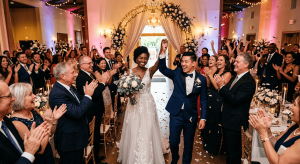
When a couple writes formal attire on an invitation, they are not asking for the strictest level of dress. They are pointing to a specific tier. On the wedding dress code scale, formal sits between cocktail and black-tie: a step up from cocktail, and a step below the tuxedos-and-gowns world of black-tie. The Knot describes it as slightly dressier than cocktail attire and a touch less dressy than a black-tie wedding.
That middle position is the whole reason formal trips people up. Read it as black-tie and you show up in a tux at a wedding where most men are in dark suits. Read it as cocktail and your knee-length dress lands a notch too casual next to the floor-length gowns. Formal asks you to look polished and put-together without going full red carpet.
Here is how formal lines up against the dress codes on either side of it:
The wedding dress code ladder, from least to most formal
| Dress code | What it signals | Women typically wear | Men typically wear |
|---|---|---|---|
| Casual | Relaxed, few rules | Sundress or nice separates | Slacks and a collared shirt |
| Cocktail | Dressy but fun | Knee-length or midi dress | Suit, tie optional |
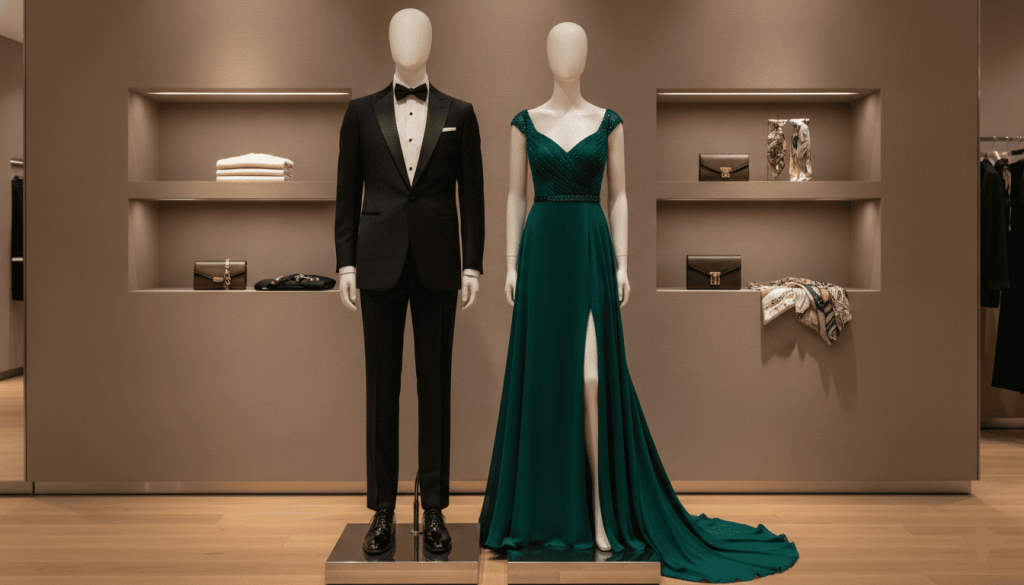
| Formal | Polished and traditional | Long gown or dressy midi | Dark suit and tie |
| Black-tie | Strictly dressy, evening | Floor-length gown | Tuxedo |
| White-tie | The most formal there is | Full-length ball gown | Tailcoat and white bow tie |
What to wear when the dress code is formal
Once you know which tier you are dressing for, the outfit gets a lot simpler. Here is what I tell guests when a couple asks for formal.
For women
Lean long. A floor-length or ankle-length gown is the safest read for formal, and it is the one detail stylists agree matters most. A dressy midi or a well-cut cocktail dress in a rich fabric can work too, especially at a daytime or less traditional formal wedding. Dressy separates and a tailored jumpsuit are fair game. If the wedding leans traditional, skew toward deeper, richer colors, which photograph as more formal than pastels. That old rule about avoiding black has loosened a lot, and I cover where black still raises eyebrows in my guide on whether you can wear black to a wedding.
For men
Men have a clearer path. A dark, well-fitted suit with a crisp white or pale dress shirt, a conservative tie, and leather dress shoes is the formal-wedding standard. A tuxedo is welcome if you own one and the wedding skews evening or upscale, but it is never required unless the invitation says black-tie or black-tie optional. Skip anything you would wear to the office on a regular Tuesday: no sport coat over chinos, no loafers without socks, no loud patterned shirt that pulls focus.
Madison’s note
“The biggest formal-wedding mistake I see is guests over-correcting into black-tie. I have watched men sweat through rented tuxedos at a 4 p.m. garden ceremony where the dress code was simply formal and every other guy was in a navy suit. When in doubt, a dark suit and a real tie clears the bar at almost any formal wedding I have planned.”
— Madison Cole, Certified Wedding Planner
Formal vs. the dress codes it gets confused with
Three dress codes get tangled up with formal, and sorting them out saves a lot of fitting-room panic.
Cocktail attire is one notch down: knee-length or midi dresses, a sharp suit, and more room to play with color. If you want the full picture, I walk through it in my guide to what cocktail attire means. Semi-formal sits just below cocktail, dressy but relaxed, and the line between the two is genuinely blurry. Emily Post and most stylists treat them as close cousins. I compare them directly in my piece on semi-formal versus formal attire and in my explainer on what semi-formal attire means.
Black-tie is the one above formal, and it is genuinely stricter. Generation Tux puts it plainly: black-tie requires tuxedos and gowns, while formal is a broader category that allows dark suits and cocktail dresses.
Etiquette note
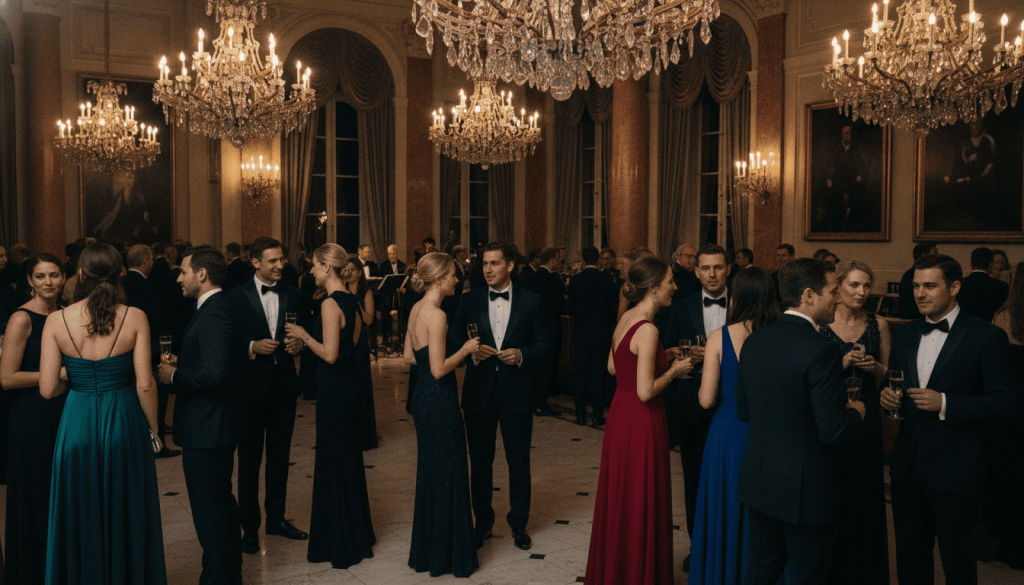
Setting a dress code is the couple’s call, and honoring it is the guest’s job. Emily Post’s long-standing guidance is that a stated dress code is a courtesy, not a demand to buy something new. If formal feels out of reach, a dark suit or a long dress you already own almost always honors the request. When the invitation says nothing at all, take your cue from the venue and the hour: an evening ballroom leans formal, an afternoon backyard does not.
Where people get “formal” wrong
A few formal misreads come up every season. The most common is treating formal and black-tie as the same thing; they are not, and a tux at a plain formal wedding can leave you overdressed. The second is assuming formal bans color outright, when deep jewel tones like navy, emerald, and burgundy all read beautifully formal.
The third is the length question for women: when in doubt, longer almost always photographs as dressier, so a maxi beats a mini at a formal event. And the last is forgetting the venue and the time. The same word means something dressier at a 7 p.m. hotel reception than at a noon vineyard lunch.
Common questions about formal attire
Does formal mean black-tie?
No. Formal is a step below black-tie. Black-tie specifically calls for a tuxedo and a floor-length gown, while formal allows a dark suit or a long-to-midi dress. If a couple wants tuxedos, they will write black-tie or black-tie optional on the invitation.
Can a woman wear a short dress to a formal wedding?
She can, but length is the riskiest call. A long gown is the safest read for formal. A dressy midi or a well-cut cocktail dress in a rich fabric can work at a daytime or modern formal wedding, but knee-length looks belong more naturally to a cocktail dress code.
Is a suit okay for a formal wedding?
Yes. A dark, well-tailored suit with a white shirt, a tie, and leather dress shoes is the formal standard for men. A tuxedo is optional, not expected, unless the invitation specifically says black-tie or black-tie optional.
What is the difference between formal and semi-formal?
Formal is dressier. Semi-formal leans toward a cocktail dress or a suit without a tie strictly required, and it gives more leeway on length and color. Formal pushes toward long dresses for women and a full suit-and-tie look for men.
The short version
If you remember one thing, let it be the ladder: casual, cocktail, formal, black-tie, white-tie. Formal lives in the comfortable upper-middle, dressy and traditional without the rented-tux pressure. Get the tier right and the rest of the outfit falls into place. For a full walkthrough of outfits, colors, and shoe calls by season, see my complete guide to what to wear to a formal wedding.
I have spent the better part of a decade decoding invitations exactly like this one for couples and their guests across the east coast. The word looks vague on paper, but it points to a clear, wearable middle ground once you know the scale.
— Madison Cole, Certified Wedding Planner
Sources
- Merriam-Webster — “Formal” definition. merriam-webster.com
- Dictionary.com — “Formal” (definition and origin). dictionary.com
- The Knot — “Formal Attire, Defined.” theknot.com
- Generation Tux — “Black Tie vs. Formal Attire.” generationtux.com
- SuitShop — “Formal vs. Semi-Formal Attire.” suitshop.com