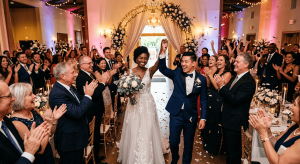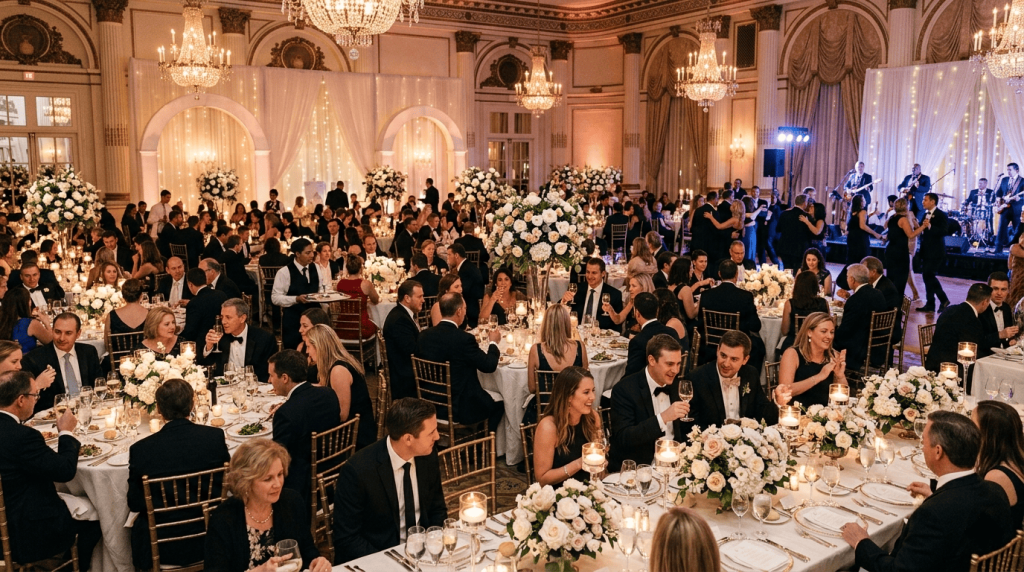
A wedding reception is the party that follows the ceremony, where the newly married couple and their guests eat, drink, toast, and dance to celebrate the marriage. The ceremony is where you become married; the reception is where everyone celebrates it. I’ve planned more than 200 weddings on the East Coast, and the reception is the part guests actually remember.
Definition
Wedding reception — the celebration held after a wedding ceremony, where the couple and their guests gather for food, drinks, music, and dancing to mark the marriage.
The short answer, and the part most guides skip
The word reception goes back to the idea of the couple receiving their guests for the first time as a married couple. Historically, the newlyweds greeted and thanked everyone who came to witness the marriage. Over time, that simple welcome grew into the full evening of dinner, toasts, and dancing we plan today.
In the US, a reception usually runs 4 to 5 hours and includes a meal, a few speeches, a first dance, and open dancing. It can be a seated dinner in a ballroom, a tented backyard cookout, or a brunch the morning after. The format is entirely the couple’s call, and I’ve planned every version of it.
Wedding ceremony vs. wedding reception: what’s different
The ceremony and the reception are two distinct parts of the same day. The ceremony is the formal piece where vows and rings are exchanged and the couple is officially married. The reception is the celebration that comes right after, and it’s where the mood shifts from solemn to festive. The Knot lays out the same split in its ceremony versus reception breakdown.
Ceremony vs. reception at a glance
| Wedding ceremony | Wedding reception | |
|---|---|---|
| Purpose | Vows and rings exchanged; the couple is married | Celebrating the marriage with everyone |
| Length | About 20 to 45 minutes | About 4 to 5 hours |
| Mood | Formal, focused, often quiet | Relaxed, social, festive |
| Typical venue | Church, garden, courthouse, scenic spot | Ballroom, banquet hall, tent, restaurant |
| Guest list | Sometimes smaller and more intimate | Often the full guest list |
One practical difference I flag for every couple: the two guest lists don’t have to match. Plenty of couples keep the ceremony small and personal, then open the reception up to a wider circle of friends and coworkers. It’s also not unusual for a guest to attend only the reception.
What actually happens at a reception, in order
Receptions feel free-flowing to guests, but behind the scenes they run on a tight order of events. Here’s the run of show I build for almost every couple, give or take a tradition:
- Cocktail hour while the couple finishes photos and guests settle in
- Grand entrance and introduction of the newlyweds
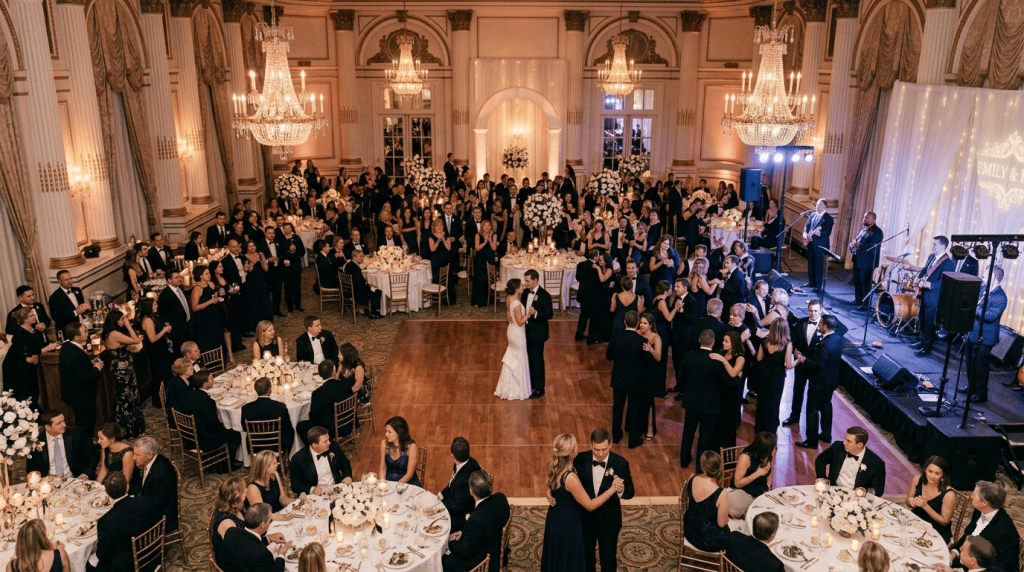
- First dance, usually right after the entrance
- Welcome and dinner, plated or buffet
- Toasts from the best man, maid of honor, and sometimes a parent
- Parent dances, such as the father-daughter and mother-son dances
- Cake cutting
- Open dancing for the rest of the night
- Optional extras like a bouquet toss, photo booth, or late-night snack
- Last dance and a grand exit or send-off
None of this is mandatory. Couples I work with regularly cut the bouquet toss, swap a sit-down dinner for food stations, or skip a formal exit. If you want the full timing breakdown, I walk through it in my month-by-month wedding timeline guide. For the music side, my picks for the best wedding songs for the first dance and dance floor cover most of what you’ll need, and if you’ve got people giving toasts, send them my best man speech examples before the big night.
Madison’s note
“The gap between the ceremony and the reception trips up more couples than any other piece. If your reception starts more than 90 minutes after the ceremony ends, plan something for your guests, even just a coffee station near the venue. I’ve watched too many people sit in a parking lot waiting for the doors to open.”
— Madison Cole, Certified Wedding Planner
Do you actually need a reception?
No. A reception is a beloved tradition, but it isn’t required to be married. Some couples I’ve worked with do a ceremony only and head straight to a quiet dinner with immediate family. Others host a relaxed brunch or luncheon instead of an evening party.
It helps to know that the reception is the most expensive part of the day. According to The Knot Real Weddings Study, the average US wedding cost about $33,000 in 2024, and the venue alone averaged around $12,900, with catering making up close to a quarter of the budget. That’s why I always start the money conversation with the reception. If you’re working out who covers it, my breakdown of who pays for the wedding is a good place to begin, and for the full picture see how much a wedding actually costs.
Frequently asked questions
What happens at a wedding reception?
A reception usually includes a grand entrance, a first dance, a meal, toasts, cake cutting, and open dancing. The couple thanks their guests and celebrates the marriage. Many add extras like parent dances, a bouquet toss, or a photo booth, and skip whatever doesn’t fit their style.
How long does a wedding reception usually last?
Most US receptions run about 4 to 5 hours, often starting in the late afternoon or early evening and ending around midnight. Shorter brunch receptions can wrap in 2 to 3 hours, while some celebrations stretch much longer. Your venue contract usually sets the hard cutoff.
Does the reception come before or after the ceremony?
The reception almost always comes after the ceremony. In most cases it follows right away, sometimes at the same venue. When there’s a gap, couples typically use it for photos, and guests enjoy a cocktail hour before the party begins.
Do you have to have a wedding reception?
No. A reception is a tradition, not a requirement. You’re fully married once the ceremony is complete. Couples skip or shrink the reception for budget, style, or simplicity, choosing a small dinner, a brunch, or no party at all.
If there’s one thing I’d leave you with, it’s this: the reception is the only part of the day your guests spend hours inside, so it’s worth designing around how the room will actually feel, not just how the photos will look.
— Madison Cole, Certified Wedding Planner