Black tie optional means you get to choose. You can wear full black-tie formalwear (a tuxedo or a floor-length gown), or you can step down one notch to a dark formal suit or a long, dressy dress. The “optional” loosens the rule without lowering the bar: the couple wants a formal room, they just are not requiring every guest to rent a tux. Here is the read I give guests who text me a photo of the invitation in a panic.
Definition
Black tie optional — a formal dress code where guests choose between black-tie attire (a tux or floor-length gown) or a dark suit or long dress.
What the “optional” actually gives you
The word that trips people up is “optional,” and it rarely means what most guests hope. It is not a green light to dress down. What it offers is a choice between two formal looks: the full black-tie version, or one step below it.
The Knot’s editors put it plainly: the real difference between black tie and black-tie optional comes down to choice, not formality. A traditional black-tie invitation makes the tuxedo and floor-length gown non-negotiable. Add “optional,” and a dark formal suit or a long dress becomes a perfectly correct alternative.
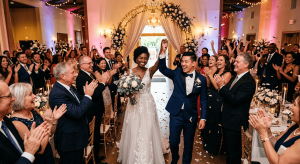
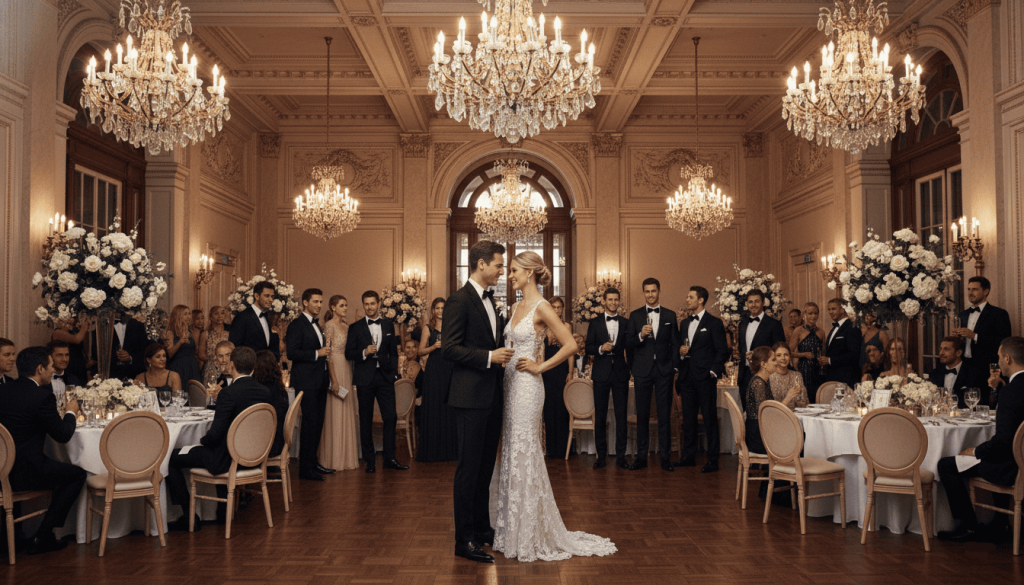
You will usually see this code on evening weddings at ballrooms, hotels, estates, and country clubs, often with larger guest lists. Couples reach for it when they want a polished, formal room but do not want to make everyone rent formalwear. Note that the couple and the wedding party are typically still in full black tie.
So when you are genuinely torn, the safe move is to round up toward black tie, never down. If you default to a dark, formal look in black, you will read correctly in almost any black-tie-optional room.
Black tie optional, at a glance
| If you’re… | Aim for |
|---|---|
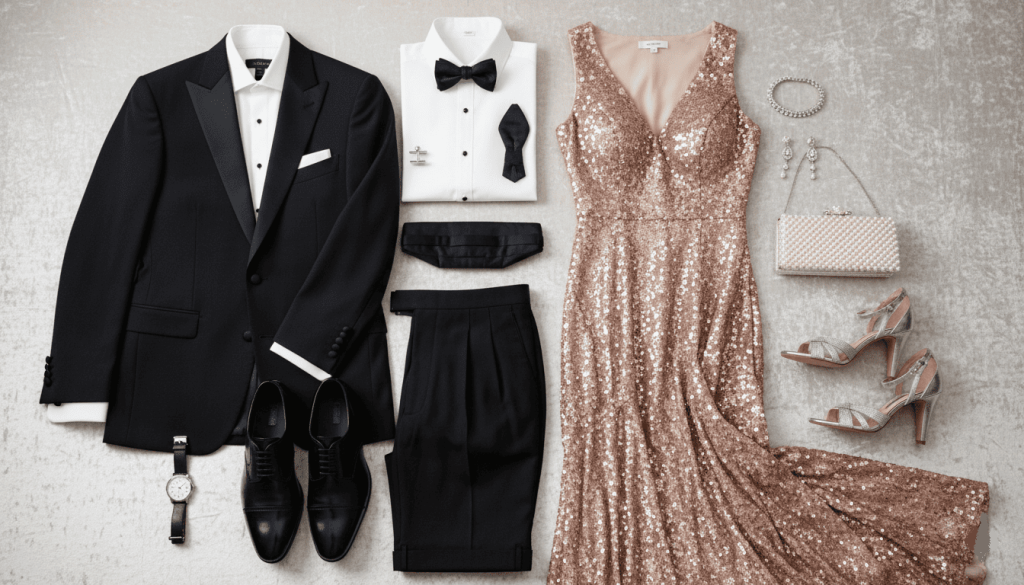
| A woman | Floor-length gown or long formal dress; an elegant jumpsuit or pantsuit also works. Dark or jewel tones. |
| A man | A tuxedo if you own one, or a dark suit (black, navy, charcoal) with a white shirt and a tie. |
| A parent of the couple | Treat it as near-black-tie; floor-length or a formal suit, a touch dressier than the average guest. |
| Unsure | Round up toward black tie, never down toward cocktail. |
What to wear if you’re a woman
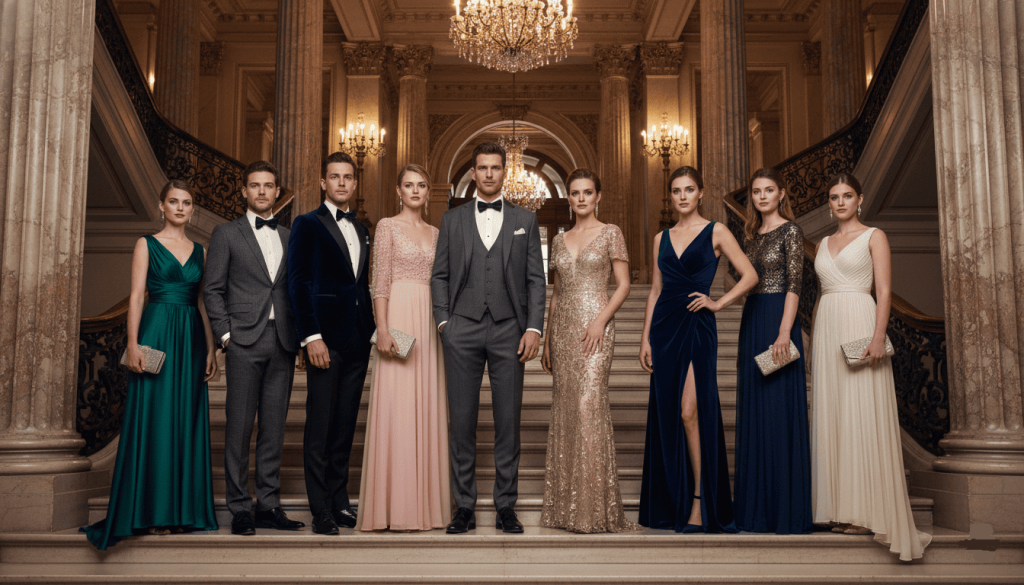
A floor-length gown is the safest, most on-code choice, and it is what I steer guests toward when the wedding is at night. A long formal dress, a dressy jumpsuit, or a tailored pantsuit all land squarely inside the dress code too. An elegant midi can work at the more relaxed, earlier end of the spectrum, but it is the lowest I would go.
For color, lean into dark and jewel tones: emerald, sapphire, burgundy, navy, classic black. Skip neon, skip pale pastels, and never wear white, ivory, or cream, which belong to the bride. Richer fabrics like chiffon, satin, and velvet read more formal than a flat cotton.
If your closet leans toward shorter, easier party dresses, know that this code sits a clear step above cocktail attire. Length and fabric are what move an outfit from cocktail up into black-tie-optional territory.
What to wear if you’re a man
If you own a tuxedo, this is the night to wear it, and you will never be overdressed. If you do not, a dark suit in black, navy, or charcoal is fully correct: pair it with a crisp white dress shirt, a conservative tie or bow tie, and polished leather shoes.
What to avoid is anything that reads daytime or office: light gray, tan, or beige suits, no tie, casual loafers, or a busy pattern. If you are weighing the two looks, my breakdown of a tuxedo versus a suit walks through where the line actually falls. And if you would rather not buy formalwear you will wear twice, renting is the smart call; I cover one popular option in my Generation Tux review.
Madison’s note
“At the black-tie-optional weddings I run, most of the men show up in a dark suit rather than a tux, and they look completely right. The only ones who feel out of place are the few who read ‘optional’ as a pass for a daytime gray suit and no tie.”
— Madison Cole, Certified Wedding Planner
What “optional” does not mean
Here is the trap I see most often: guests read “optional” as “casual.” It is not. Optional isn’t a downgrade to casual; it’s a second formal lane. Everything below still applies.
- No jeans or denim, even dark, pressed denim.
- No sneakers or casual footwear; dressy heels and leather dress shoes only.
- No sundresses, mini dresses, or anything you would wear to a backyard barbecue.
- No light or bright colors that fight the formality, and nothing white, ivory, or cream.
- No office-grade separates, like a standalone work blazer or a daytime print.
Etiquette note
The setting tips the call. An evening ballroom reads stricter than a 4 p.m. vineyard ceremony, so match the formality of the room you are walking into. Leave white, ivory, and cream to the couple, keep flashy or oversized jewelry to one statement piece, and when a color choice stumps you, dark and jewel tones never miss.
Three black-tie-optional mix-ups I see every season
Across the 200-plus weddings I have planned, the same misreads turn up on the dance floor year after year. They are easy to dodge once you know to look for them.
The first is the guest who dresses for cocktail and lands a full tier too low: a short dress or a no-tie suit at a 7 p.m. ballroom. Nothing scandalous, just visibly under the room.
The second is the man in a light or tan suit at an evening wedding. The cut can be perfect, but the color pulls the whole look toward daytime and away from formal.
The third runs the other way: the rare guest who over-corrects and arrives in a true ballgown at a relaxed, daytime black-tie-optional event. Overdressing is the safer error, but at a 3 p.m. garden wedding a long, simpler gown reads better than couture.
Questions guests ask me about black tie optional
The four that come up most, with the short answers I give in real life.
Is black tie optional the same as semi-formal?
No. Black tie optional sits a level above semi-formal. At black tie optional, women should still lean toward a long dress and men keep a tie, while semi-formal allows above-the-knee dresses and lets men skip the tie entirely. When in doubt, treat black tie optional as the more formal of the two.
Can a woman wear a short dress to a black-tie-optional wedding?
A true mini is too casual for this code. A long dress is the safest choice, especially at an evening wedding. An elegant midi can pass at the more relaxed, daytime end, but if you want to stop second-guessing yourself, go long.
Do men have to wear a tuxedo for black tie optional?
No. A tuxedo is encouraged and always welcome, but a dark suit in black, navy, or charcoal with a tie is fully acceptable. The “optional” exists precisely so guests who do not own or want to rent a tux can still look right.
What colors should you avoid for black tie optional?
Skip white, ivory, and cream out of respect for the couple, and steer clear of neon and pale pastels, which read too casual. Favor dark shades and jewel tones such as emerald, sapphire, and burgundy, which photograph beautifully and always suit the formality.
How to play it safe
If you take one thing from this, let it be the direction: black tie optional is a formal invitation with a built-in escape hatch, not a casual one. Dress for the more formal end, match the room and the time of day, and you will never be the guest who misread the code. Still untangling the rest of the invitation? My guide to semi-formal attire covers the dress code people most often confuse this one with.
— Madison Cole, Certified Wedding Planner