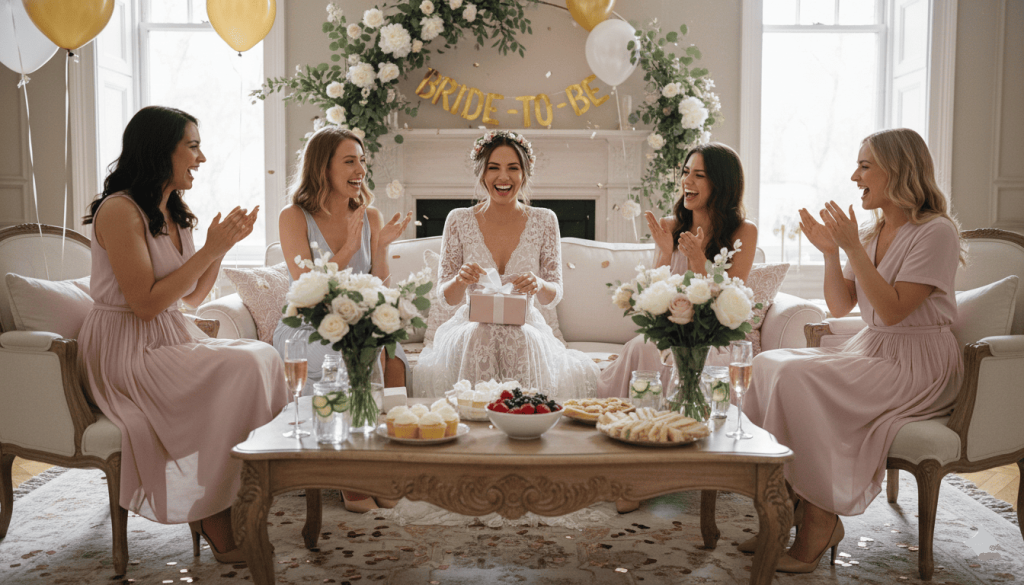
A bridal shower is a pre-wedding party thrown in honor of the bride, where her closest people gather to celebrate her and send her off with gifts. I’ve planned and attended more than 200 weddings, and the shower is the one pre-wedding event guests ask me about most: who throws it, when it happens, and what they’re walking into. Here’s the plain-English version.
Definition
Bridal shower: a gift-giving party held before the wedding to celebrate the bride-to-be and help set up her new home.
So what’s a bridal shower really for?
The gifts are the visible part, but the point is bigger. A bridal shower is a few hours where the people closest to the bride get to fuss over her before the wedding rush takes over. Most of my brides are running on fumes by the final month, and the shower lands at the sweet spot where it still feels like a treat rather than a chore.
Practically, it’s also where a chunk of the registry gets cleared. Guests usually pull a gift from the couple’s registry and bring it to open at the party, which is why a well-built registry matters more than people think.
And it’s optional. I tell every bride the same thing: if a shower isn’t your style, skip it. Nobody is obligated to throw one or attend one, and plenty of couples I’ve worked with traded it for a quiet brunch or folded it into another celebration.
Who hosts a bridal shower, and who gets invited
Traditionally, the shower is hosted by the Maid of Honor (MOH) and the rest of the bridal party, sometimes with the bride’s mother or sister stepping in. Whoever hosts usually plans the party and covers most of the cost.
Old etiquette held that the bride’s immediate family shouldn’t host the shower, because throwing a gift-giving party for your own daughter looked like fishing for presents. That rule has loosened a lot. These days I see mothers, aunts, and cousins host all the time, and nobody blinks.
The guest list is usually some mix of:
- The bridal party and the bride’s closest friends
- Close family on both sides (mothers, sisters, aunts, grandmothers)
- Anyone invited to the shower who is also invited to the wedding
That last point is the one rule I’d actually protect. Showering someone who didn’t make the wedding guest list reads as a gift grab, so keep the shower list inside the wedding list.
When a bridal shower usually happens
Most showers land somewhere between two and six months before the wedding. Earlier than that, gifts pile up before the registry is even finalized; later, and the bride is too buried in final-month logistics to enjoy it.
It also sits inside a sequence of pre-wedding events. The rough order is engagement party, then bridal shower, then the bachelorette party, then the rehearsal dinner. If you’re mapping all of this out, it’s worth slotting the shower onto your overall wedding planning checklist so the dates don’t collide.
Madison’s note
“The mistake I see most is stacking the shower and the bachelorette on back-to-back weekends. The guest lists overlap, everyone is spending money twice in a month, and by the wedding they’re tapped out. I space those two events by at least three to four weeks.”
— Madison Cole, Certified Wedding Planner
What actually happens at a bridal shower
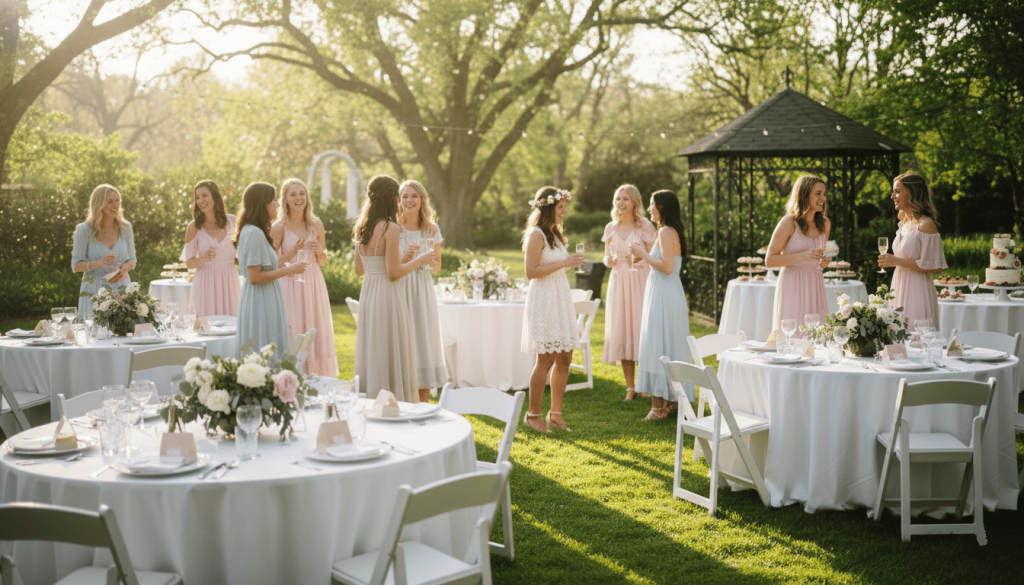
A shower usually runs two to three hours and is a daytime affair: brunch, lunch, or afternoon tea. The format is relaxed by design, and the bride is the guest of honor, not the host.
A typical one looks like this:
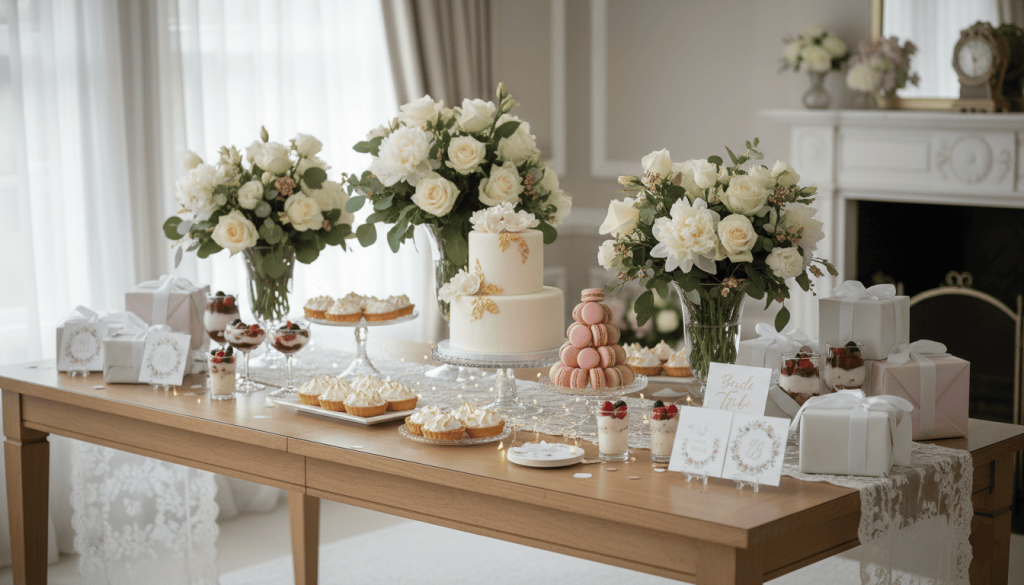
- Food and drinks, often a brunch spread or a grazing table
- A few games (the classic is guessing how well the couple knows each other)
- Gift opening, where the bride opens presents in front of everyone
- Cake or dessert to close it out
The gift-opening stretch is the heart of it, and it’s where a good host earns their keep by keeping things moving so it doesn’t drag for an hour.
Etiquette note
Guests bring a gift from the registry, and there is no fixed amount you’re expected to spend. A shower gift is typically lighter than the wedding gift, since you’ll give again at the wedding. If you’re hosting, you cover the venue, food, and decor; you don’t ask guests to chip in for the party itself. The bride’s thank-you notes should go out within two to three weeks.
Bridal shower vs. wedding shower: what’s the difference?
The two terms get used interchangeably, and honestly the line is blurry. The real difference is the guest list. A bridal shower is traditionally women-only and centered on the bride. A wedding shower, sometimes called a couple’s shower, includes both partners and guests from both sides.
Since most couples already live together before the wedding, the old “stock the bride’s new kitchen” framing has faded, and co-ed wedding showers have become common. Pick whichever fits the couple; there is no wrong answer here.
Where the bridal shower tradition comes from
The custom is usually traced to 16th-century Holland, where, as the story goes, a bride’s father couldn’t afford her dowry, so her friends gathered gifts to help her marry anyway. The term itself caught on in the United States in the late 1800s. Whatever the exact origin, the through-line is the same: the people around a bride pitching in to help her start married life.
If you’ve been handed the job of throwing one, the gift question is usually the first hurdle.
Related read
65 Best Bridal Shower Gifts for Brides
The gifts that actually get used, sorted by budget and personality.
Do you actually need a bridal shower?
After more than 200 weddings, my honest take is that a shower is lovely but not mandatory. If you have people who want to celebrate you and the timing works, say yes and enjoy it. If it feels like one more obligation, let it go or scale it down to a quiet lunch. The wedding is the main event, and everything leading up to it is supposed to be the easy, fun part.
And if you’re the guest staring at a blank card, wondering what on earth to write, I’ve put together a full guide on what to write in a bridal shower card so you’re not stuck at the table.
Common questions about bridal showers
A few of the questions I get asked most.
Do you bring a gift to a bridal shower?
Yes. A shower is a gift-giving party, so guests typically bring something from the couple’s registry. It’s usually a smaller gift than your wedding present, since you’ll give again at the wedding. If you can’t attend, sending a gift is a kind gesture but not strictly required.
Who pays for a bridal shower?
The host pays, usually the Maid of Honor and bridal party, sometimes split among a few hosts, or covered by the bride’s mother or another close relative. Guests are never expected to contribute to the cost of the party itself; they bring a gift, and that’s it.
How long before the wedding is a bridal shower?
Most showers happen two to six months before the wedding. That window is early enough to avoid the final-month chaos and late enough that the registry is set. Anywhere in that range works fine.
Can men come to a bridal shower?
A traditional bridal shower is women-only, but co-ed wedding showers that include both partners and guests from both sides are increasingly common. It comes down to what the couple wants; there’s no rule against a mixed guest list.
Sources
The references I leaned on for the history and etiquette here.
Sources
- The Knot — Wedding Shower vs. Bridal Shower. theknot.com
- Zola — What Is a Bridal Shower? Definition & Purpose. zola.com
- Wikipedia — Bridal shower (history and origins). en.wikipedia.org
Madison Cole is a Certified Wedding Planner who planned more than 200 weddings across the East Coast, from Charleston historic mansions to Outer Banks beach ceremonies, before founding One Stop Wedding Planner. She writes the way she used to coach her couples: practical, honest, no fluff.
— Madison Cole, Certified Wedding Planner